

April 30, 2021, 3:28 pm | Read time: 4 minutes
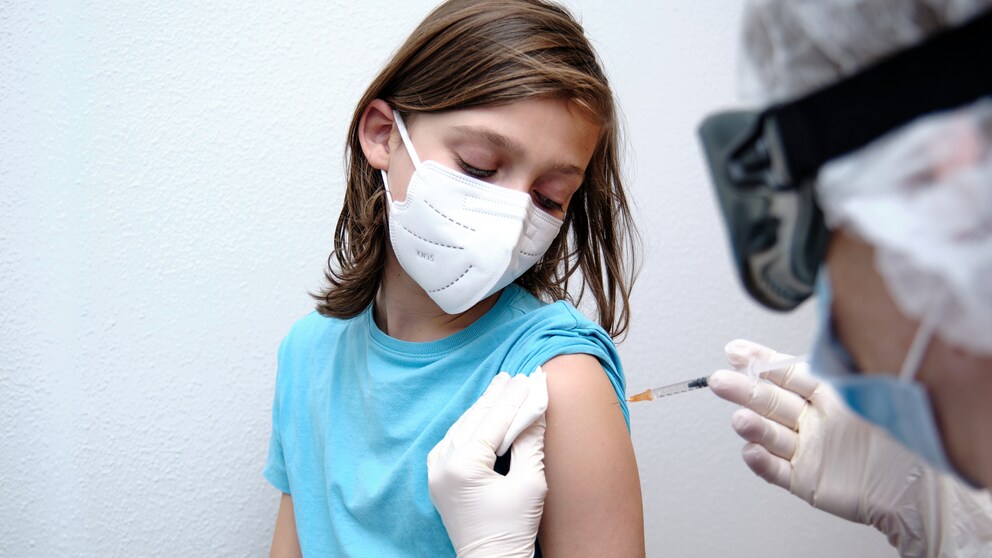
So far, there are no COVID-19 vaccinations for boys and girls under 16. That is about to change: BioNTech and Pfizer are applying for approval of their vaccine for 12- to 15-year-olds. Studies indicate high efficacy and tolerability.
Children and adolescents aged 12 and older may be able to get vaccinated against COVID-19 before the new school year. BioNTech and Pfizer have unexpectedly applied for EU approval of their COVID-19 vaccine for children and adolescents aged 12 and up this Friday. The Mainz-based biotech company and its U.S. partner announced this.
They again pointed to very high antibody responses from the approval study in 12- to 15-year-olds. According to the company, the first children and adolescents could receive the vaccine as early as June if approved. In the EU, the vaccine is currently only approved for those 16 and older. The review of a vaccine approval application by the EMA usually takes a few weeks.
Pharmaceuticals must be specially adapted for children and adolescents because their bodies do not function on the “small adults” principle. Therefore, separate studies are necessary before a vaccine can be approved.
Federal Health Minister Jens Spahn assumed that if approved, children in this age group could receive their first immunization by the summer holidays at the latest. “As of today, if nothing unusual happens,” said the CDU politician.
COVID-19 infection rates among children are increasing
Vaccinations for the youngest in the population now seem more urgent than at the beginning of the pandemic—at that time, children were not considered major drivers. However, their role has changed according to the Robert Koch Institute in Germany, partly due to the dominance of the more contagious virus variant B.1.1.7.
Infection rates among children are significantly increasing, said RKI President Wieler. “Children definitely contribute to the infection process.” Long-term effects, which also occur in children, should not be overlooked in risk assessment.
The weekly incidence currently ranges from 141 cases among the youngest up to four years old to 260 among 15- to 19-year-olds, each calculated per 100,000 inhabitants. Among older teenagers, these are the highest incidence rates in any age group. For 10- to 14-year-olds, they currently stand at 234 per 100,000 inhabitants, according to the RKI.
Also of interest: BioNTech, Moderna, AstraZeneca, J&J—four COVID-19 vaccines compared

When will the COVID-19 vaccine be available for children under 12 in Germany?

When Will the COVID-19 Vaccine Be Available for Children?
Approval of BioNTech vaccine for children possible in June
COVID-19-related outbreaks currently affect private households and the professional environment, but also daycares and schools, according to the RKI situation report. President Lothar Wieler makes no secret of the fact that he considers the nationwide emergency brake incidence of 165 for school closures to be significantly too high from a health protection perspective.
The BioNTech/Pfizer vaccine is currently only conditionally approved for people aged 16 and older in the EU and the U.S. The newly requested EMA approval could occur in early to mid-June in the best-case scenario. After that, vaccinations for 12- to 15-year-olds could begin. With an eye on the upcoming school year and the goal of expanding vaccinated population groups to achieve herd immunity, this would be an important step.
Also of interest: Exercise before the COVID-19 vaccination—good or bad?
High efficacy in clinical study with 12- to 15-year-olds
BioNTech and Pfizer recently announced that a clinical study in the 12 to 15 age group in the U.S. showed 100 percent efficacy. The vaccine was well tolerated. The side effects were similar to those in the 16 to 25 age group, the companies explained. The health of the nearly 2,300 study participants in the U.S. will continue to be monitored for up to two years after receiving the first vaccine dose for safety reasons, they added.
In parallel, BioNTech and Pfizer’s clinical study on the efficacy and safety of their COVID-19 vaccine in children aged six months to 11 years is ongoing. BioNTech expects reliable data from this by September, said the company spokesperson. It will therefore take some time before the first children in this age group can be vaccinated with the vaccine. BioNTech/Pfizer can only apply for EMA approval after this interim step. The review is then expected to take a few weeks again.
with material from dpa