

August 3, 2026, 8:09 am | Read time: 7 minutes
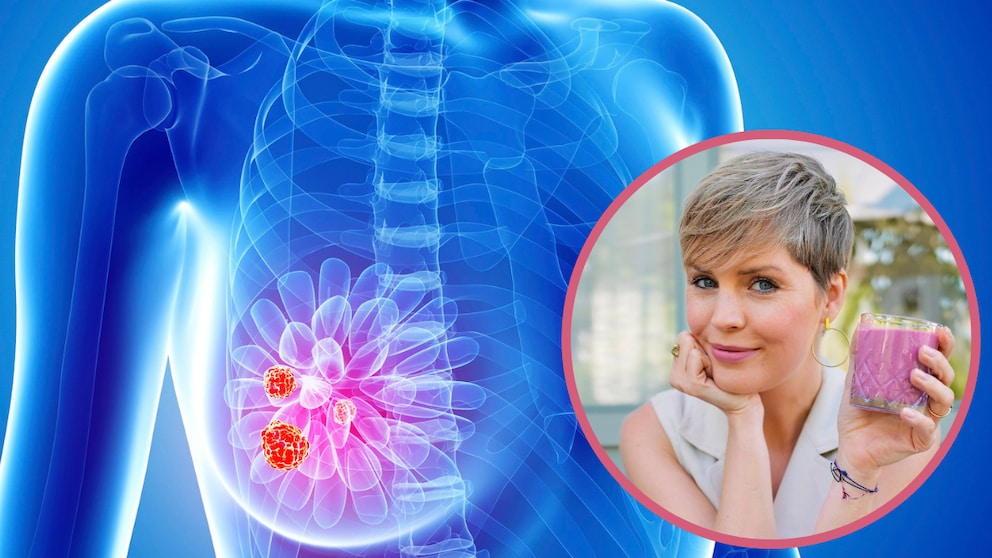
At 29, Carolin Kotke was diagnosed with breast cancer. What followed were chemotherapy, the fear of death—and a life that was never the same again. The illness forced her to reorder her priorities and place health at the center of her life for the first time. Today, Kotke works as a nutritionist and author. Her latest book, “Nutrition for Cancer: Getting Through Therapy and Strengthened Afterwards,” aims to provide guidance to those affected and shows how they can best support their bodies. In an interview with FITBOOK, she speaks openly about the most defining moments of her illness, the courage to reshape her life after the diagnosis, and what continues to give her strength. She also explains the role nutrition, exercise, and mental health have played in her journey and the message she wants to share with other cancer patients.
FITBOOK: You received your breast cancer diagnosis in 2017 at just 29 years old. What was that moment like for you?
Carolin Kotke: “I didn’t initially grasp the seriousness of the situation. Maybe I didn’t want to accept it. I was sitting with my mom in radiology when the radiologist explained that I had breast cancer. Malignant. My mother was close to tears, and my only reaction was: ‘What does that mean? Am I going to be put on sick leave now?’ I had just started a new job, was on the fast track, and didn’t have time to be sick. Back then, my career was my top priority, not my health. I only understood how serious the situation was during the course of the therapy.”
“Maybe I Won’t Live to See My Next Year”
When did you realize that this illness would permanently change your life?
“The most pivotal moment for me was when, despite six months of exhausting chemotherapy, residual tumor cells and metastases were found in the lymph nodes. That’s when I realized how serious this disease is. For the first time, I thought: ‘Maybe I won’t live to see my next year.’ Back then, I vowed to support my body as best as I could, to take nothing for granted, and to change my life if I truly survived all of this.”
And you did. What does your life look like today?
“Today, I’m fortunately healthy and have truly turned my life around 180 degrees. I gave up my old job, retrained as a nutritionist, became self-employed, and live in the countryside instead of the city.”
Menopause at 30
The illness also changed your ideas about family and the future. How did you experience this shift?
“I can’t have children anymore because I had my ovaries removed. That was a big step. I had long envisioned the classic path: career first, then family. The diagnosis changed everything. Also, I’ve been in menopause for eight years at 38. I had to learn that you don’t always need the perfect plan and that your life path sometimes unfolds differently than you imagined.”
What does health mean to you today—different from before your illness?
“Health used to be something I took for granted. Today, it’s the be-all and end-all. If health isn’t there, everything else means little. You can’t just demand; you have to work with your body, support it, and treat it more lovingly.”
What role have nutrition and exercise played in your journey back to more strength and quality of life?
“A significant role. Nutrition has become one of the most important building blocks in my life. Added to that are exercise, spending a lot of time in nature, stress management, mindfulness, and mindset. I’m not grateful for the diagnosis, but for developing a new appreciation for the small things in life and my body at a young age.”
What habits are particularly beneficial to you today?
“I’m outside in nature every day. We’ve had a dog for a year and a half. Even though I don’t have a child, he’s a bit like my child. With him, I’m out in the fresh air for about an hour every day.”
Mother on Her Son’s Wilms Tumor: “Suddenly, Time Raced”

Extreme Athlete Josefine Rutkowski: “Everyone Here Will Know What Cycle Day It Is”
“This Is My Biggest Challenge”
What significance do sleep, regeneration, and stress management have for you today?
“These are major topics—and honestly, still my biggest challenge. I work independently today and with a lot of passion. I have to be careful not to overwhelm myself. Due to menopause and estrogen deficiency, I notice how sensitive my nervous system has become. That’s why mindful movement, breathing exercises, relaxation techniques, and music have become important tools for me to find more balance again.”
What techniques are in your toolbox, for example?
“Breathing exercises are very important to me. In the evening, I like to do the 4-7-8 breathing to fall asleep. When I notice I’m stressed, I consciously pause and breathe deeply in and out. In the morning, I first open the window and take in fresh air. Music and sound also help me. That’s why I did a sound bowl training. I also enjoy Qigong because it combines breathing and movement. It leaves little room for the mind to wander.”
Nutrition Tips for Cancer: “Don’t Google Everything Right Away!”
There are many dietary recommendations circulating about cancer. Which ones really help and which ones put pressure on those affected?
“The most important thing is: It’s best not to Google everything right away. Otherwise, you quickly encounter extreme recommendations. You have to eat vegan, follow a ketogenic diet, or do juice fasting. That overwhelmed me at the time because much of it sounded very dogmatic. What helped me more was listening to my body again. The body doesn’t need perfection, but good nourishment. You can check: Is it getting enough nutrients? How is the gut flora? How stable is the blood sugar? These are important building blocks for me.”
So there’s no universal cancer diet?
“No. There’s not one recommendation for all cancer patients. Every body reacts differently. That’s why I find it much more important to check nutrient levels and individually see what’s missing or needed. If there were a cancer diet, it would mean to me: eat nutrient-rich and colorful.”
What helped you mentally during particularly tough phases?
“Talking about it. At first, I was very afraid of the topic and suppressed a lot. But suppressing doesn’t help. For me, it was almost like therapy to talk openly about the illness—with family, friends, and other affected individuals. Learning to accept help was also an important step. Realizing that you’re not alone can give a lot of strength.”
You also made your diagnosis public. Why was that important to you?
“I was already active on social media at the time and talked about my diagnosis there. Additionally, I kept a breast cancer diary on my blog. Writing helped me a lot in processing. Sometimes it’s easier to write things down before speaking them. I also realized how good it felt to find other affected individuals—especially as a young woman with cancer.”
Was there someone who gave you courage back then?
“Yes, I found a woman on social media who spoke openly about breast cancer. I found her incredibly brave, and she gave me a lot of strength. A few days after I made my illness public, she passed away from cancer. That moved me deeply and simultaneously encouraged me to continue. I had experienced how much courage she had given me, and I wanted to carry that forward.”
What message would you like to give to other affected individuals?
“Listen to yourself and your body. Learn your limits and take them seriously. Look at: What do I need right now? What can support me: conversations, nutrition, exercise, or mindful tools like breathing? We can often do more than we think. It’s crucial to do something good for your body in this situation.”