


March 5, 2026, 4:21 pm | Read time: 10 minutes
Atopic dermatitis is a disease that “drives you out of your skin”! The skin condition is one of the most common diseases among children. Around one in ten children in Germany is affected. Neurodermatitis is not contagious, but is nevertheless a major burden for children and parents. FITBOOK explains exactly how atopic dermatitis develops, which symptoms are typical, and how everyday life can be made easier.
Neurodermatitis is also known as “atopic eczema” or “atopic dermatitis”. Even babies can get atopic dermatitis. The most common sufferers are 3 to 6-year-olds1 The chronic inflammatory skin disease occurs in episodes and is particularly feared because of its agonizing itching2,3 Read all about atopic dermatitis in children below.
Overview
- What Is Atopic Dermatitis?
- What Are the Causes of Atopic Dermatitis?
- What Are the Symptoms of Atopic Dermatitis in Children?
- How Is Atopic Dermatitis Diagnosed?
- When Should You See a Doctor With Atopic Dermatitis?
- What Treatment Options Are Available if a Child Has Atopic Dermatitis?
- How Can I Prevent an Atopic Dermatitis Flare-up?
- Does Atopic Dermatitis Ever Go Away?
- Sources
What Is Atopic Dermatitis?
Atopic dermatitis is not simply dry skin. It is a complex chronic disease in which the protective skin barrier does not function properly. Normally, the skin forms a kind of protective shield against external irritants, pathogens, and dehydration. In children with atopic dermatitis, this protection is impaired: the skin loses more moisture, becomes more sensitive, and gets inflamed more easily. The result is dry, reddened, and flaky skin that itches mercilessly all the time4
What Are the Causes of Atopic Dermatitis?
Atopic dermatitis is partly hereditary: atopic dermatitis often occurs in families with allergic diseases5 The skin disease was therefore considered the first disease of the so-called “atopic march”: it was assumed that atopic dermatitis is the beginning of a whole chain of diseases that often starts in early childhood. Then you embark on an “allergy career,” so to speak—more and more diseases follow: Hay fever, food allergies, asthma6 However, we now know that this is not true. All these conditions have a certain inflammatory process in common, but they do not occur in any particular order. Nevertheless, more than a third of people with atopic dermatitis also have food allergies. Later on, many sufferers often develop allergic diseases of the respiratory tract, such as hay fever or asthma. Today, this is referred to as the “atopic spectrum.” Atopy refers to the body’s innate tendency to react hypersensitively to certain substances and develop allergies.
However, an outbreak of atopic dermatitis is also favored by environmental factors: pollutants such as particulate matter or nitrogen oxides irritate the skin and can promote inflammation. Indoor mold or high humidity has a negative effect on the skin. Diet also plays a role. Malnutrition or a lack of important nutrients can affect skin health. And even climate change has an impact on our skin: temperature fluctuations and changes in humidity weaken the skin barrier and make the skin more susceptible to irritation and infection7
What Are the Symptoms of Atopic Dermatitis in Children?
The main sign of atopic dermatitis is agonizing itching in the affected areas. You want to take off your skin, it’s so awful! This often leads to the so-called “itch-scratch vicious circle”. The itching tempts you to scratch, which irritates the skin even more. This leads to more itching—a vicious circle that is difficult to break. At the same time, open spots can be a gateway for bacteria and germs, which further aggravate the inflammation.
What the itchy areas look like depends on the age of the child:
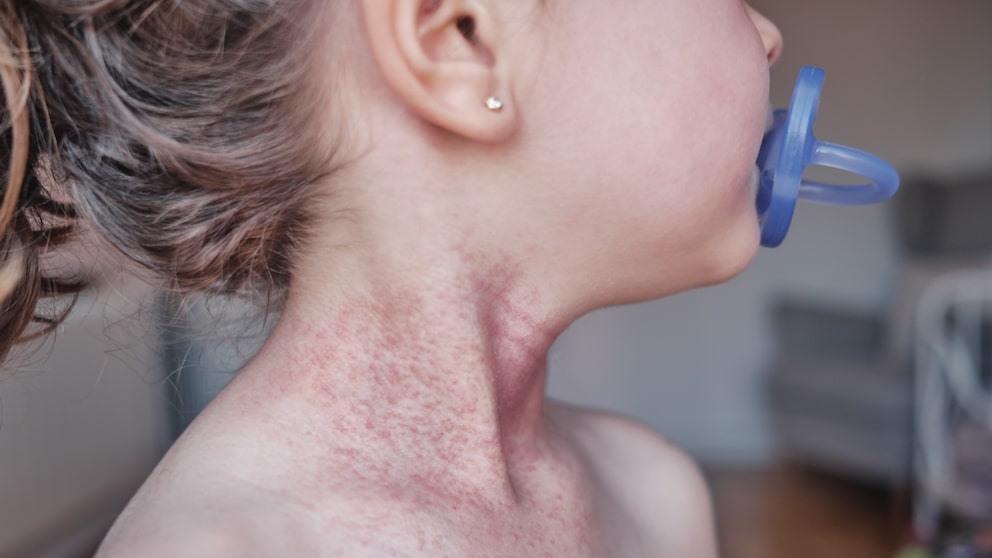
- Infants: Here, neurodermatitis often manifests itself as red and scaly skin, especially on the cheeks, forehead, or scalp. The extensor sides of the arms and legs can also be affected. The skin is reddened, often oozes, and forms crusts. The itching often leads to restlessness and sleep problems.
- Young children: In older children, the skin changes often occur on the elbows, knees, or wrists. The skin appears dry, cracked, and feels rough. Reddish edges with white patches often appear on the inside.
- Schoolchildren and teenagers: Now, constant scratching can lead to thickening of the skin. The hands, neck, and back of the knees are particularly affected.
Skin changes in which fluid (e.g., serum, blood, or pus) leaks out or wrinkled, scaly skin under the eyes are also more common in children8
How Is Atopic Dermatitis Diagnosed?
Atopic dermatitis is usually diagnosed by a pediatrician or dermatologist based on the typical skin changes. There is no single test that clearly identifies atopic dermatitis. The diagnosis is therefore based on several factors:
- The appearance of the skin: redness, dryness, and the distribution of the affected skin areas. It is also typical for the skin to turn white after scratching. Healthy skin reddens when scratched.
- Anamnesis: This involves asking, for example, whether there are any allergies in the family, whether the child suffers from hay fever, or whether the skin scaling has occurred more often9
- Allergy tests: prick tests or blood tests can help to identify possible triggers such as house dust or certain fragrances10
In addition, if an infection is suspected, a skin swab is often taken to determine whether bacteria or fungi play a role. This additional information can optimize treatment. It is also intended to ensure that it is not another skin disease, such as psoriasis or a contact allergy (e.g., to nickel or various fragrances).
When Should You See a Doctor With Atopic Dermatitis?
A visit to the dermatologist is recommended if the symptoms are very severe or if there are visible signs of worsening. If the skin is inflamed, weeping, or covered with yellowish crusts, this often indicates an infection that requires medical treatment. Fever in combination with skin changes is also a warning sign. Persistent, agonizing itching that prevents the child from sleeping or severely affects their everyday life should also not be ignored.
Sometimes therapies that have already been initiated may not have the desired effect, for example, if the skin remains very red or cracked. In such cases, it is advisable to adjust the treatment together with the doctor. A visit to the doctor is also advisable if atopic dermatitis in children is accompanied by other health problems, such as asthma or allergies, in order to ensure holistic care. Psychological support can also be helpful in some cases to help cope better with the condition.
What Treatment Options Are Available if a Child Has Atopic Dermatitis?
Patience is required for atopic dermatitis in children. Some experts advise keeping a symptom diary in order to track down the things that make the condition worse or help it to subside. Others, on the other hand, take a critical view of this, as simply dealing with the illness can make it worse.
In any case, it is important not to scratch! Even if it is difficult. Scratching only makes things worse. Cold compresses or cooling ointments can help, if necessary wear leggings or long-sleeved shirts at night if scratching occurs during sleep. Short fingernails can also help to prevent scratching. There are special anti-scratch suits for small children, and older children can try cotton gloves (usually bought for polishing cutlery, but can be used for other purposes). Distraction also plays an important role: activities such as painting, handicrafts, or listening to stories can help to forget the itching for a while.
Skin Care
Regular, proper skin care is part of basic atopic dermatitis therapy: moisturizing creams containing urea (urea) or glycerine help the skin to retain moisture. Moisturizing creams or ointments can also support the weakened skin barrier. Special fatty ointments that protect the skin from drying out are also suitable for babies. But be careful: these creams should not contain any irritating fragrances.
There are also various medications that can help: Creams containing cortisone are often prescribed to soothe the skin, especially in the early stages of an atopic dermatitis flare-up. They are effective and safe when used correctly. However, with prolonged use, they thin out the skin and usually make the symptoms worse in the event of a relapse. Therefore, only use small amounts and apply them thinly. So-called calcineurin inhibitors are used as an alternative. These medications specifically reduce the inflammatory reaction of the skin and are particularly suitable for sensitive areas such as the face. They do not contain cortisone compounds and are therefore also suitable for long-term use.
Further Treatment Options for Severe Cases
External treatment is often not sufficient for severe neurodermatitis. This is where so-called systemic therapies come into play—i.e., tablets and injections. There are various medicines, which are also approved for children, that can reduce the “full throttle mode” of the immune system11 However, they may only be used in really severe cases and for a short time (about a week).
Specialized UV light therapy can help reduce inflammation in older children. Radiation is usually given two to six times a week over a period of four weeks to three months. The duration of the sessions usually starts with less than one minute and can be increased to several minutes. Studies show that light therapy can effectively relieve inflammation and reduce itching. It enables temporary healing of the skin, but not a permanent cure for neurodermatitis. This method should only be used under medical supervision, with the radiation dose carefully tailored to the individual’s skin type and gradually increased to acclimate the skin to the treatment. And: The medical light cabins should not be confused with a “normal” solarium, which is useless for this treatment.12

Dry, Flaky Nipples in Women – Causes and Treatment

How Goat Milk Can Help with Skin Problems
How Can I Prevent an Atopic Dermatitis Flare-up?
How an atopic dermatitis flare-up occurs has not yet been conclusively clarified, possibly also because the causes can be very individual. A diary of the skin care products used, sleep, and affected skin areas can provide clues as to what works and what does not. Just don’t get too caught up in the suffering—atopic dermatitis has a strong psychological component13 So it’s better to pamper yourself and relax than to go on too much of a brain merry-go-round.
Regular skin care is important to prevent flare-ups. Daily baths with lukewarm water (not hot!) can help to remove irritants, dirt, and bacteria from the skin. A few splashes of oil in the water prevent the skin from drying out. After bathing, the skin should be carefully dabbed dry and cream applied immediately. Replenishing creams are not only helpful during flare-ups, but they can also maintain the barrier of sensitive skin in often affected areas during inconspicuous phases.
When selecting clothing, it is recommended to choose cotton, silk, or linen over wool or synthetics. Soft cotton jersey or bed linen made of cotton-maco-satin are really kind to the skin! Dark clothing should be avoided as it often contains chemical dyes that can have an irritating effect. Clothes should also not be too tight or chafe so that the skin is not irritated. The special atopic dermatitis clothing often offered with antibacterial additives or silver threads did not improve the symptoms in one study14 Although various materials, which are mainly used for sportswear, can also be well tolerated (especially if they are light and airy), it is advisable to be cautious about special marketing claims targeted at atopic dermatitis patients, as they may not withstand even the first wash cycle.15
Does Atopic Dermatitis Ever Go Away?
Neurodermatitis cannot be cured. However, many children actually “grow out” of atopic dermatitis, especially if it starts in early childhood. Nevertheless, the skin of some of those affected remains sensitive: almost one in three affected children also suffer from eczema at times in adulthood. The motto then is: take good care of the skin and avoid known triggers that could have triggered the flare-ups. And, to repeat: please don’t scratch, it only makes things worse.