


December 14, 2024, 6:43 am | Read time: 9 minutes
Red, itchy blisters–the rash that appears with chickenpox all over the body is usually unmistakable. Children and teenagers are primarily affected by the disease. In addition to the rash, fever often occurs, which is particularly dangerous for newborns. FITBOOK author Julia Freiberger explains what lies behind the disease and what parents should watch for in their children.
Caution is also advised during pregnancy. If a woman becomes infected with chickenpox in the first six weeks of her pregnancy, it could cause severe malformations in the unborn child. An infection around the time of birth can also be life-threatening for the newborn: The immune system is not yet able to fight the viruses.1
Follow the FITBOOK channel on WhatsApp now!
Overview
What is chickenpox?
“Feuchtblattern,” “wild or pointed blisters”–chickenpox is known by many names and describes a highly contagious viral infection that primarily occurs in children. It is caused by the so-called “varicella-zoster virus,” also known as “varicella.” It belongs to the herpes virus group. The virus itself causes chickenpox as a “primary disease” and remains in the body for life after recovery. Years later, when the immune system is weakened, it can lead to shingles.2
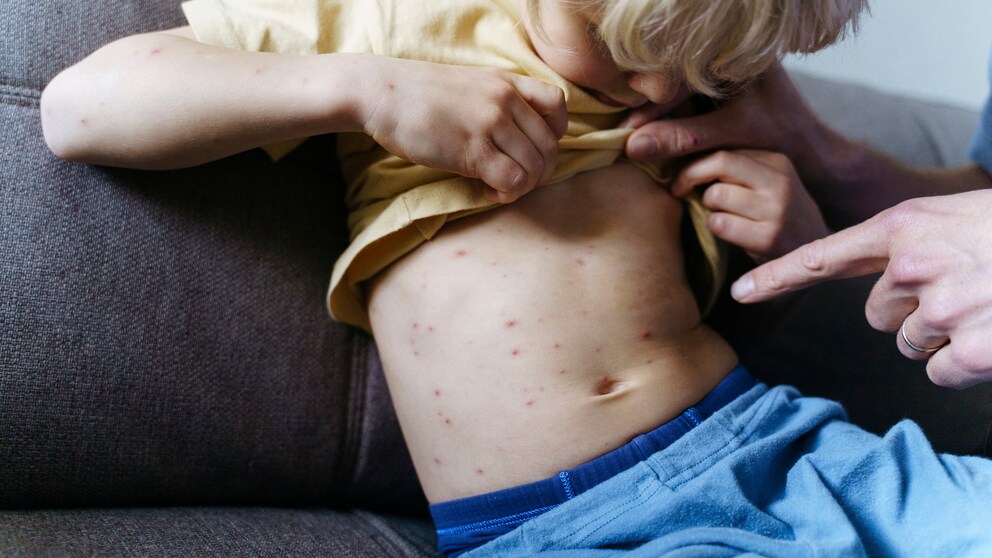
The disease is characterized by a severely itchy rash with red blisters and mild fever. The rash usually starts on the head and appears as red spots that turn into nodules and then blisters, which crust over.
While the disease is unpleasant, it is usually benign. However, it can lead to serious complications (such as pneumonia, bacterial skin infections, meningitis, and encephalitis) that can be fatal in the worst cases.
Where does the name come from?
The disease got its name from the way the virus is transmitted. Some parents may have noticed that their child is immediately taken to the treatment room at the pediatrician’s office at the suspicion of chickenpox, without waiting in the waiting room. This is to avoid contact between the potentially “varicella-zoster virus”-infected child and other children and parents. Chickenpox got its name due to its high contagion risk. A short stay in the same room is enough to catch the virus from an infected person–it is said that the virus spreads as quickly as the wind. Hence the name “chickenpox.”
Also interesting: Symptoms and treatment of herpes zoster
How is the virus transmitted?
The virus can be transmitted from person to person through direct contact or droplet infection. It is enough for saliva droplets from infected individuals to be released into the air when sneezing, coughing, or talking, where they can be inhaled by healthy people. The fluid from the blisters is also contagious, especially when they burst or are scratched open. Contact with an infected person almost always leads to infection unless one has already had chickenpox or is vaccinated against it.3
Incubation period
The period between infection and the outbreak of chickenpox is between eight and 28 days, with most cases occurring between 14 and 16 days. The risk of infection begins one to two days before the appearance of the pox and ends when all blisters have crusted over. This is often five to seven days after the rash begins. The disease occurs most frequently in winter and spring.
Symptoms of chickenpox
Chickenpox usually begins with general symptoms such as body and headaches and a slight increase in body temperature. These early symptoms appear one to two days before the visible outbreak of the disease. Then, the characteristic severely itchy rash develops. It initially appears on the face and torso but later spreads to the legs and arms. The blisters can also affect the genitals and mucous membranes. The intense itching can significantly disrupt sleep. In adults, the rash often appears less typically or may not appear at all.
Fever usually lasts three to five days, rarely exceeding 102 degrees Fahrenheit. The rash goes through several stages of development. Initially, small red spots turn into nodules, which then develop into fluid-filled blisters. The fluid inside is initially clear but later becomes cloudy before the blisters dry out and form a crust. The crust falls off after a short time. Complete healing usually occurs after seven to ten days, although the period can vary. Because the different stages of the rash can be seen on the skin simultaneously, it is also called a “starry sky pattern.” The number of blisters can vary individually.4
Course of the disease
Typically, chickenpox begins with malaise, fatigue, and itchy blisters. The blisters then burst, dry out, and form a crust under which they heal. In most cases, the disease in children heals within two weeks. However, scratching the itchy blisters can lead to bacterial infections or purulent skin inflammations, which can result in permanent scars.
In adults, chickenpox often has a more severe course than in younger children. Adults also tend to have a significantly larger number of blisters on the skin. Complications such as varicella pneumonia are also more common in adults than in children.5
Consequences of the disease
Although chickenpox usually resolves without complications and heals on its own, older children and adults have an increased risk of a prolonged course and complications. The disease is also dangerous for newborns. If an unvaccinated woman contracts chickenpox shortly before (about five days before) or after birth (up to two days after), the disease can be life-threatening for the newborn. In this case, the mother cannot produce enough antibodies to provide the child with sufficient protection through breast milk or the placenta. Additionally, the newborn’s weakened immune system makes it difficult to fight the infection.
If a non-immune pregnant woman becomes infected with the virus during the first six months of pregnancy, it can pose a serious risk to the unborn child. In this case, a so-called “varicella syndrome” may occur, causing severe malformations and neurological damage, skeletal anomalies, or eye diseases.

Childhood Illnesses Parents Should Know
Impetigo – Symptoms, Treatment and Prevention
Treatment of chickenpox
Treatment is symptomatic in mild cases. This means fever or body aches are relieved with tablets such as acetaminophen. To reduce itching and dry out the blisters, specific gels, powders, or lotions can be used. Children, in particular, have difficulty avoiding scratching. However, scratching the blisters increases the risk of infection and can also cause inflammation or scarring.
Therefore, it may be helpful to keep the child’s fingernails short. Another option for young children is to use cotton mittens to make scratching more difficult. Loose, wide clothing made of natural material (without synthetic fibers) can also help avoid skin irritation. It is also advisable to avoid softening the skin: Baths are not recommended in this case, and the child’s skin should be gently patted dry after washing.6
Antibiotics do not work on viruses
Since chickenpox is caused by viruses, antibiotics do not work. However, they are used if bacterial secondary infections or complications occur.
In particularly severe cases of chickenpox, so-called “antivirals” may be used. These medications do not kill the viruses but can prevent further multiplication. This treatment method is mainly used for people with weakened immune systems.
What to do if you suspect chickenpox?
If chickenpox is suspected, the doctor’s office should be informed in advance so that appropriate protective measures can be initiated. Chickenpox is subject to the regulations of the Infection Protection Act: People suspected of having the disease or who have already been diagnosed are temporarily not allowed to work in community facilities (schools or kindergartens). This also applies to household members who are not immune to the disease. Additionally, the facilities must be informed of the illness–and can only be visited again when there is no longer a risk of infection. It is especially important that unprotected pregnant women or people with weakened immune systems seek medical attention immediately if they come into contact with infected individuals.
How can the disease be prevented?
The Standing Committee on Vaccination (STIKO) recommends vaccination against chickenpox as a preventive measure for children, adolescents, and certain risk groups to effectively avoid diseases and possible complications. The vaccine itself is based on weakened viruses injected into the body. This is intended to stimulate the immune system to develop a protective response without causing the disease.
Infants and children
The vaccination for children and infants is carried out in two steps:
- The first dose should be administered at 11 to 14 months of age.
- The second dose at 15 to 23 months should be given with a combination vaccine against mumps, measles, rubella, and varicella.7
STIKO also recommends that children, adolescents, or adults who have not yet been vaccinated or are incompletely vaccinated should catch up on vaccinations. Vaccination is especially important for certain risk groups, such as women planning to have children, health care workers, people with severe neurodermatitis, or those with weakened immune systems.
According to the RKI, case-control studies show that after vaccination, 95 percent of vaccinated individuals are protected against severe varicella. In 70 to 90 percent, the disease is prevented. With two vaccinations, the protective effect increases further, preventing varicella disease in about 95 percent of vaccinated individuals.
Caution: “Chickenpox parties” are not allowed!
Since chickenpox usually runs a harmless course, some parents attend so-called “chickenpox parties” to deliberately infect their children with the virus and achieve natural immunity. However, this measure is not only illegal but also negligent. The children are deliberately exposed to the unpleasant symptoms of the disease and possible complications. Although rare, chickenpox can have serious consequences such as brain or lung infections. Here again, the clear recommendation is vaccination as an effective and gentle protection against chickenpox.8