

July 15, 2019, 11:13 am | Read time: 4 minutes
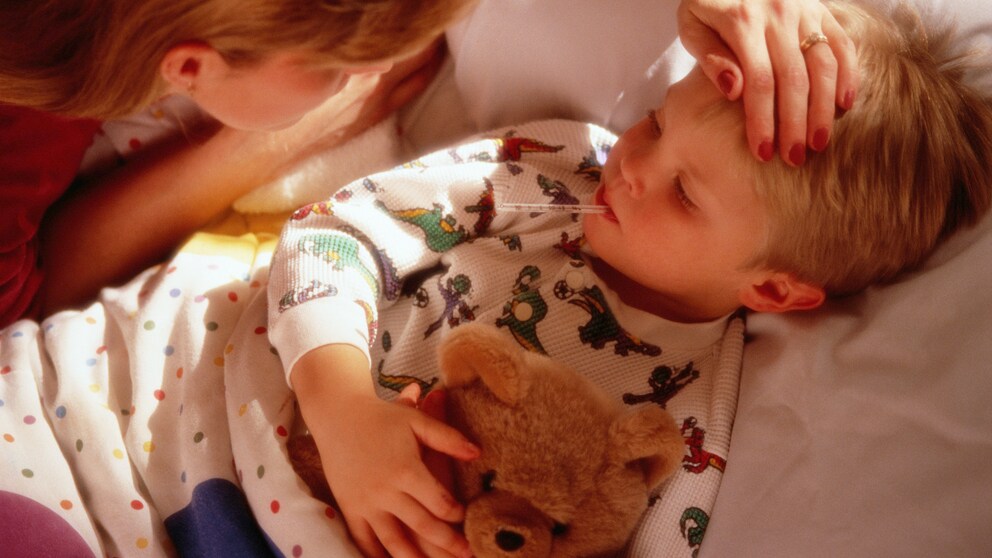
Diarrhea, colds, conjunctivitis–as children start daycare, many experience one infection after another. If your child is affected, you should keep them at home: They need to recover and not infect others. Here’s what else you need to know.
Parents and educators know: Nurseries and kindergartens are breeding grounds for all kinds of viruses and bacteria. It’s all the more important to keep sick children away long enough. But how long is enough? An overview of the most important childhood illnesses.
Colds and Flu-like Infections
With coughs, runny noses, and body aches, children need plenty of fluids and rest. They should stay home until they’ve been completely well for an entire day. “If you could say in the evening, ‘Today you could have gone back to daycare,’ and that’s without fever-reducing medication, the child is healthy,” explains Tanja Brunnert from the Lower Saxony Association of Pediatricians.
Gastrointestinal Infections
The key in such illnesses is hydration. “The younger the child, the more dangerous diarrhea is because they can dehydrate,” says Bernhard Riedl, a general practitioner and scientific associate at the Technical University of Munich. A child is considered healthy only after two days without symptoms. Infections with rotaviruses, adenoviruses, and noroviruses must be reported. If a doctor diagnoses such an infection, they usually report it to the health department. “However, parents are encouraged to inform the kindergarten,” explains Sabine Kosler, a consultant for Berlin’s FRÖBEL Education and Childcare.
Conjunctivitis
The eyes are red and watery, and the eyelids are sticky. A doctor should determine whether it’s an allergic, viral, or bacterial conjunctivitis. Bacterial infections are treated with antibiotic eye drops. If the child receives such drops, they usually need to stay home for about two days. Hand-foot-and-mouth disease often follows with fever and flu-like symptoms, leading to painful blisters in the mouth and a rash on the hands and feet, which can vary in severity. Children should stay home until the blisters have healed.
Also of interest: When to see an eye doctor immediately
Scarlet Fever
Children with scarlet fever develop fever, sore throat, vomiting, and difficulty swallowing. The tongue is coated white, swells, and turns red after a few days, becoming the typical “strawberry tongue.” A red rash spreads from the upper body to the abdomen and legs. With antibiotics, a child must stay home for two days; without, for three weeks. Scarlet fever is reportable in Saxony and Thuringia.
Chickenpox
Small red spots spread over the entire body, turning into itchy blisters with watery content. “The most important thing is to treat the itching, as scratching can lead to unsightly scars,” says Brunnert. Once all spots have crusted over, children can return to daycare. There is a vaccine against the chickenpox virus. Chickenpox must be reported even if only suspected.
Chickenpox: Symptoms, Transmission, and Why Vaccination Is So Important

Scarlet Fever–Highly Contagious and Not Limited to Children
Measles
The illness begins with a cough, runny nose, and fever. The temperature drops and rises again after a few days. The red rash starts behind the ears and on the face. After a measles outbreak, children should stay home for four days. There is a vaccine that can be administered up to three days after contact with an infected person. Measles must be reported even if only suspected.
Also of interest: How dangerous is exercise with fever and colds?
Mumps
Mumps usually begins with fever, flu-like symptoms, or vomiting and stomachache. A characteristic feature is the painful swelling of the parotid glands. After the onset of the disease, children should stay home for nine days. Reporting is required even if only suspected. Children are vaccinated against mumps along with measles and rubella. The vaccination can be administered up to three days after contact with an infected person.