

June 22, 2026, 4:02 pm | Read time: 8 minutes
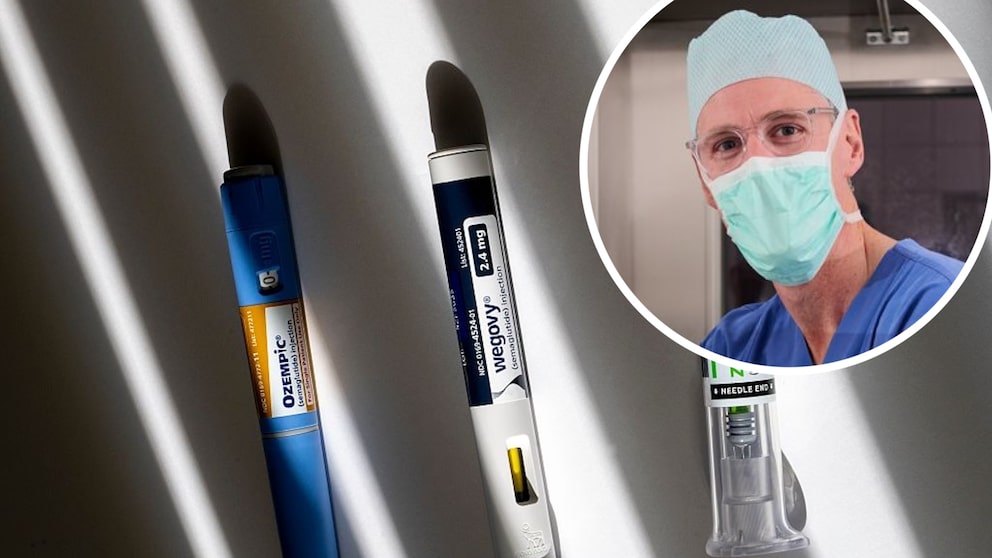
While many people see Ozempic and Wegovy as medical wonder drugs, a clinic doctor warns of a dangerous misconception. The injection may change the number on the scale, but not the lifestyle–and that can have fatal health consequences. On the other hand, modern GLP-1 medications can be a tremendous benefit for people with genuine obesity disease.
At This Point, I Have a Problem
Germany is getting fatter–and sicker. More than every second adult is now overweight. The consequences are visible everywhere: crowded waiting rooms, rising numbers of diabetes, cardiovascular diseases, and osteoarthritis, as well as a health system increasingly groaning under the weight of lifestyle-related diseases.
At the same time, medications like Ozempic, Wegovy, or Mounjaro are experiencing an unprecedented boom. Millions of people hope to finally solve their weight problem with an injection. Soon, tablets promising a similar effect will also hit the market. The societal message seems clear: Are you overweight? Then you need help. You have obesity. That’s a disease. There are now medications for that. This is exactly where I have a problem.
Also interesting: Chief Physician and Longevity Expert Thomas Kälicke: “I’ve Lived by These 7 Rules for 20 Years”
“I Have Obesity” Versus “I Am Obese”
I consider the distinction between “I have obesity” and “I am obese” to be extremely important. One is a serious disease, and these people, who are not the majority, deserve every medical support. The others are those who have become obese, often over years or decades. Not due to genetic causes or rare metabolic disorders, but through a combination of high-calorie diet, lack of exercise, sleep deprivation, chronic stress, frequent snacking, and a positive calorie balance.
In most cases, overweight does not occur suddenly and not without reason. It’s uncomfortable to say, but that’s exactly where the crucial difference lies. Those who say “I am obese” acknowledge that the current situation is the result of a process. And what has arisen through a process can often be changed through a new process.
The Industry Has Recognized That We Want It as “Simple” as Possible
The weight-loss injection caters to a deep human desire: We want to solve problems without having to change our behavior. Of course, it’s easier to give yourself an injection once a week or soon take a pill than to permanently change your diet or exercise regularly. Naturally, it sounds more attractive to pharmacologically suppress appetite than to deal with calories, protein amounts, sleep quality, and exercise.
The industry has recognized this! And it markets the medications accordingly successfully.

Medications Suppress Appetite–But That Doesn’t Automatically Mean Better Eating
I want to be fair: The effectiveness of modern GLP-1 medications is impressive. Semaglutide and tirzepatide lead to weight losses of about ten to over 20 percent of body weight, depending on the study. They are among the most effective medications we’ve ever had for weight reduction. For people with obesity disease, this can be a real blessing. But this is exactly where a new danger arises. Because the injection changes the weight–but not the lifestyle.
The medications work primarily through appetite regulation. Gastric emptying is slowed, the feeling of hunger decreases, and people eat less. The problem is: Eating less does not automatically mean eating better.
Those who do not simultaneously change their diet often reduce not only calories but also the intake of proteins, vitamins, and minerals. And this is precisely where, in my view, the real discussion begins.
Loss of Muscle and Bone Mass Will Concern Us in the Future
Studies show that maintaining muscle during medication-induced weight loss is an important issue. As an orthopedic surgeon, I see daily the consequences muscle loss can have in old age. Even more intriguing is the question of the long-term effects on bone metabolism. Some recent studies suggest that significant weight loss may be associated with a decrease in bone density. The data is currently developing very dynamically.
Those who eat significantly less over the long term and do not change their eating habits under the weight-loss injection will consume too few proteins and lose muscle and bone mass. This not only theoretically creates conditions that could become problematic in the long run. In my view, this discussion has so far been conducted far too little.
Also interesting: Commentary by Thomas Kälicke: This Misconception Costs You Years of Life!
What I Experience in the OR
In our clinic, we now specifically ask patients about GLP-1 medications before planned surgeries. The reason: The medications slow gastric emptying. As a result, food residues can remain in the stomach even after prolonged fasting. This is relevant for anesthesia because the risk of aspiration increases–that is, inhaling stomach contents during the induction of general anesthesia. Therefore, many professional societies now recommend pausing the medications in good time before certain procedures.
Who Actually Takes the Injection?
Since we started specifically asking about GLP-1 medications before surgeries, I am getting an increasingly better impression of how widespread these preparations actually are. And I am repeatedly surprised. Among them are many people who do not appear severely obese and at first glance do not seem to have a severe obesity disease. I also have the impression that the actual use is significantly higher than commonly assumed.
There are now numerous online offerings that aggressively advertise the medications. They are sometimes promoted with surprisingly low-threshold procedures and then “discreetly” delivered to homes.
Whether a relevant black market exists beyond that is hard to prove. However, my personal impression from many conversations with patients is that the actual spread of the medications is likely much greater than the official prescription numbers suggest.
Our System Inadequately Compensates Lifestyle Changes
Another problem arises. A sustainable lifestyle change is time-consuming. It requires education, motivation, support, and regular conversations. However, our health system inadequately compensates for this form of medicine.
Sometimes I have the impression that it has become easier to issue a prescription than to go on a long-term path of dietary change, increased exercise, and behavioral change with the patient.
This could be one of the greatest dangers of the current development. Because not everyone who is obese automatically suffers from the disease of obesity. Most people have simply become obese over the years due to an unfavorable lifestyle. For these people, the injection can lead to short-term weight reduction. But it does not automatically solve the causes of the problem.

“The Biggest Misconception About the Weight Loss Injection”

Weight-Loss Pill Instead of Injection! Is the Tablet the More Convenient Solution?
The Real Solution Remains Boring
Perhaps the biggest problem with the weight-loss injection is that it gives the impression there is a shortcut. But there isn’t one.
Those who want to live healthily in the long term still cannot avoid the same basic principles:
- less highly processed foods
- adequate protein
- set meals instead of constant snacking
- long-term balanced energy balance
- regular exercise
- strength training
- adequate sleep
These are exactly the factors that have made many people obese in the first place. And these are exactly the factors that need to be changed if the problem is to disappear permanently.
My Conclusion
For people with genuine obesity disease, modern GLP-1 medications can be a tremendous benefit. Especially when they are not understood as a substitute for a lifestyle change, but as support for it. In combination with a consistent dietary change, adequate protein intake, strength training, and regular exercise, they can help reduce significant health risks and enable sustainable weight loss.
Used correctly, they can change lives: They can reduce secondary diseases, get people moving again, and be an important part of successful therapy. But they do not replace a lifestyle change. And they must not lead to millions of people delegating their responsibility for their own health to an injection. The crucial question is therefore not: “How do I get the weight-loss injection?” But: “Why did I become obese in the first place?” Those who answer this question honestly and are willing to address the causes usually need less medicine than they think. And that is precisely where the most sustainable form of weight reduction lies.

“See Positive Effects of Injections in My Own Environment”
“I see the positive effects of the weight-loss injection in my own environment. When someone, whom I have observed for decades struggling with severe overweight and for whatever reason never found a way out of the vicious cycle, now suddenly comes towards me beaming and visibly slimmed down thanks to GLP-1 therapy, I can only rejoice from the heart. I am even more pleased when the story doesn’t end there. When there are reports of bike tours, strength training, or the first favorite YouTube trainer. Because we now know from studies that weight often quickly returns after stopping the injections without accompanying lifestyle changes. I see it this way: For many, they are the first chance to break out of a vicious cycle of overweight, frustration, and health-related secondary diseases. What should also be mentioned: The medications not only reduce weight but actively protect against heart attacks and strokes in those with pre-existing conditions (not in healthy people). Besides heart protection, the drugs also show significant benefits for kidney function in people with type 2 diabetes and chronic kidney disease.”