

May 19, 2020, 9:11 am | Read time: 2 minutes
If you want to make your own face mask, ensure the fabric can withstand heat and survive washing at a minimum of 140 degrees Fahrenheit. More importantly, consider which material offers the most reliable protection against coronavirus particles. FITBOOK explains which combination U.S. researchers recommend.
There are various ways to protect yourself and others from coronavirus infection using face masks. The Robert Koch Institute (RKI) explains how different types of industrially manufactured masks protect and their reliability. You can find corresponding information with us under five face masks against coronavirus at a glance.
Homemade masks are believed to offer some protection to the wearer and primarily to those around them. The level of protection can be increased to some extent by using suitable materials.
Also interesting: How to properly clean face masks – here are the options!
Which Material Offers the Best Protection?
Researchers at the University of Chicago examined various fabrics individually and in combination for their permeability to coronavirus. They created artificial aerosols (= fine particles suspended in the air, such as viruses) that mimic human breathing and blew them through fabric samples. The results can be read on the science portal “Science Daily.”

5 Masks to Protect Against Coronavirus–and Their Effectiveness

Proper Behavior When Suspecting a COVID-19 Infection
Combination of Cotton and …
The lowest permeability to virus particles was measured with a tightly woven cotton cloth combined with a double layer of chiffon. Chiffon is a fine, almost transparent material commonly used in women’s evening wear. Similar results were achieved with cotton combined with silk or flannel. These fabrics are said to offer comparable protection against coronavirus aerosols as standard N95 masks, which are approved for medical use in the U.S.
Also interesting: Will the coronavirus stay forever?
The explanation lies in the effective interaction between a mechanical barrier provided by the robust cotton and an electrostatic barrier from materials like chiffon. Chiffon often consists of synthetic fibers such as polyester and spandex, which can become statically charged.
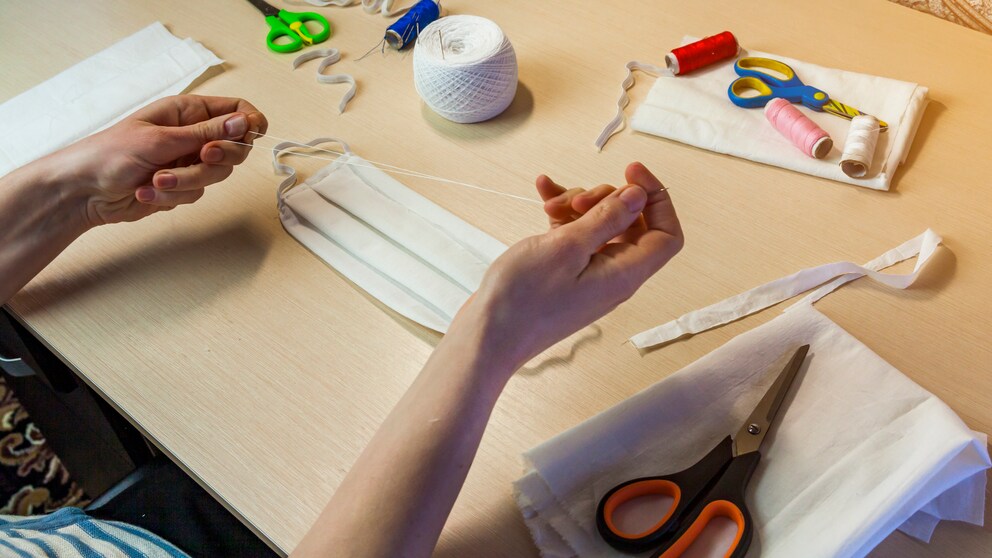
Here’s how you can sew a face mask yourself:
Most Important: The Fit
The most crucial factor for reliable respiratory protection against coronavirus, besides the material, is the proper fit of the mask. As researchers emphasize, even a small leak of just one percent can reduce the mask’s protection by more than half.