

April 14, 2023, 8:27 am | Read time: 3 minutes
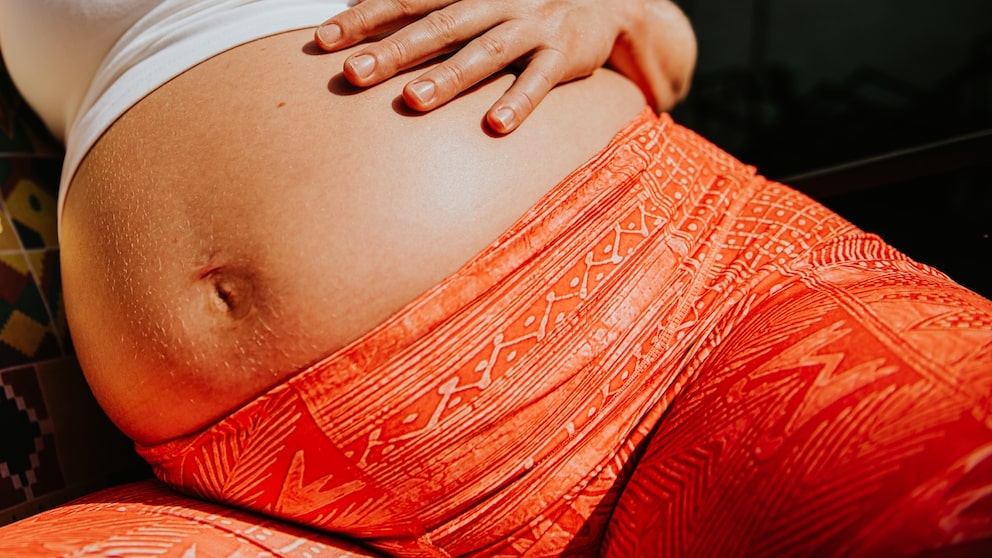
Patrice Aminati, the wife of TV host Daniel Aminati, received a devastating diagnosis a few weeks ago: skin cancer that had already metastasized. The mole reportedly changed during Patrice’s pregnancy, just a few months after she had given birth to a daughter. A dermatologist and a gynecologist explain whether there is a connection between pregnancy and skin cancer.
Mole Changed During Pregnancy
In her Instagram story a few days ago, Patrice shared that she had had the mole on her neck for some time. She had it removed for cosmetic reasons. In the lab, doctors discovered the melanoma. For a long time, the mole was unremarkable, but it began to change during her pregnancy. “During pregnancy, it is common for moles to enlarge or change and then regress,” said the wife of TV host Daniel Aminati.

This is confirmed by gynecologist Dr. Gößlinghoff. “Due to hormonal changes and the many growth hormones, moles can change. That’s why they should be checked during pregnancy. Among pregnant women, there is a high rate—about eight percent—of malignant melanomas, which is attributed to the high growth factors.”

Twice Pregnant in One Cycle: Gynecologist Explains the Phenomenon of Superfetation
One Food Can Significantly Increase the Risk of Skin Cancer
Higher Skin Cancer Risk After Pregnancy?
Dermatologist Dr. Afschin Fatemi also explains that it is due to the increase in the hormone estrogen. “This can cause existing moles to grow larger or new moles to appear. Changes in the color or shape of moles are also possible.”
However, the expert does not want pregnant women to panic. “It is important to emphasize that most moles during pregnancy do not cause health problems and are generally harmless. However, in rare cases, moles can become malignant during pregnancy. Changes in the size, color, or shape of moles should therefore be monitored by a dermatologist, especially if accompanied by itching, pain, or bleeding,” the doctor further explains.
What the Dermatologist Advises Women After Pregnancy
If you are prone to moles or have a family history of skin cancer, Dr. Fatemi has advice. “Although pregnancy does not necessarily increase the risk of skin cancer, women should be particularly vigilant after pregnancy and have regular skin examinations. This is especially true for women who have had skin cancer in the past or have a family history of skin cancer. It is also important to take appropriate sun protection measures during and after pregnancy to minimize the risk of skin damage and skin cancer.”