

December 7, 2021, 10:48 am | Read time: 3 minutes
Not only in the fitness sector are “greens” touted as low-calorie nutrient bombs. However, from the perspective of nutritionist Julia Zichner, these powders have several disadvantages compared to regular vegetables.
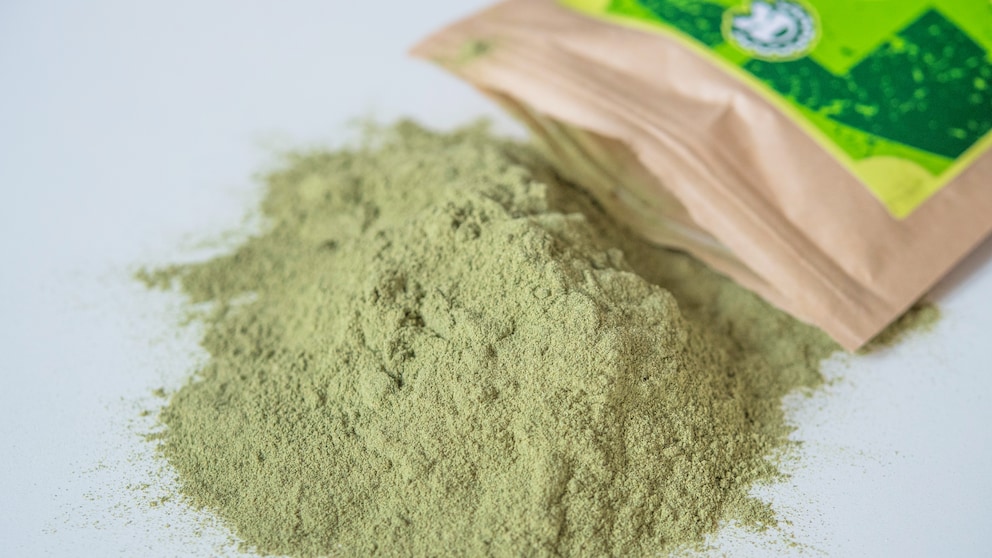
Vegetable powders are now found on many supermarket shelves. Using the powders seems super practical: Mix one or two tablespoons into food or a drink–and you’ve got your daily vegetable intake. However, Julia Zichner, a certified nutritionist from Radeburg, is not a fan of these trendy “greens.” In an interview, the nutrition expert explains her reservations about these dietary supplements. How healthy are vegetable powders?
Enjoyment and Feeling of Fullness Fall by the Wayside
You view vegetable powders critically and say you wouldn’t spend “a cent” on them. Why?
Julia Zichner: “One aspect is the topic of eating and enjoyment, the other is volume and satiety. When I eat vegetables in their normal form, I have a certain amount that ends up in my stomach and makes me feel full. And this feeling of fullness is achieved by vegetables, even though they have comparatively little energy. In this respect, eating vegetables is also a good basis for maintaining one’s desired weight.
Vegetable powders or tablets do not make you feel full, and there is no moment of enjoyment. Additionally, unlike regular vegetables, the powders and tablets contain hardly any fiber, which is important for gut health. And: One should consider the role model effect for children. If adults swallow vegetables in powder form, how are children supposed to learn that they should eat vegetables?”
Also interesting: Hyped Supplement “Athletic Greens”–Nutritionist’s Verdict

One-Pot Recipes in the Air Fryer: Healthy, Simple, and All in One Bowl!

In the Air Fryer: 3 Salmon Recipes Packed with Extra Protein for Muscle Power
How Healthy Are Vegetable Powders?
Can the powders at least provide the vitamins and minerals contained in the original vegetables?
“Yes, to some extent. Minerals are not destroyed by the heating and drying process during production. However, vitamins break down during heating and storage. In powder made from 100 grams of fresh broccoli, there will be fewer vitamins than in 100 grams of fresh broccoli–unless they were artificially added.
What can hardly be represented in powders and tablets is the interaction of vitamins, minerals, and secondary plant compounds. Not everything in this area has been researched yet. But it is known, for example, that vitamins are more effective in the body when combined with secondary plant compounds.”
Also interesting: Are Vitamins Destroyed by Blenders?
How to Get Enough Vegetables Without Powders
It’s commonly advised to eat five servings of fruits and vegetables a day. Especially with vegetables, it’s often not easy to stick to that. Do you have tips on how to reach the recommended amount?
“First, I would look at how much I already consume in a day. Many underestimate this because they have no sense of how much something weighs. Go ahead and put a large tomato on the scale. You’ll be surprised.
Also interesting: Eating 2 Servings of Fruit and 3 Servings of Vegetables Daily May Reduce Mortality
On average, it is recommended to consume 650 grams of fruits and vegetables a day. Especially in the fall, vegetable stews and soups are a great way to increase your intake. The fact is, of course, that nutrients are lost through cooking, but this is accounted for–the recommendations are calculated with a buffer. The larger portion should be vegetables–400 grams daily is recommended by the German Nutrition Society. In general, it’s always advisable to have a colorful mix of cooked and raw vegetables in your diet.”
With material from dpa