

September 27, 2025, 5:45 am | Read time: 4 minutes
In summer, it’s often a matter of appearance, but even with closed shoes, calluses on the feet are an issue. Some find them uncomfortable or even painful. That’s why they remove the bothersome calluses. What you should consider when doing so and what purpose calluses actually serve, you can find out here.
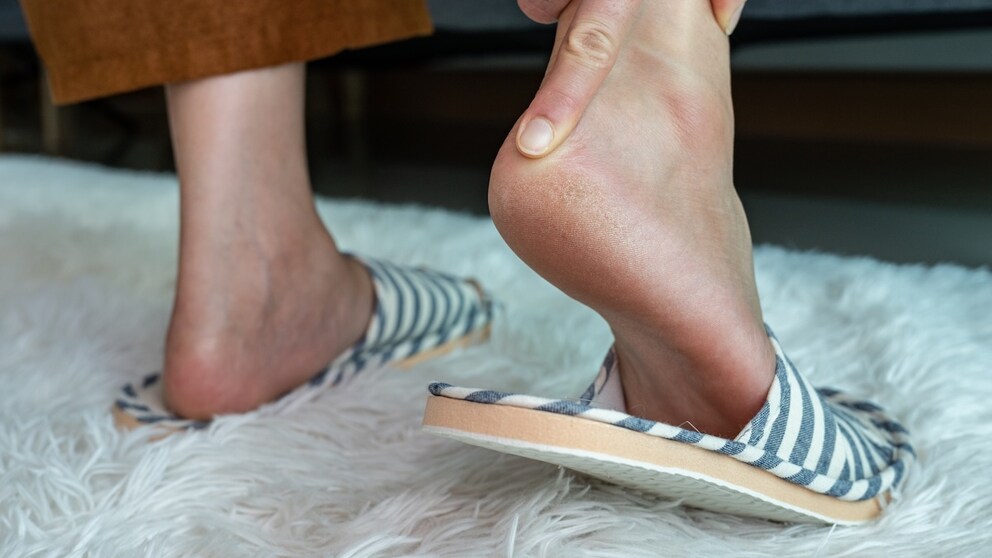
Stratum corneum, as medicine calls the outermost layer of the epidermis, forms all over the human body, even on the eyelids. On more stressed body parts such as the heels, balls of the feet, elbows, and for those who work with their hands, on the fingers, calluses are particularly pronounced. Here, they form a kind of protective layer that shields the underlying areas from injuries and drying out.
Do You Need Calluses on Your Feet?
Munich dermatologist Dr. Timm Golüke explains that a certain amount of callus is important–“naturally within an aesthetically acceptable range.” Meaning: If calluses are removed too generously, the skin on the foot is left unprotected. This makes it more sensitive to pressure and friction, thus more prone to blisters and the like. Those who aggressively use a foot file on calluses might scrape down to the flesh and risk injuries.
In 2019, an interesting study was published that examined the usefulness of calluses. The “dpa” reported on it. According to the international study, calluses on the feet are more useful than thought: They protect the feet when walking barefoot without reducing the sensitivity of the soles. The study examined people in Kenya and the U.S., showing that barefoot walkers have significantly thicker calluses but still perceive stimuli just as well as people with thinner calluses. Unlike calluses, shoe soles–especially heavily cushioned ones–change the load distribution when walking and can even affect joints and the skeleton in the long term.1
Is More Callus Better?
No. Too much is not only unsightly but can also be painful. Uncomfortable pressure points and corns are nothing more than callused skin areas that are supposed to protect more sensitive foot tissue from repeated friction, triggered, for example, by uncomfortable shoes. Extremely thick calluses can even crack under stress. “If calluses remain extremely stubborn and do not go away despite intensive treatment, it could be a fungus,” warned expert Golüke. In that case, a visit to a dermatologist is recommended.
How Much Callus Is Healthy?
Dry, callused skin on the feet is not necessary–this is the aesthetic and medical recommendation from Dr. Golüke. “It is sufficient if the skin in heavily stressed areas has a certain roughness.” So feel free to regularly but gently tackle calluses and don’t worry that this will promote faster regrowth. That’s a myth, assures Dr. Golüke. “The skin doesn’t think. How quickly calluses return depends, among other things, on stress,” the doctor assures.

Corn – Causes, Symptoms and Treatment

Recognizing, Treating, and Preventing Athlete’s Foot
Tips for Properly Removing Calluses
Start with a Softening Foot Bath
Before removing calluses, a foot bath is recommended: It softens the calluses and makes them easier to remove. Simply mix some apple cider vinegar or lemon juice with lukewarm water and soak your feet for 20 minutes.
Gently Remove Calluses with a Pumice Stone
Afterward, it’s best to use a gentle pumice stone, a special file, or an electric remover, ensuring the skin always feels smooth. Particularly gentle: callus scrubs with pumice and salt particles. It’s best to avoid planes and rasps with sharp blades, as the risk of injury is too high!
Never Cut Away Calluses
In general, you should not cut away bothersome calluses. This can lead to injuries. Also, be careful not to remove too much callus. Calluses form especially on heavily stressed areas of the feet–and protect the deeper tissue.
Remove Calluses with Anti-Callus Socks
For several years, anti-callus socks have been all the rage. They are worn over the feet for a few minutes. After a few days, the effect begins. The skin and calluses start to peel off gradually, leaving behind soft and smooth feet. But beware: The process can take several days, and the peeling skin may not look very appealing.
Leave Socks on Overnight for Smooth Feet
Depending on how quickly nails grow and calluses form, a pedicure lasts about four weeks. For regular foot care after the evening wash, you can also rub them with a foot cream or balm. While a foot cream is usually a water-based emulsion and absorbs relatively quickly, foot balm is based on a fat base. The balm forms a kind of protective film on the skin but sometimes absorbs slowly.
Special foot creams with urea, salicylic acid, or deer tallow help against rough spots. Afterward, it’s best to elevate your feet or wear socks overnight after applying the cream so that the balm stays on the skin longer–and can fully work its magic.