

May 8, 2026, 8:07 am | Read time: 5 minutes
Is it worth buying bottled water, or is tap water just as good or even healthier? Are some water brands actually better than others, or does it not matter which one ends up in the shopping cart? FITBOOK has investigated these questions and explains what you should pay attention to when buying water.
What Makes a Good Mineral Water?
Tap water or bottled water? For many, it’s a matter of taste. Others are convinced that one is healthier than the other. To answer this question, several important aspects need to be considered.
Basically, three criteria can be distinguished: taste, mineral content, and potential contamination by pollutants or heavy metals. Taste is subjective, of course. FITBOOK limits itself to the general information that a higher mineral content usually leads to a stronger taste.
One might assume that all types of water should have a high mineral content. After all, the word “mineral” is in the name. However, this is not necessarily the case. Since an EU reform in 1980, mineral water no longer has to have a minimum mineral content. As a result, there are significant differences in nutrient content between different products.
Pay Attention to These Nutrients
Few people look at the nutritional table on water bottles. And those who do often find complicated-sounding chemical substances whose meaning and concentration many cannot assess. However, the topic is not that complicated if you know what to look for. Not all ingredients are equally important.
Overall, the mineral concentration of good water should be at least 500 milligrams per liter. It’s also worth taking a closer look at the calcium and magnesium content. These minerals can be well absorbed through water. However, the amounts contained can vary significantly depending on the brand.
Magnesium
Magnesium fulfills numerous important functions in the body and is involved in more than 300 processes. Therefore, an adequate intake is crucial. Depending on age and gender, the daily requirement is between 300 and 400 milligrams. Choosing the right water can help cover part of this amount. Water is considered magnesium-rich if it contains at least 50 milligrams per liter.
Discount store water brands often perform worse in this regard, usually containing less than ten milligrams of magnesium per liter. More expensive mineral waters from traditional springs often have higher values.
Calcium
Calcium is primarily known for its importance to bone health, but it also plays a crucial role in muscle and nerve function and blood clotting. In Germany, the recommended daily intake is 1,000 milligrams for adults and about 1,200 milligrams for growing adolescents. The main source of calcium is usually dairy products like milk, cheese, or yogurt. For people who avoid these, whether for health or ethical reasons, calcium-rich mineral water can be a good alternative.
Incidentally, tap water often contains similar amounts of magnesium and calcium as many discount store mineral waters.
Sodium
Sodium is a component of table salt and can affect blood pressure. Therefore, people with high blood pressure are often recommended to choose water with a low sodium content. In this case, a concentration of less than 200 milligrams per liter should be observed. This is the case with most conventional brands.
Other ingredients like chloride, bicarbonate, or sulfate are less important, as they are usually consumed in sufficient quantities through the diet.

When Does Sweating Become Dangerous?

3 Supplements You Can Make at Home
Is Tap Water a Healthier Alternative to Bottled Water?
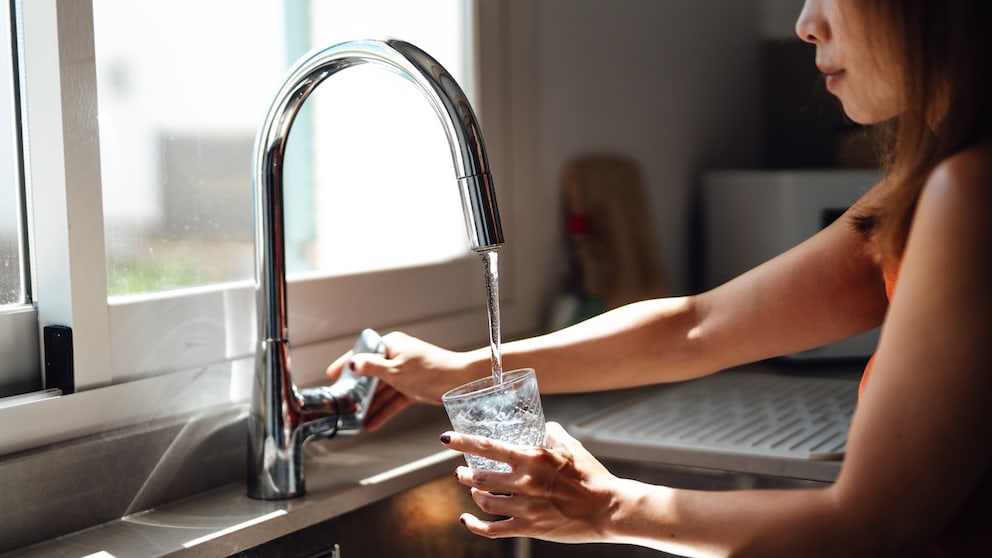
In hardly any other country are the quality controls for drinking water as strict as in Germany. The Federal Office of Consumer Protection and Food Safety (BVL) also emphasizes that tap water in Germany is subject to strict controls and can generally be consumed without concern.1 Clear limits apply to more than 40 different substances, which must not be exceeded. These include nitrate and heavy metals like arsenic or lead. Certain types of bacteria are also regularly checked. However, tap water is not routinely tested for drug residues, hormones, and viruses. Nevertheless, it is considered safe for health, as these substances, if present at all, occur only in very low concentrations.
However, tap water should not be consumed in large quantities everywhere without concern. Quality assurance only extends to the house connection and not to the faucet in the apartment. This is where a risk can exist. Especially in very old buildings, the water pipes may still be made of lead or copper. These metals can leach into the water and be absorbed by the body. This can be particularly problematic for unborn children, as well as for babies and young children.
Suitable drinking water filters can provide a solution. Those who want to be completely sure can also take a water sample at home and have it professionally tested in a lab.
Tap Water or Bottled Water–Which Is Healthier?
The strenuous task of carrying water crates is not really worth it, at least not if mineral concentration is the most important selection criterion. While there are mineral waters that are particularly rich in calcium or magnesium, these are rarely found in discount stores. However, this does not mean that bottled mineral water is generally worse. It is just not healthier than tap water in many cases.
This conclusion applies at least when comparing average bottled water from discount stores with tap water, assuming the latter does not have elevated heavy metal contamination. In terms of environmental protection, however, there is a clear winner. The Federal Environment Agency states2 that drinking tap water causes less than one percent of the environmental impact of bottled water.