


October 23, 2026, 11:44 am | Read time: 5 minutes
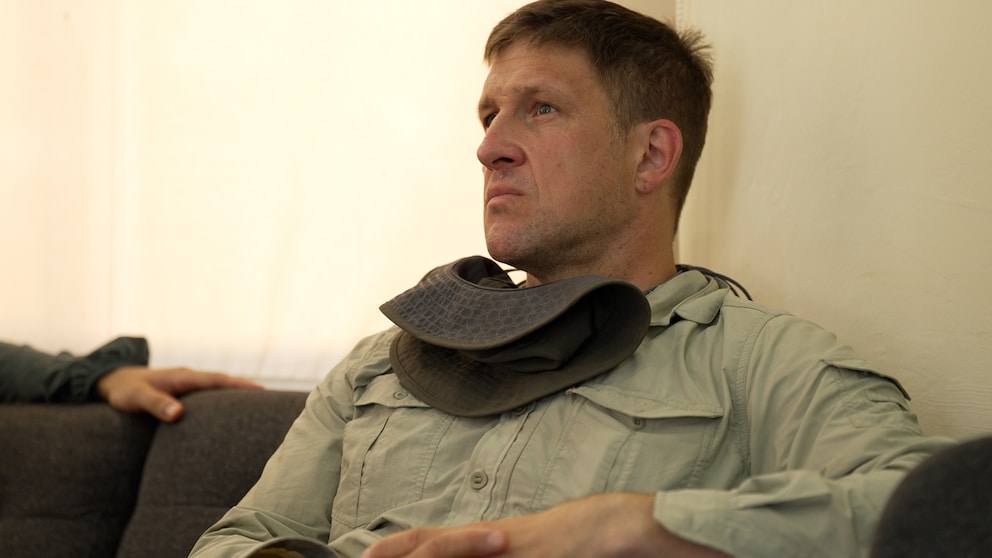
What happens when a Type 1 diabetic suddenly finds themselves alone and doesn’t know when they’ll next get something to eat? This is exactly the question Matthias Steiner wanted to explore on the survival reality show “7 vs. Wild.” For the former weightlifter and 2008 Olympic champion, participation came with special health risks. Both severe hypoglycemia and a lack of insulin can be life-threatening for him. In a conversation with FITBOOK Editor-in-Chief Nuno Alves, Steiner explains why he still agreed to participate and what precautions he had to take for emergencies.
Matthias Steiner Wanted to Test His Limits
For Steiner, participation was more than a physical challenge. He was aware from the start that his condition played a special role: “My participation was associated with special risks due to my diabetes. But that was also a reason why I agreed. I wanted this boundary experience.”
Finding food was a particular concern for him: “I wanted to find out if I could manage with this autoimmune disease in an area where I don’t know beforehand if I’ll find something to eat–and if so, whether this food contains carbohydrates at all.”
What Happens in the Body with Type 1 Diabetes?
Type 1 diabetes is an autoimmune disease in which the insulin-producing cells of the pancreas are destroyed. As a result, the body no longer produces its own insulin. The hormone normally ensures that sugar from the blood enters the body’s cells and is used there as energy. Those affected must therefore administer insulin themselves and adjust the dosage according to their food intake and physical activity.1
“Severe Hypoglycemia Can Lead to Unconsciousness”
Under the unpredictable conditions of “7 vs. Wild,” the correct insulin dosage became a particular challenge for Steiner. Neither food intake nor physical exertion could be planned in advance.
Steiner explains: “There are two dangers: If too much insulin acts in relation to food and physical exertion, my blood sugar can drop dangerously low. Severe hypoglycemia can lead to unconsciousness and become life-threatening.”
But the opposite could also become a problem. “I can’t just skip insulin because I’m not eating. In the case of severe insulin deficiency, so-called ketone bodies can accumulate and acidify the blood. This is called ketoacidosis and can also become life-threatening within days.”
Also interesting: Symptoms that indicate Type 1 diabetes
How Matthias Steiner Monitored His Blood Sugar in the Wilderness
In terms of medical care, Steiner had to consider one main thing: Participants were not allowed to keep their smartphones. Therefore, he needed another solution to monitor his glucose levels.
“I had a sensor with me that allowed me to continuously monitor my glucose levels, and several spare sensors in case one failed. Since we had to give up our phones, I had a separate reader without GPS for this. Additionally, I had a device with me that could measure both blood sugar and ketone bodies in the blood to double-check.”
Measuring ketone bodies was another way to detect a possible insulin deficiency. Steiner also had to think about storing his insulin: “And for the insulin, there are special cooling bags.”
Steiner Was Prepared for Emergencies
But what if his blood sugar suddenly dropped sharply despite all precautions? After all, Steiner couldn’t just go to the nearest supermarket or rely on immediate help.
“I had glucose gel with me for hypoglycemia. But–and I really want to emphasize this–only for emergencies. This was also agreed upon with the production. When you’re alone and it can take 30 or 40 minutes for help to arrive in an emergency, you have to be able to counteract it yourself.”
There was also an emergency regulation for all participants. They could request help via a red button and were to be rescued as quickly as possible.

Matthias Steiner: “This Is the Key Lever for Healthy Aging”

Matthias Steiner: “Soft Drinks and Pasta Put Me Into a Coma Very Quickly”
Little Time for Physical Preparation
In addition to medical planning, Steiner also had to physically prepare for the adventure. He focused on as practical a preparation as possible: “Unfortunately, I didn’t have much time to prepare extensively. Luckily, I have a good basic physical fitness. The few days I had left, I used for longer hikes–with long pants, a long-sleeved shirt, and hiking boots.”
Steiner also wanted to find out how his body reacted to unfamiliar weather conditions: “For this, I spent two days in the mountains. We had 35 degrees Celsius in the shade here in the summer, and I wanted to see how my body reacted to the strain in the heat.”
But physical fitness alone wasn’t enough. Steiner had never been in the wilderness before and had to learn how to make a fire and build a shelter. He sought support from outdoor experts. Since he didn’t know what materials would be available on-site, he could only practice to a limited extent.
“At some point, I just had to trust that I was physically fit enough. How I would manage the rest would be revealed on-site.”
How the Olympic Champion Experienced the Wilderness
The true challenge of the environment only became apparent during filming. Steiner clarifies: “7 vs. Wild is definitely not a fake format. You are truly completely on your own.” The terrain particularly affected his equipment: “And I can reveal this much: The region is extreme. The ground is so sharp-edged that the soles of my brand-new trekking shoes were completely cut through in no time.” He still views his participation positively: “It was definitely an experience I wouldn’t want to miss.”