

June 20, 2025, 9:01 am | Read time: 3 minutes
When bedtime becomes a nightly struggle, many parents turn to unusual methods–including melatonin gummies. What initially seems like a harmless aid reveals itself upon closer inspection to be a risky sleep aid. “Stiftung Warentest” is now sounding the alarm.
“Stiftung Warentest” has examined four melatonin products for children. The verdict is clear–all products are critically evaluated, particularly due to potential side effects, incorrect dosages, and lack of safety mechanisms.
Follow the FITBOOK channel on WhatsApp now!
Overview
“Stiftung Warentest” Warns Against Products
Melatonin is a hormone that regulates the day-night rhythm. Some dietary supplements take advantage of this and promise improved sleep–even for children. However, “Stiftung Warentest” explicitly warns against such products in the July 2025 issue of their magazine.
A classic comparison test with grades was not conducted, but the verdict is clear: “The conclusion is the same for all products: We warn against these products,” says the test team.
Child’s Internal Clock Can Be Disrupted
The testers point out that healthy children produce enough melatonin at night. Taking the hormone additionally at bedtime can affect the internal clock–and even “throw it significantly out of sync,” they say.
Known side effects include nightmares, instability while walking, drowsiness, headaches, and elevated blood sugar levels. “Children may not be well-rested the next morning,” warn the testers.
Moreover, there is a lack of reliable knowledge about long-term effects. It is unclear, for example, whether the hormone affects physical development such as growth in height.
Also interesting: Does my child have normal sleep problems or a sleep disorder?
Ingredients Often Inaccurately Labeled
Another issue: The tested products sometimes deviated significantly from the stated values. For instance, a gummy drop was supposed to contain 0.5 milligrams of melatonin according to the packaging–but in one case, 1.15 milligrams were found in the lab.
All products also contained vitamin B6. Two of them exceed the recommended daily maximum of 0.9 milligrams, as advised by the Federal Institute for Risk Assessment (BfR). A consistently high intake can lead to nerve damage.

Do Melatonin Sprays or Tablets Really Help You Fall Asleep?

Which Children’s Desserts From the Supermarket Are OK?
Gummy Look Tempts Snacking
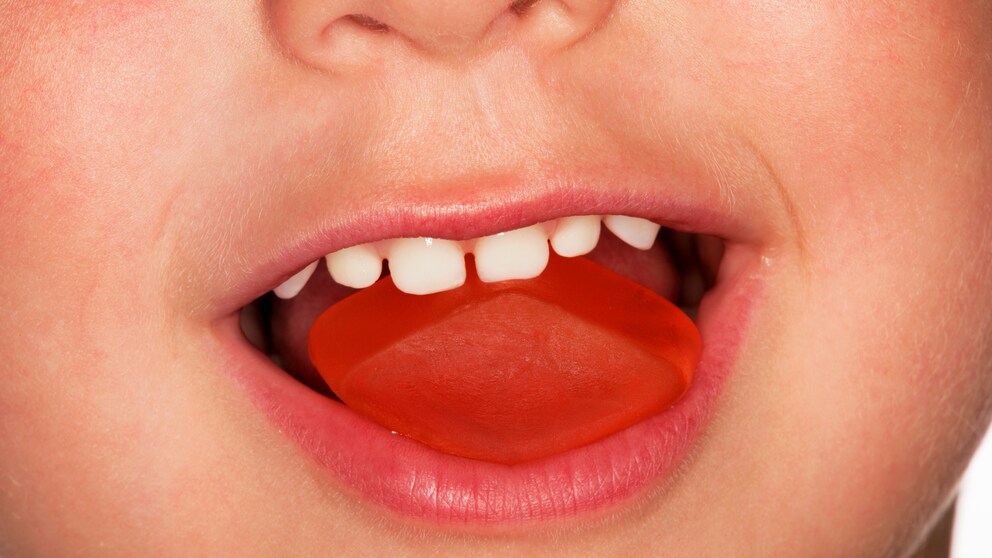
The design of the products is also problematic. Visually, they resemble regular candies, which can be dangerous for children–especially if they consume multiple drops unsupervised. Additionally, two of the four tested packages were not childproof.
Sleep Disorders in Children–What a Psychologist Advises Parents
Sleep disorders in children should be taken seriously and professionally addressed, such as by pediatricians, family counseling centers, or social pediatric centers–especially if the child takes more than 20 minutes to fall asleep several times a week.
However, small adjustments in daily life often help. Angelika Schlarb, a psychologist at the University of Bielefeld, advises in the magazine:
- Establish bedtime rituals, such as reading together.
- Have daily conversations not in bed, but during dinner.
- Position the bed so that the headboard does not face the door. “Only then do people of all ages feel secure,” says Schlarb.
*With material from dpa