

May 19, 2022, 3:09 pm | Read time: 2 minutes
Sun protection is especially important for little ones. The good news for parents: Most sunscreens for children do not contain concerning UV filters. However, some do.
Well-applied, well-protected: Children’s skin is particularly sensitive to the sun’s UV radiation. The magazine “Ökotest” examined a total of 21 children’s sunscreens, focusing on the UV filters in the products.
Overview
Better “Ökotest” Ratings for Children’s Sunscreens Than Two Years Ago
Overall, the sunscreens performed better than two years ago, according to the testers. Two-thirds of the products received ratings of “good” or “very good” (issue 6/2022).
The UV filters in the sunscreens were a particular focus for the Ökotest testers. They recommend children’s sunscreens with chemical UV filters or the mineral filters titanium dioxide and zinc oxide.
Also interesting: What should I consider regarding UVA and UVB protection in sunscreen?

The Right SPF for Kids and the Best Sunscreens

Good Sun Protection for Children’s Eyes: What Parents Need to Know
Difference Between Chemical and Mineral UV Filters
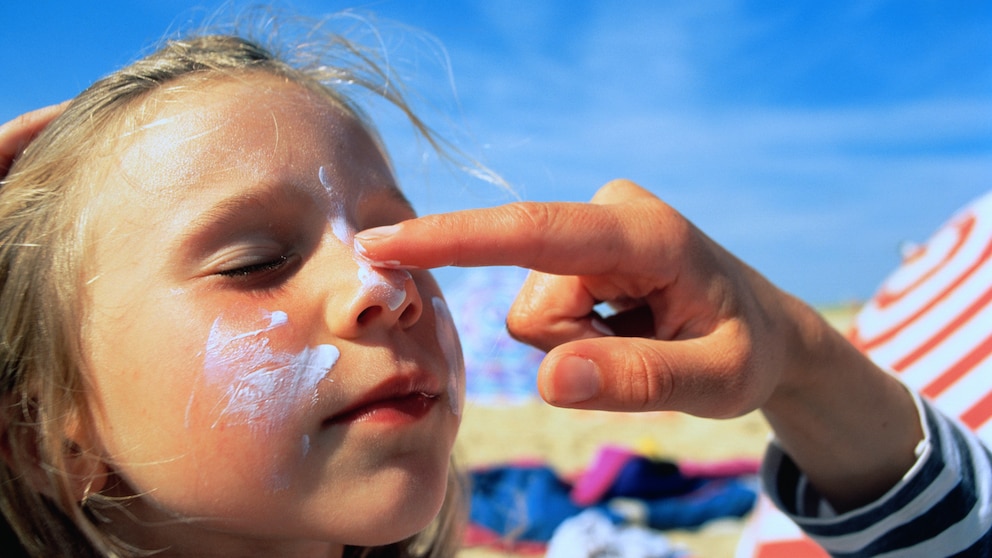
The difference between chemical and mineral UV filters often becomes apparent when applying. Mineral filters are harder to spread on the skin, leading to the so-called “whitening effect.” However, this phenomenon can be beneficial for children, according to the Ökotest testers. It allows parents to see if they might have missed the child’s nose or a cheek when applying sunscreen.
Also interesting: The right sun protection factor for children and the best sunscreens
However, there are also UV filters considered concerning. These include:
- Octocrylene
- Homosalate
Both may have hormonal effects. Four of the tested children’s sunscreens contained these UV filters, resulting in point deductions from “Ökotest.”
Also interesting: Dermatologist offers tips for proper sun protection
Ökotest Advises Against These Children’s Sunscreens
Of a total of five products, Ökotest experts advise against them due to concerning UV filters or ingredients such as benzophenones, paraffins, or microplastics. Three children’s sunscreens were rated “poor” or “inadequate”:
- Eucerin Sensitive Protect Kids Sun Spray SPF 50+ (poor)
- La Roche-Posay Anthelios Dermo-Pediatrics 50+ Lotion (poor)
- Rossmann’s Sunozon Kids Sun Milk 50+ (inadequate)
Do you still have sunscreen left from last year? FITBOOK explains here why you should not use it anymore.
With material from dpa