


November 24, 2021, 2:27 pm | Read time: 4 minutes
While parents are often relieved when their children are in bed at night, the kids, on the other hand, bargain for every extra minute they can stay up. Researchers have now outlined in a new study how important sufficient sleep is for children. According to the study, a lack of sleep can even have dramatic consequences for their brains.
When it’s time to say “Off to bed, kids!” in the evening, it can certainly cause some discontent in families. After all, the kids often have no desire to go to bed. Streaming services and cellphones also often make it harder to get to sleep. However, scientists fully support parents who are concerned about ensuring their children get enough sleep. Sleep is important at any age. Those who are tired and exhausted cannot concentrate well, are more irritable, and have slower reactions. But according to a new study, insufficient sleep can have even more dramatic effects on children’s brains–and possibly even cause long-term damage.
Overview
Study on the Sleep of 5,566 Children
As part of the research project, scientists from Boston Children’s Hospital examined the sleep and brains of 5,566 children aged nine to eleven. In the first step, the parents of the participating children completed an extensive questionnaire about their children’s sleep and sleep problems. They were asked about issues such as difficulty falling asleep, frequent waking, trouble falling back asleep and/or waking up, snoring, breathing problems, and nightmares.
Also interesting: Does my child have normal sleep problems or a sleep disorder?
In addition, the research team collected brain data from the children in the second step of the study using a procedure called functional magnetic resonance imaging (fMRI). This was done while the boys and girls were at rest. Based on these data, the researchers conducted a computer analysis of the various brain regions.
Too Little Sleep Affects Children’s Brains
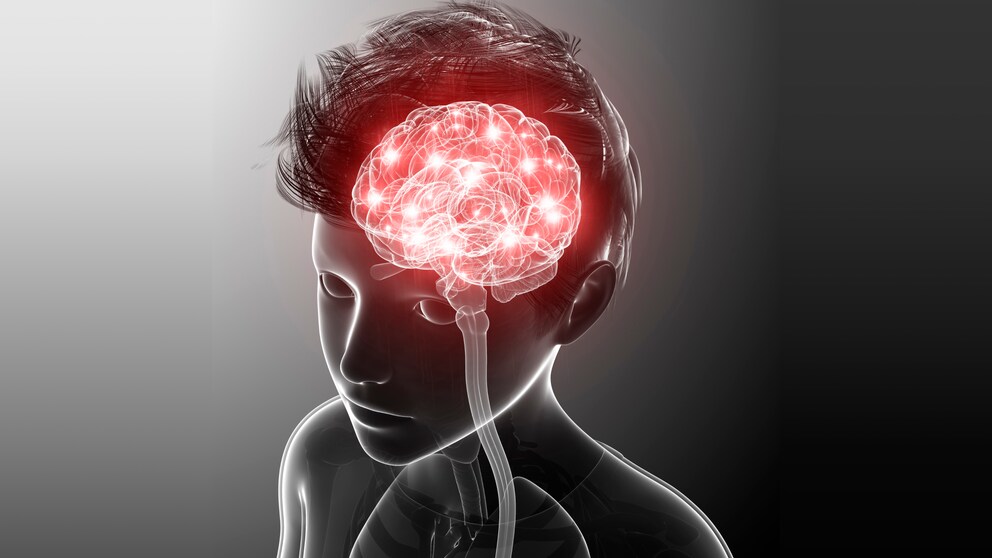
The scientists found that insufficient sleep actually affected the brains of the children studied. In particular, long times to fall asleep, frequent waking during the night, short total sleep duration, and sleep-related breathing disorders showed strong effects in the study. They led to less efficient, less flexible, and less resilient brain networks. The scientists also observed “abnormal” network changes in various brain regions of poor sleepers. These included several cortical areas, the thalamus, the basal ganglia, the hippocampus, and the cerebellum.
The cortical brain areas (cerebral cortex) control motor and sensory functions. The thalamus is responsible for sensory impressions, while the basal ganglia and cerebellum are important for movement sequences. The hippocampus is the interface between short- and long-term memory. In other words, too little or poor sleep seems to have a comprehensive and dramatic impact on the child’s brain.
Also interesting: Students in Germany get too little sleep

How Sugar in Infancy Could Affect the Brain Decades Later

Your Child Spends Hours in Front of the TV? Here’s What You Need to Know
Anomalies in a Critical Time of Brain Development
“The network anomalies we identified may potentially lead to deficits in various cognitive processes, including attention, reward, emotional regulation, memory, and the ability to plan, coordinate, and control actions and behaviors,” explained study author Dr. Caterina Stamoulis in a press release.
This is particularly alarming because children’s brains are in a critical developmental phase. “The circuits in children’s brains mature rapidly. Especially those that support higher-level thinking processes, such as decision-making, problem-solving, and the ability to process and integrate information from the outside world. We show that insufficient sleep can therefore have enormous impacts on the cognitive and mental health of individual children and the entire population.”
Sources
- Brooks, S.J., Katz, E.S., Stamoulis, C. (2021). Shorter Duration and Lower Quality Sleep Have Widespread Detrimental Effects on Developing Functional Brain Networks in Early Adolescence. Cerebral Cortex Communications
- Boston Children’s Hospital (2021). Inadequate sleep is bad for preteens’ brains. EurekAlert!