


June 18, 2025, 2:23 am | Read time: 5 minutes
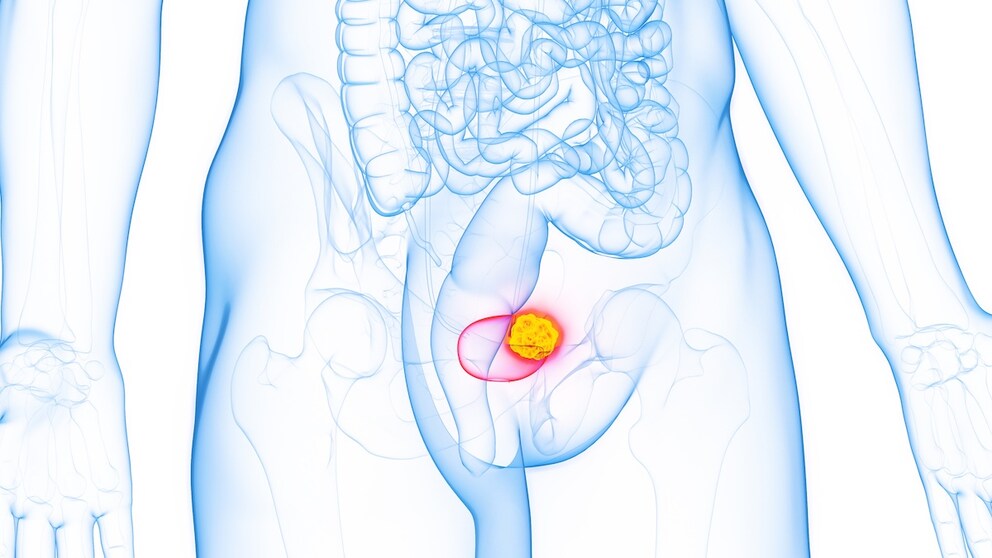
In bladder cancer, cancer cells invade the bladder. The medical term for this is bladder carcinoma. FITBOOK explains the signs that indicate the disease, who is commonly affected, and what potential treatments look like.
Bladder cancer primarily affects older individuals. At the time of diagnosis, men are on average 73 years old, and women are 77 years old.1 Men are more frequently affected than women: Annually, around 31,000 people in Germany are diagnosed with bladder cancer, about 23,000 of whom are men.2 Like many cancers, bladder cancer does not present with clear symptoms, especially in the early stages. However, there are certain signs that may suggest the possibility of the disease.
Overview
What Symptoms Indicate Bladder Cancer?
Early Stage
In the early stage, the cancer causes few symptoms. However, symptoms that may suggest bladder cancer include:
- Reddish-brown discoloration of the urine (blood in the urine)
- Pain during urination
- Increased urge to urinate, with only small amounts of urine being passed
- and bladder cramps
Advanced Disease
If bladder cancer has progressed further, additional symptoms may occur, such as:
- Pain in the flanks
- Enlarged lymph nodes
- Vein or lymph congestion
- Bone pain
Since the symptoms are similar to those of a bladder infection or other urinary tract and kidney diseases, these must first be ruled out during diagnosis.3
Also of interest: These Symptoms Indicate Damaged Kidneys
What Are the Causes of Bladder Cancer?
The exact cause of bladder cancer is not yet fully understood. One of the most significant risk factors is smoking–both active and passive. Chronic bladder inflammation (cystitis) can also increase the risk of developing the disease. Additionally, experts believe that certain chemical substances (including those in medications) and numerous toxins, which people may encounter professionally, promote the development of bladder cancer because they are excreted through the urinary tract.
Also of interest: Tips to Avoid a Painful Bladder Infection
Risk Factors
In addition to the previously mentioned factors that can increase the risk of bladder cancer, the literature cites other risk factors:
- Older age
- Family history of bladder cancer
- Abuse of painkillers
- Previous chemotherapy treatments
- Previous radiation therapy in the pelvic area
Prevention of Bladder Cancer
Smoking is particularly noteworthy here. It is considered the most significant risk factor for the development of the disease and is associated with a more severe course if the disease is already present.
Therefore, the best way to prevent bladder cancer is to never start smoking or to quit smoking as early as possible.
Also of interest: Why Quitting Smoking Is Always Worth It
What Stages Are Distinguished in Bladder Cancer?
In the early stage, cancer cells affect the mucous membrane. This is referred to as superficial bladder carcinoma. It is called superficial because the cancer has not yet penetrated deeper into the muscle tissue. This is the case when a person is already in a later stage. If the cancer has already invaded the muscle layer, it is referred to as muscle-invasive carcinoma.
How Is a Diagnosis Made?
Since bladder cancer can present with diffuse symptoms, various medical examinations are conducted by a doctor if cancer is suspected:
- Physical examination
- Urine test (to check for blood and perform a cell analysis)
- Ultrasound examination of the bladder and kidneys
- Endoscopy of the urethra and bladder
If the suspicion of bladder cancer is confirmed, additional tests are conducted, such as tissue examinations (biopsy), to determine the stage of the disease.
Also of interest: Do You Possibly Suffer from an Overactive Bladder? Causes and Treatment

Causes, Symptoms and Treatment of Cervical Cancer

Liver Cancer–Early Signs, Causes, and Treatment
How Is Bladder Cancer Treated?
The treatment is tailored to the stage of the bladder cancer. If the cancer is still in an early stage and confined to the mucous membrane, only the affected tissue is removed. If the muscle layer is also affected, an invasive surgery is necessary to completely remove the carcinoma.
For men, this means the removal of the bladder, prostate, and seminal vesicles. For women, the surgeon removes the bladder, uterus, both ovaries, the fallopian tubes, and part of the vaginal wall. Both men and women require an artificial urinary diversion after the procedure. Alternatively, if the patient refuses surgery or other reasons contraindicate it, radiation therapy can be used. In a late stage of bladder cancer, such as when tumors have already spread, this therapy can also alleviate the patient’s pain.
To prevent a recurrence, chemotherapy is often used, sometimes accompanied by immunotherapy. In any case, regular follow-up examinations are important to quickly detect and control a recurrence.
What Is the Prognosis?
In 75 percent of affected patients, bladder cancer is detected at an early stage and therefore has a good prognosis. The recurrence rate of a tumor depends on the number of tumors, their aggressiveness, and their depth of invasion. The likelihood of the cancer returning within five years is between 50 and 70 percent.4