


April 9, 2026, 1:52 pm | Read time: 6 minutes
Most people see a massage as a reliable escape from stress and deep relaxation. A new study from the University of Konstanz suggests: Drinking the wrong thing beforehand can negate the health benefits of genuine physical recovery.
Study: Sugar Before Massage Apparently Prevents Maximum Physical Regeneration
Researchers at the University of Konstanz examined how a soft drink—and the sugar it contains—affects relaxation processes during a massage. They found: You can be physically “wired” and still feel the calming effect of a massage. However, if you’re seeking maximum physical regeneration and protection for your cardiovascular system, you should avoid sugar before a massage.
What is already known: Sugar influences how the body responds to stress. But what sugar does to the body when you deliberately relax—such as during a massage—was hardly researched until now. A team led by psychologist Maria Meier (lead author of the study) and Jens C. Pruessner, professor of neuropsychology, addresses this research gap with their study published in the “International Journal of Psychophysiology.”1
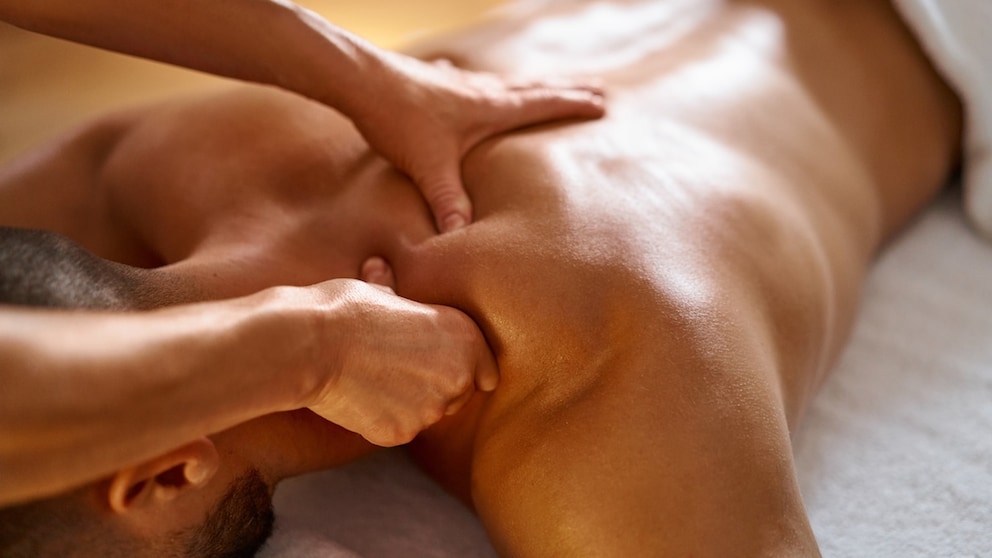
15-Minute Neck and Shoulder Massage for Science
To answer the question, they studied 94 healthy young adults, averaging about 23 years old. Participants had to fast for four hours before the appointment to ensure comparable baseline blood sugar levels. In the lab, they were randomly assigned to groups: One group drank a solution with 75 grams of glucose, while the control group received water.
To consume 75 grams of glucose through soft drinks, you would need to drink about 650 ml to over 750 ml, depending on the beverage. In whole milk chocolate, this corresponds to about 130 to 150 grams.
After a 15-minute waiting period for the sugar to enter the bloodstream, the actual relaxation phase followed: Half received a ten-minute neck and shoulder massage, while the other half rested sitting down.
Also interesting: What 14 days of sauna did to my body
It’s About These Two Opponents of the Autonomic Nervous System
The researchers monitored the participants’ heart function the entire time using ECG and impedance cardiography. This precise measurement allowed them to independently capture the activity of the two main players of the autonomic nervous system:
- The activity of the parasympathetic nervous system, which ensures rest
- and the activity of the sympathetic nervous system, which primes the body for performance (“Fight-or-Flight”)
To determine whether the combination of sugar and relaxation also affects mental endurance, all participants completed a concentration test at the end.
Results: Even with Sugar, You Are Put into a State of Relaxation …
On one hand, participants were able to mentally relax well—regardless of whether they drank sugar or water. In both groups, people felt more relaxed during the massage. Their bodies also actually switched to rest mode. The “rest nerve” (parasympathetic nervous system) was normally activated by the massage, and the sugar did not disrupt this part of relaxation.
… But the Stress System Stays On!
However, with sugar, the participants’ bodies remained internally on alert during the massage. While those who drank water experienced a reduction in the stress system (sympathetic nervous system) during the massage—researchers refer to this as “sympathetic withdrawal”—the consumed sugar seemed to actively block this calming effect. For participants who consumed sugar before the massage, the stress system remained active. Lead author Maria Meier: “We conclude from our test results that sugar impairs the body’s ability to relax.”2
Also interesting: What happens in the body after drinking a can of cola
Why the Feeling of Relaxation Isn’t Enough
One might argue: Does it matter if the perceived relaxation occurs even after sugar? From a medical perspective, the absence of a physical response is not trivial. Researchers emphasize that purely mental relaxation does not reflect the full physiological effect of a treatment.
They find this problematic for several reasons:
- Disrupted regulation of this system is repeatedly associated with physical and mental illnesses and an increased risk of cardiovascular diseases
- The body’s inability to shut down the stress system after a strain is considered a robust risk factor for mortality
Study Provides Another Exciting Result
The study yielded another, almost paradoxical result: While sugar blocked full physical rest, it seemed to simultaneously enhance mental performance. Participants who drank glucose performed significantly better and worked more precisely in the subsequent concentration test than those in the water group.
Scientifically, this is exciting because it revises an old view of our nervous system. For a long time, it was believed that the sympathetic (stress) and parasympathetic (rest) systems function like a seesaw—when one system is active, the other must take a break. However, the Konstanz study provides impressive evidence for the “autonomic space” model: Both branches can be active simultaneously. You can be physically “wired” and still feel the calming effect of a massage on the rest nerve.
How to Strengthen the Vagus Nerve to Protect the Heart

Exercises for Relaxation and Unwinding
Researchers: Pay Attention to Blood Sugar Before Relaxation Measures
Regarding the effect of the massage, the researchers conclude: “The results suggest that relaxation treatments may trigger stronger physiological relaxation responses when blood sugar is in the lower normal range.” In other words, if you want to achieve both mental and physical calm during a massage, don’t ruin it with a soft drink beforehand.
One of Several Weaknesses of the Study: Participants Knew They Had Sugar in Their System
As exciting as the results are, they have limitations: The participants were all young and healthy—whether the “sugar effect” looks the same in older people or those less active remains to be seen in further studies. Additionally, the participants naturally knew they had consumed energy due to the sweet taste. Researchers cannot entirely rule out that mere expectation slightly boosted mental performance.

A Detail I’ll Pay Attention to in the Future
“Interesting: The researchers talk about ‘relaxation treatments’—this opens the field wide for various non-stressful contexts. The body comes to rest—but possibly not completely if blood sugar is elevated beforehand. Why not pay attention to this before calm yoga sessions, breathing, or mindfulness exercises? Or even before passive relaxation measures. Water instead of soda and apple spritzer before the sauna! A detail I’ll pay attention to in the future.”