

August 25, 2022, 6:07 pm | Read time: 9 minutes
Finally off work, but can’t relax and unwind? We have tips and exercises to help you relax–they’re easy to do.
Your thoughts are racing, your muscles are tense, and you just can’t seem to find peace. From journaling to special breathing techniques, there are several strategies to counteract constant stress. Neurocentric training can also provide relief. Specific exercises help you relax and unwind.
Overview
Why Is It So Hard for Many to Unwind?
Our daily lives are filled with countless tasks, leaving us with racing thoughts, tense muscles, and a struggle to truly relax after work. The constant switch between meetings and projects is the norm at work, and we spend more and more hours sitting in front of a computer. Many find it difficult to truly unwind after work and embrace their downtime, which can lead to increased stress over time. Building an evening routine tailored to your own needs can be helpful.
What Does Stress Mean for the Body?
Stress is understood as increased physical and mental tension that can lead to health damage. This occurs when external stimuli create mental and physical tension. If this state persists, it has long-term and often severe effects on our bodies. Therefore, it’s important to develop an awareness and sense of how to reduce stress.
How Does Stress Manifest?
Stress can manifest through the following factors:
- Difficulty concentrating
- Headaches
- Muscle tension
- Insomnia
- Digestive problems
Stress can also trigger feelings of anxiety, helplessness, anger, or aggression. Cognitively, stress can lead to increased prejudice, disbelief, and concentration difficulties. This can affect behavior, resulting in sleep problems or reduced appetite.
Also of interest: The impact of chronic stress on the immune system
Role and Function of the Nervous System
The human body has two areas of the autonomic or involuntary nervous system that regulate these physiological body processes and contribute to our well-being: the sympathetic nervous system (“stress mode”) and the parasympathetic nervous system (“rest and digest mode”). The sympathetic nervous system is activated when threatening stressors force our bodies to be alert and attentive. The results are increased heart rate and breathing frequency, better blood flow to the skeletal muscles, dilation of the pupils, and reduced digestion.
These are all necessary adjustments to react quickly in a threatening situation. This is evolutionarily conditioned–in the past, humans had to flee from predators in stressful situations, making a quick adaptation of the body to these exceptional situations vital for survival. The parasympathetic nervous system, on the other hand, is responsible for recovery, regeneration, and digestion. It regulates breakdown, rebuilding, and regeneration processes.
These two areas work synergistically together and should be balanced throughout the day. Only when these two areas are balanced can physical performance be accessed, and physical well-being exist. If the body is under constant stress due to uncertainties, financial hardship, or family burdens, the regeneration mode cannot sufficiently counterbalance.
It is therefore necessary to strengthen the regeneration mode (parasympathetic nervous system) while minimizing the stress mode (sympathetic nervous system). Only then can you process all the day’s experiences in the evening and regenerate at night.
Also interesting: Crazy TikTok trick with ice pack is said to improve sleep
What Role Does the Vagus Nerve Play?
The vagus nerve plays a crucial role in reducing stressors and promoting regeneration. It is responsible for transmitting information and regulating nearly all upper abdominal organs up to the middle of the large intestine. The vagus nerve is one of the cranial nerves that originate directly from the brainstem and not from the spinal cord. Simply put, information is relayed directly to the brain with the highest priority.
The vagus nerve controls functions such as breathing and heart rate, as well as gastrointestinal activity. When the vagus nerve is stimulated, meaning activated, breathing and heart rate slow down, and digestion is stimulated. This leads to positive effects on the regeneration mode, improving sleep and the body’s recovery capacity. This enhances well-being, ensures a balanced mood, and even influences positive blood sugar regulation and improved digestion.
Like all brain areas, this one can also be specifically activated through exercises. This makes the processing of information more precise and, consequently, improves physical, mental, and emotional health and balance.
The well-known and fundamental measures already known for stress reduction are a healthy diet and sufficient sleep. Additional regenerative measures help support the body in the necessary recovery and restore balance.
Also interesting: Tense neck – 5 effective exercises

Reduce Stress Instantly With Box Breathing: Here’s How the Technique Works
How to Strengthen the Vagus Nerve to Protect the Heart
How Does Neurocentric Training Work?
The human body is not only highly specialized but also extremely intelligent. Trillions of different cells work in harmony to keep us alive and enable our performance.
Neurocentric training is all about consciously perceiving your body’s processes. It focuses on the dynamic balance between the parasympathetic and sympathetic nervous systems.
https://oembed/fitbook/affiliate/5eaae654ea73934cabb8a51adae8b449f66bf1715f36cd70ad61224b5717d8c5/93d6a906-a170-464b-97d3-c296e9d8cb42/embed
How Can You Reduce Stress Levels and Relax Better?
There are a number of exercises that help relax by activating both the vagus nerve and the insular cortex. You can easily try them at home.
For example, you can specifically train the connection between breathing and heart rate through the body’s own systems. Conscious and deep inhalation through the nose directly calms the heartbeat and thus reduces the stress reaction.
Another tip: The brain loves routines that reduce complexity and create security. Therefore, a calming routine with special exercises can help you relax: from an evening walk to journaling to meditation or reflection with loved ones, you can tailor it to your individual needs. Here are a few examples to try.
Walk
Just ten minutes of an evening walk can help you incorporate more movement into your daily routine. The steady walking relaxes the mind. Looking into the distance, ideally at nature, relaxes the eyes and the shoulder-neck area.
To avoid thinking about the day’s or tomorrow’s tasks, try this breathing exercise during your walk:
- 2 steps inhale
- 2 steps hold breath
- 4 steps exhale
- 2 steps hold breath
Instead of rubbing the areas, you can also tap if that’s more comfortable. Alternatively, you can use circular or stroking movements.
Also interesting: 11 reasons to start your day with a walk
Journal
Take a moment to jot down your thoughts and reflect on the day.
- What went well?
- What didn’t go so well?
- What would you like to do differently tomorrow?
Reflecting on the day helps process experiences. The brain sorts through the day’s impressions and experiences, discards the unimportant, and stores the important. At the same time, you can consciously perceive your own thoughts and emotions. You also begin to structure the next day, providing more predictability and security for the nervous system. By mentally going through the next day, you unconsciously think about possible challenges.
Movement
Find movements that you enjoy. This is not about sports and performance, but about movement. Feeling and being aware of your own body provides the nervous system with information about the body’s condition. The better the nervous system knows whether it is threatened or not, the better it can relax and achieve dynamic balance. You should be able to breathe in and out through your nose in a relaxed manner. It doesn’t matter how you move or what you do. Here are a few examples:
- Playing table tennis in the park
- Beach volleyball
- Badminton
- Dancing
- Ballroom dancing
- Yoga
- Pilates
- Bouldering
- Cycling
- Inline skating
- Walking
- Basketball
- Volleyball
- Capoeira
Breathing
Pay attention during the day and evening to breathe in and out through your nose in a relaxed manner, keeping your mouth closed. If you wake up with a dry mouth or tense jaw, it suggests you are sleeping with your mouth open and your breathing is not ideal. In this case, you can try taping your mouth shut with a strip of kinesiology tape about a finger’s width. It’s also worth trying to release tension from your body and mobilize the diaphragm. A simple exercise is the diaphragm stretch. It not only improves movement, lung ventilation, and oxygen supply but also reduces unnecessary stress cycles and tension throughout the body.

2 Exercise Recommendations for Relaxation
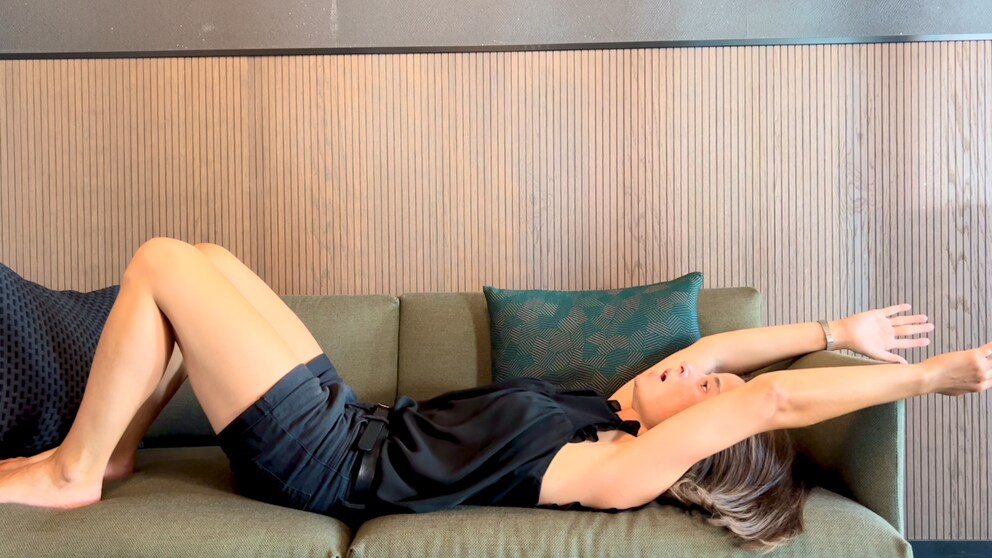
Diaphragm Stretch
Improving your breathing can have positive effects on tension, back pain, and digestive problems. It can also optimize sleep.
All of this can be positively influenced by breathing. Here’s a recommended exercise:
- Pull your pubic bone toward your navel (press your lower back into the surface)
- Inhale deeply through your nose and simultaneously extend your arms backward
- Open your mouth and throat and exhale fully (keep your arms extended back and your spine long)
- Do three repetitions and consciously notice the subsequent relaxation
Also interesting: Massage and breathing techniques that can help with digestive problems
Neuro-Reset
This exercise creates a dynamic balance between tension and relaxation. Sensory stimulation activates internal body awareness and provides the nervous system with a lot of information about where tensions are present.
- Inhale and exhale evenly through your nose. Perform the exercise as intensely as is comfortable.
- Rub your body for ten seconds each, starting with your head and skull.
- Then move on to your face, eyes, nose, mouth, ears, and neck.
- Next, rub your shoulders and neck.
- Then rub your upper arms, elbows, forearms, wrists, and hands. Move on to the chest.
- Finally, rub your thighs, knees, and finally your feet.
If rubbing is uncomfortable, you can also try tapping, or use circular or stroking movements.