


May 11, 2026, 1:22 pm | Read time: 4 minutes
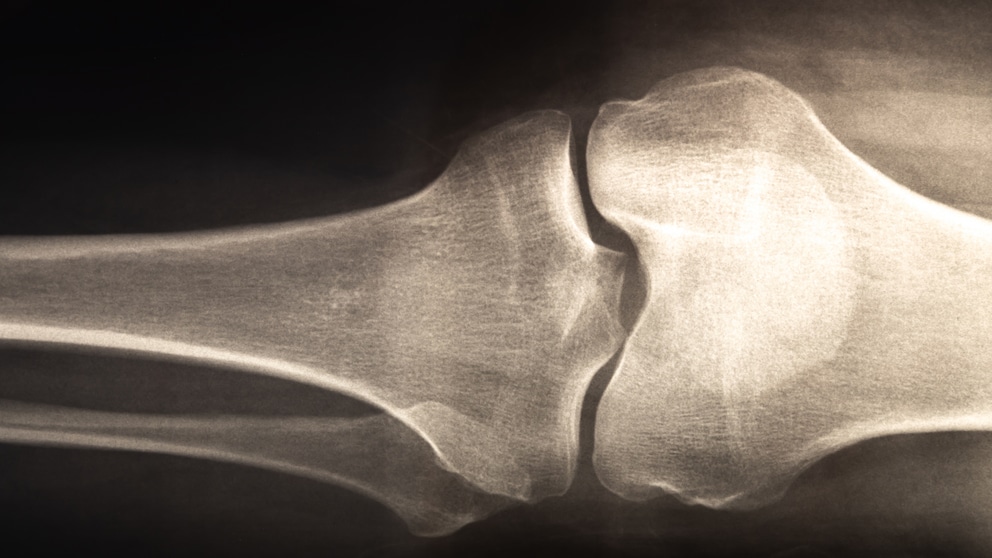
Recent studies show that the skeleton and brain communicate with each other. Thus, bone health has a direct impact on mental health. FITBOOK explains what science knows so far about the so-called bone-brain axis and how we can strengthen it in everyday life.
Depression and osteoporosis (bone loss) often occur together. This primarily affects the older population and presents an increasing clinical challenge. Could bones or the skeleton be much more than just structural support? The search for the bone-brain axis is a relatively new field of research. Yet scientists have already made remarkable discoveries. Depression not only affects mental health but also directly impacts bone health. Conversely, bones send biochemical signals to the brain that can influence mood, stress processing, and inflammation. The good news is that it doesn’t have to come to that.
Bones Are Not a “Dead Framework”
A recent review study from China addresses the current state of knowledge.1 It is based on the following observations: People with depression are more likely to have bone loss. Osteoporosis patients are more likely to suffer from depression. Both conditions share similar biological processes.
- chronic stress
- chronic inflammation
- hormonal disorders
- changes in the nervous system
Numerous animal experiments, genetic analyses, and other studies have revealed that the skeleton and bones have far more functions than just holding “body and soul” together. In fact, they have emerged as a hormonally active, messenger-producing system. The messengers reach the brain through the bloodstream by crossing the blood-brain barrier. This means the brain, hormonal system, immune system, and bone tissue are in constant mutual exchange. Researchers describe this complex communication system as the bone-brain axis.
Bone Health and Mental Health: How Depression Weakens the Skeleton
One of the strongest “bone killers” is stress. During chronic stress and depression, the body produces high amounts of the stress hormone cortisol. Too much cortisol inhibits bone-building cells while promoting bone-resorbing cells. Thus, stress is akin to an attack on bone density. This is confirmed by numerous observations showing that people with depression often have elevated cortisol levels associated with low bone mineral density.
Another mechanism is chronic inflammation. Researchers see it as a crucial “bridge between mental health and the skeleton.” Elevated levels of inflammatory messengers are also associated with depression and bone loss. Particularly detrimental is the behavior often accompanying depression, such as poor diet, sleep problems, lack of exercise, and vitamin D deficiency, which accelerates the vicious cycle.

Women Over 30: Why Strength Training Is Crucial for Hormones and Longevity

Increased Risk of Osteoporosis May Be Detectable in the Eyes
New Insights Bring New Therapeutic Approaches
Two bone substances, in particular, seem enlightening: the bone hormone osteocalcin and the bone protein osteopontin. Both counteract the aforementioned downward spiral of bone loss and depression. Increasing and strengthening their levels could be a possible key to healing. Discussed are sleep and light therapies, brain stimulation, exercise programs, and certain osteoporosis medications. Further studies are needed to determine how effective these measures are for bone health and mental health.
For researchers, these findings represent an important paradigm shift: Mental health and bones should no longer be treated separately. This aligns with a current trend in medicine, which recognizes that our entire biological network affects our well-being, as demonstrated by the “gut-brain connection.”
What Can We Do for Our Bone Health and Mental Health? The Answer Is Surprisingly Simple
There is a surprisingly simple and essentially free way to escape this fate, as another study in 2025 was able to demonstrate: exercise.2 Neither marathon running nor challenging sports is necessary. Even a walk or a bike ride can positively influence the communication between bones and the brain. Exercise apparently increases the release of the bone hormone osteocalcin. This not only strengthens bones but also improves neuroplasticity in the brain and mood. Through another complex interplay of muscle hormones, messengers, anti-inflammatory processes, and other signals, a kind of counter-movement is created that strengthens the health of bones and the brain. In short, moderate endurance and strength training set the necessary upward spiral in motion, weakening the interplay of depression and osteoporosis. As is often the case, the earlier you start, the better. But better late than never.