


January 30, 2026, 12:19 pm | Read time: 7 minutes
Take a powder, dilute it with cold water or tea, and drink it. The miracle cure that is supposed to remedy all ailments is ready. What sounds too good to be true is nothing more than healing clay. It is said to be able to alleviate complaints such as stomach pain, skin impurities, and inflammation. Healing earth was already used in the Middle Ages to combat the plague. Nowadays, it is still a popular household remedy that is used to detoxify the body, among other things.
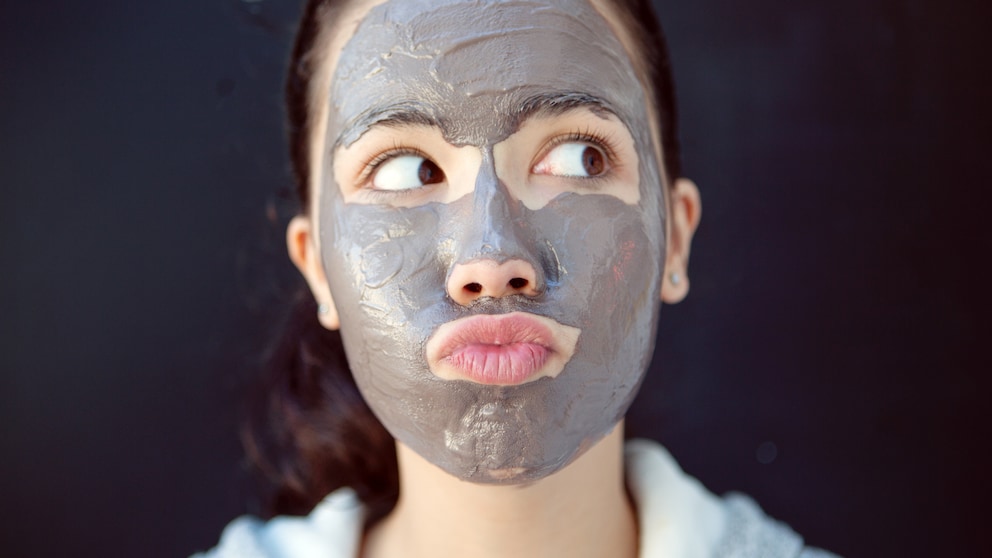
Healing clay is available in various forms. The most commonly known form is the face mask. However, as an approved medicinal product, it may not only be used on the skin. It is also used to alleviate internal bodily ailments. FITBOOK author Julia Freiberger explains when to use healing clay, what effects it has, and what the study situation looks like.
Overview
What Is Healing Clay?
Healing clay is a natural remedy extracted from glacial loess deposits. These sedimentary layers are found in temperate climate zones—i.e., almost everywhere except Antarctica. Depending on its place of origin, healing clay can appear in different colors and have different compositions of ingredients.
With the help of certain processes, the already naturally fine, yellow to grey colored powder is further ground and sieved. The resulting product is then pasteurized (heated to kill germs) and dried. The end product is a gray powder, rich in trace elements and minerals. It is known as a natural remedy or mineral clay because it is produced without chemical additives such as preservatives and colorants.
Where Does It Originally Come From?
The origin of mineral clay dates back to the Ice Age. It can be found in nature both in solid form and as rock dust. As healing earth is extracted from great depths, it is sterile and contains many minerals. As mentioned at the beginning, healing earth was used in the Middle Ages to treat ailments. In ancient times, the Greeks used it to treat acid stomachs, poisoning, wounds, and insect bites, while the Egyptians used it to relieve inflammation and rheumatic complaints.1
Healing Clay Contains the Following Ingredients
The powder mainly contains:
- Trace elements: Fluorine, selenium, copper, and zinc
- Silicic acid, quartz, dolomite, lime, and feldspar
- Minerals: potassium, calcium, iron, sodium, magnesium, and titanium
Due to its high binding capacity and the fact that it can absorb a lot of water, mineral earth is said to “soak up” toxins. The total surface area of the individual powder particles results in an even larger surface area that functions like a “sponge.”
Application of Healing Earth
Mineral clay is often used in the form of a mask for skin problems. You may have already encountered these masks in drugstores. They promise a soothing and antioxidant effect. The powder is also often used for superficial wounds and is applied to the affected areas after it has been thickened with water. Oily skin, eczema, cellulite, and beard lichen can also be treated with it.
Otherwise, its use is limited to heartburn, stomach pain (which is caused by acidity), diarrhea, joint pain, and inflammation.
Internal Use
For internal use, it can be taken mixed with half a glass of water or tea. Alternatively, you can put the healing clay in your mouth without water and simply swallow the healing clay pulp. In this way, it should reach the stomach in a higher concentration. Alternatively, the powder can also be taken in the form of capsules. However, the taste of healing clay is mildly earthy and may not be pleasant for everyone.
External Use
For external use, the powder is thickened with water, and the healing clay paste is applied to the affected areas to be treated.2
What Effects Does Healing Clay Have?
Healing clay is said to have numerous health benefits—both when used internally and externally. The mode of action depends largely on the composition of the ingredients, which can vary depending on their origin.
Neutralization of Stomach Acid and Acid-Base Balance
Healing clay is often used for gastrointestinal complaints such as heartburn, an acidic stomach, or gastrointestinal inflammation. The carbonate salts it contains are said to bind excess stomach acid and bile acids, thereby regulating the acid-base balance.
Cholesterol Reduction and Diarrhea Treatment
In addition, healing clay is said to be able to bind excess cholesterol from food and thus contribute to lowering high cholesterol levels. It is also used as a natural remedy for diarrhea due to its water-binding properties.
Detoxification and Intestinal Health
Thanks to its fine structure, healing clay has the ability to bind harmful substances and remove them from the body. It is said to be able to absorb intestinal toxins, bacteria, fungi, and excess dietary fats, while at the same time helping to stabilize the intestinal flora, thanks to the minerals and amino acids it contains.3
Skin Cleansing and Anti-Inflammation
Healing clay can be applied externally in the form of masks, wraps, or compresses. Its fine particles are said to absorb bacteria, sebum, and other metabolic products from the skin, which can provide relief for acne, eczema, neurodermatitis, and psoriasis in particular. Their antibacterial and soothing effect can also reduce itching.
Relief from Bruises, Insect Bites, and Joint Pain
Cold compresses with healing clay can also be used for bruises, burns, rheumatic complaints, and insect bites. The cooling effect of the clay causes blood vessels to contract, potentially reducing swelling and inflammation.
Promotes Blood Circulation and Muscle Relaxation
Warm healing clay compresses, on the other hand, are said to promote blood circulation and relieve muscle tension and joint pain. A regular supply of minerals, silica, and trace elements can also strengthen the connective tissue and prevent wrinkles, sagging skin, and cellulite.

Symptoms Indicating Leaky Gut Syndrome–and Potential Subsequent Diseases

Scientifically proven effects of ginger tea
This Is the Study Situation
Whether the described effects of healing clay actually occur cannot be guaranteed. The same applies to the assumption that it is supposed to be healthy for the body. So far, there are no studies that prove the effectiveness of healing clay. The assumption that it can be used to bind cholesterol in the body is also controversial.
However, the lack of scientific facts is offset by the positive shared experiences that people have had with the use of healing clay. Even though the effectiveness of healing clay has not yet been sufficiently researched, it is considered a proven remedy in folk medicine.4
What Should I Bear in Mind When Taking It?
You should seek medical advice before deciding to use healing clay for ailments. Due to its binding properties, healing clay can also bind the active ingredients of medication. If you decide to use the mineral clay internally, it is important to drink plenty of water, as the high silicon content can lead to the formation of urinary stones in the worst case.5
Are There Any Side Effects?
To date, healing clay is generally not associated with negative effects. When used externally (for example, as a mask), allergic reactions may occur. If healing clay is used internally, an intestinal blockage could develop as a result of insufficient fluid intake. However, it should be possible to eliminate this by subsequently taking in liquid. To ensure safety, it is advisable to seek medical advice before using mineral clay..6