

August 4, 2026, 2:01 pm | Read time: 4 minutes
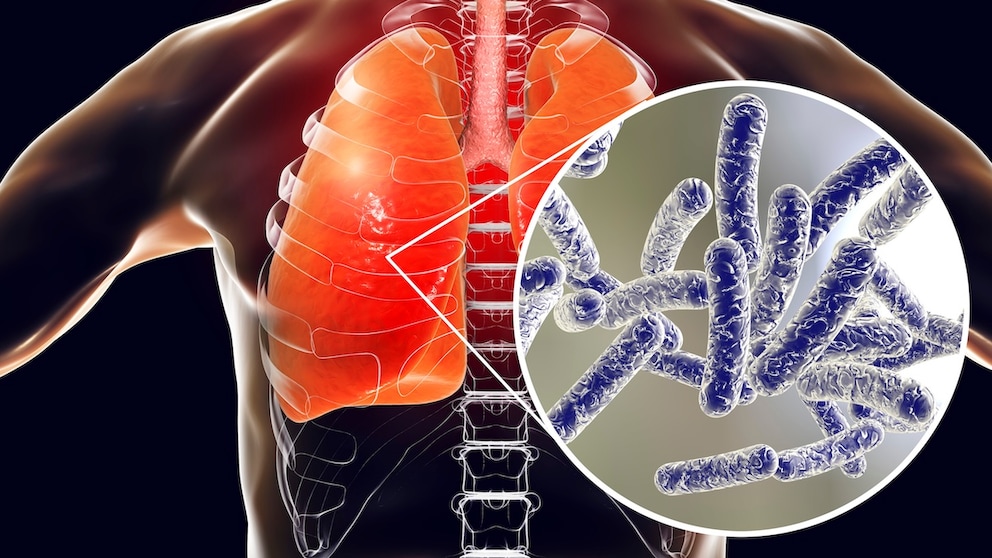
There is an increased risk of Legionella, especially in warmer areas—and consequently more so in our summer months. Depending on the severity of the infection, it can lead to the less dangerous Pontiac fever, which usually resolves on its own, or to Legionnaires’ disease. In that case, a severe pneumonia may occur, sometimes even resulting in death. You can read about how to recognize a Legionella infection and how to protect yourself in this article.
Legionella are bacterial pathogens primarily found in warm freshwater at temperatures of about 77 to 113 degrees Fahrenheit. They are therefore mainly a concern in the summer months. Pipes in places like vacation homes are particularly susceptible to Legionella colonization, “if the water is not sufficiently heated or stands still for long periods,” explains Dr. Matthias Riedl, a Hamburg internist, in a FITBOOK interview.
How Do You Get Infected With Legionella?
Neither drinking contaminated water nor skin contact is considered problematic. Rather, it is the aerosols, or fine particles, that can enter the respiratory tract from the water stream. This is also revealed by the bacterium’s nickname: Legionella pneumophila (= lung-loving). Typically, infection occurs when using faucets in sinks or showers.

Additionally, the condensate from unmaintained air conditioning units can contain Legionella. It is therefore important to have air conditioning units in cars and offices cleaned regularly (preferably by a professional) to prevent the formation of germs—and their inhalation.
How Dangerous Is Legionella?
It depends. If a Legionella infection leads to Legionnaires’ disease (also known as legionellosis or Legionella pneumonia), it can be fatal. This is a severe form of pneumonia that can particularly affect older individuals and those with pre-existing health conditions and weakened immune systems.
The potential danger of Legionnaires’ disease is already revealed by the history of its name. The name originated in 1976 in Philadelphia after an incident that made international headlines. At an annual meeting of the veterans’ association “American Legion,” 221 people contracted severe pneumonia, and 34 of them died. It was only months later that it was discovered that the conference hotel had spread the Legionella pneumophila bacteria through its air conditioning system.
What Symptoms Indicate Legionella?
In the case of Legionella pneumonia, the symptoms are comparable to those of a very severe classic pneumonia. It usually manifests quickly and quite suddenly with weakness, high fever, and extreme malaise. The cough is typically dry at first and is later accompanied by sputum.
Legionnaires’ disease must be treated with antibiotics and often requires hospitalization. It is important to determine the cause as soon as possible when symptoms and indications are present to begin the correct treatment quickly.1
Less severe cases of a Legionella infection are referred to as Pontiac fever. This can result in a flu-like illness with fever, headache, and body aches, and often a dry cough—but pneumonia does not occur. The illness usually resolves on its own and only requires symptomatic treatment.
How Common Are Legionella Infections?
Cases of Legionnaires’ disease must be reported to health authorities. According to the latest figures from the Robert Koch Institute (RKI), there were already 2,111 reported cases in Germany by the end of November 2025, a similar number to the previous year (2,093 cases). However, the actual number is likely much higher, as not every patient with pneumonia is specifically tested for Legionella.2

Chickenpox: Symptoms, Transmission, and Why Vaccination Is So Important

Pneumonia: What to Watch for in Children
How Can You Protect Yourself From Legionella?
The Federal Center for Health Education (BzgA) recommends paying attention to the regular use of water pipes and avoiding so-called dead legs through, among other things, defective seals. “In a house with central water heating and a central hot water tank, the regulator temperature on the water heater should be set to at least 140 degrees Fahrenheit,” the article on infection protection continues. Human-to-human transmission is not a concern.
Lowering the Hot Water Temperature to Save Energy–Does This Increase the Risk of Legionella?
Many people are currently looking for ways to save energy due to the gas crisis. According to media reports, some homeowners are considering lowering the hot water temperature from 140 to 122 degrees Fahrenheit. Does this increase the risk of Legionella spreading in the pipes? Dr. Matthias Riedl: “If the water is consistently below 140 degrees, then it is dangerous. However, if it is repeatedly and regularly raised during the day, then it is not.” If individual consumers now lower the water temperature, there is a risk of Legionella infections.