


September 17, 2026, 1:32 pm | Read time: 9 minutes
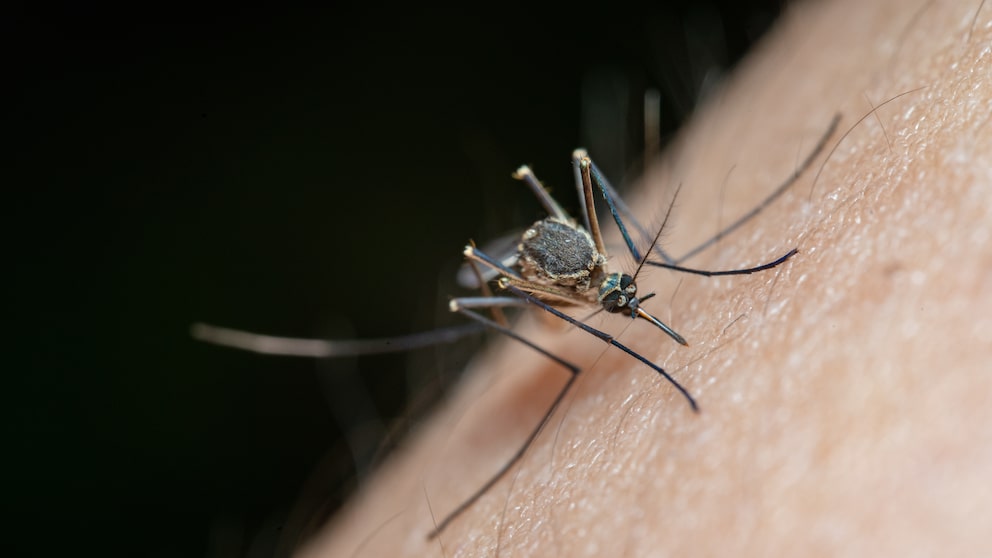
A single mosquito bite can be enough to contract one of the world’s most dangerous infectious diseases: malaria. The disease is caused by parasites transmitted by mosquitoes that are active at dusk and night. The consequences can be severe: Symptoms range from fever and chills to seizures, coma, and death.
Malaria is currently transmitted in 80 countries worldwide. In 2024, there were an estimated 282 million malaria cases and about 610,000 deaths, according to the World Health Organization (WHO). Africa is particularly hard hit: 94 percent of cases and 95 percent of deaths occurred in the WHO African region. About three-quarters of malaria deaths there involved children under five years old.1
What Is Malaria?
Malaria is an infectious disease primarily found in tropical and subtropical regions. It is caused by single-celled parasites known as “Plasmodium.” Initially, they multiply in the liver before attacking human red blood cells, causing them to burst. This releases more parasites into the bloodstream, prompting the body to respond with a fever to fight the infection.
There are different types of Plasmodium that can cause malaria in humans. Typical symptoms include headaches, body aches, chills, vomiting, and diarrhea. The course of the disease can vary depending on the pathogen.2
These Are the Symptoms of the Disease
Malaria usually begins with rather nonspecific symptoms such as headaches, body aches, fever, and a general feeling of illness. These signs are often mistakenly equated by those affected with a flu-like infection or a gastrointestinal infection. Patients may also suffer from vomiting, fatigue, and a dry cough. Additionally, the increased breakdown of red blood cells can trigger anemia.
Early Symptoms Are Often Nonspecific
According to the WHO, the most common early symptoms include fever, headaches, and chills. The first symptoms often appear 10 to 15 days after the bite of an infected mosquito. Depending on the malaria pathogen, symptoms may also start much later. Especially at the beginning, the symptoms can be mild and nonspecific, making malaria easy to confuse with other diseases.
The regular fever spikes known for malaria do not always occur. This is particularly true for the dangerous malaria tropica. In an infection with Plasmodium falciparum, the fever can be irregular. Particularly insidious: An untreated infection with this pathogen can develop into a severe disease within 24 hours and be fatal, according to the WHO.
When a Mosquito Bite Suddenly Becomes Life-Threatening
Signs of severe malaria can include extreme fatigue, consciousness disorders, repeated seizures, and shortness of breath. Dark or bloody urine, yellowing of the skin or eyes, and unusual bleeding are also possible warning signs. In severe cases, organs can be damaged.3
The exact symptoms vary depending on the type of malaria:
Malaria tertiana
This form typically begins with sudden fever and nonspecific symptoms. These fever attacks can occur every 48 hours. In this context, chills and high fever often occur in the afternoon. The high temperature, which usually lasts three to four hours, drops abruptly to normal levels. This form of malaria rarely has a fatal course.
Malaria tropica
“Malaria tropica” is the most dangerous type, as symptoms can be very diverse and a typical fever pattern is absent. Severe cases can lead to consciousness disorders, seizures, coma, kidney failure, severe anemia, or a circulatory collapse.
Malaria quartana
This type is rare and is primarily characterized by fever occurring every three days, or in a 72-hour cycle. It is even possible for relapses to occur years after the initial infection.
Plasmodium knowlesi
This form of malaria occurs exclusively in Southeast Asia, with the pathogen primarily originating from monkeys. However, if the pathogen is transmitted by Anopheles mosquitoes, it is possible, though rare, for the disease to occur in humans. The disease itself is characterized by daily fever spikes.
Current Malaria Cases at Frankfurt Airport
Currently, a rare malaria outbreak at Frankfurt Airport is causing a stir. According to the Frankfurt Health Department, six employees have contracted malaria. Two of them have died from the disease. The first death occurred in early July 2026, but malaria was only diagnosed after death. The second death followed in August.
The cases are likely so-called airport malaria. Infected Anopheles mosquitoes are brought in, for example, on a plane from a malaria area and then bite people at the airport or in its vicinity. According to authorities, the six affected individuals had not previously been in a malaria area.4
Such infections are extremely rare. Authorities currently see no increased risk for the general population. Malaria is not transmitted through normal interpersonal contact. Additionally, no further cases related to the outbreak have been reported so far.
How Common is Malaria in Germany?
Malaria cases in Germany are usually diagnosed almost exclusively after stays in malaria areas. In 2024, a total of 934 cases were reported to the Robert Koch Institute. This was five percent less than in 2023, which had 985 cases. The numbers were roughly back to pre-COVID-19 pandemic levels.5
In 2024, 85 percent of malaria cases with a known pathogen identified Plasmodium falciparum—the pathogen of the dangerous malaria tropica. Most affected individuals with a known place of infection had contracted it in Africa.
How Is Malaria Transmitted?
Just one bite from an Anopheles mosquito can be enough to contract malaria. The mosquito transmits single-celled parasites known as plasmodia. When a female Anopheles mosquito bites an infected person, it takes up certain developmental forms of the parasites with the blood. These then multiply and develop in the mosquito’s body and migrate to its salivary glands. When the infected mosquito bites another person, it transmits the malaria pathogens into their bloodstream through its saliva.
In the human body, the parasites first reach the liver and multiply there. They then attack the red blood cells, multiply again, and destroy the cells. This releases more parasites, which in turn infect other red blood cells.
Is Human-to-Human Transmission Possible?
Malaria is not transmitted through normal interpersonal contact. Therefore, infected individuals are not contagious to others in everyday life. However, in rare cases, transmission can occur through infected blood, such as via contaminated needles or blood transfusions. An infected mother can also transmit the pathogens to her child.
Incubation Period Depends on the Type of Pathogen
After contracting malaria, the disease does not break out immediately, as the time between infection and the onset of symptoms depends on the type of pathogen.
There are five types of Plasmodium that can cause malaria in humans:
- Plasmodium falciparum (causes “malaria tropica”): The deadliest parasite, most widespread in Africa, with an incubation period of seven to 15 days.
- Plasmodium vivax (causes “malaria tertiana”): More common outside Africa, with an incubation period of 12 to 18 days.
- Plasmodium ovale (causes “malaria tertiana”): Also has an incubation period of 12 to 18 days.
- Plasmodium knowlesi (causes “knowlesi malaria”): A rarer type found in Southeast Asia, especially in forested areas, with an incubation period of 10 to 12 days.
- Plasmodium malariae (causes “malaria quartana”): The incubation period is 18 to 40 days, and the parasite can remain in the blood for months or years before symptoms appear.
The tricky part about some Plasmodium types (such as P. vivax and P. ovale) is that they can remain dormant in the liver for years and trigger recurring malaria attacks.
How Does Malaria Progress?
The severity of malaria depends, among other things, on the pathogen and the health condition of the affected person. An infection with Plasmodium falciparum is particularly dangerous. Without timely treatment, malaria tropica can rapidly worsen and become life-threatening.
In severe malaria, various organs can be affected. The increased breakdown of red blood cells can lead to severe anemia. Acute kidney failure, circulatory problems, and respiratory issues up to pulmonary edema or lung failure are also possible.
Cerebral Malaria Can Lead to Coma
A particularly severe complication is cerebral malaria, which can occur especially with an infection by Plasmodium falciparum. It involves impairment of the brain. Possible consequences include disorders of consciousness, repeated seizures, and coma.
The spleen and liver can also enlarge in malaria. In rare cases, a ruptured spleen can lead to dangerous internal bleeding.
Are There Risk Groups?
For children living in malaria areas, the disease poses a significant threat. It takes only a few days for the pathogen to cause severe complications. Infants and children under five years old are particularly at risk of infection and severe illness. Even if children survive malaria, they may suffer lifelong mental or physical damage that can impair their further development.
Pregnant women, HIV/AIDS patients, and people with immune deficiencies are also among the population groups at increased risk of severe disease progression and high mortality risk. If a malaria infection occurs during pregnancy, it can be dangerous for the unborn child. Premature births are common, with children born at a lower birth weight, reducing their chances of survival and the likelihood of healthy development in childhood.
Signs that indicate a tetanus infection

Black Death in the 21st Century–How to Avoid Infection
How Is the Disease Treated?
Treatment depends on which malaria pathogen is causing the disease and any accompanying conditions. Pregnancy, as well as intolerances or allergies to certain malaria medications, also influence the choice of therapy. Doctors treat malaria with drugs that specifically target the parasites. The choice of active ingredient depends, among other things, on the pathogen and possible resistances. In some cases, they combine several active ingredients to effectively combat the parasites.
Are There Preventive Measures?
One of the most important protective measures against malaria is the consistent avoidance of mosquito bites. Depending on the travel destination and individual risk, a medical malaria prophylaxis may also be recommended. For trips to areas with high transmission potential, regular chemoprophylaxis is generally advisable. The appropriate preventive measures depend on the travel destination, travel time, duration, travel style, and individual factors.
Other effective measures include:
- Insecticide-treated mosquito nets (to sleep under)
- Wearing long clothing (that is treated with insect repellent)
- Staying in mosquito-proof rooms (e.g., equipped with screens or air conditioning)
- Using insect repellent
Malaria Vaccine
Two WHO-recommended malaria vaccines are now available: RTS,S/AS01 and R21/Matrix-M. They target Plasmodium falciparum and are primarily intended for children living in malaria areas. The WHO particularly recommends the vaccinations in areas with medium and high transmission risk. The first vaccine, RTS,S, was recommended by the WHO in 2021, followed by R21 in 2023. The vaccinations are part of a comprehensive malaria prevention strategy and do not replace other protective measures.6