

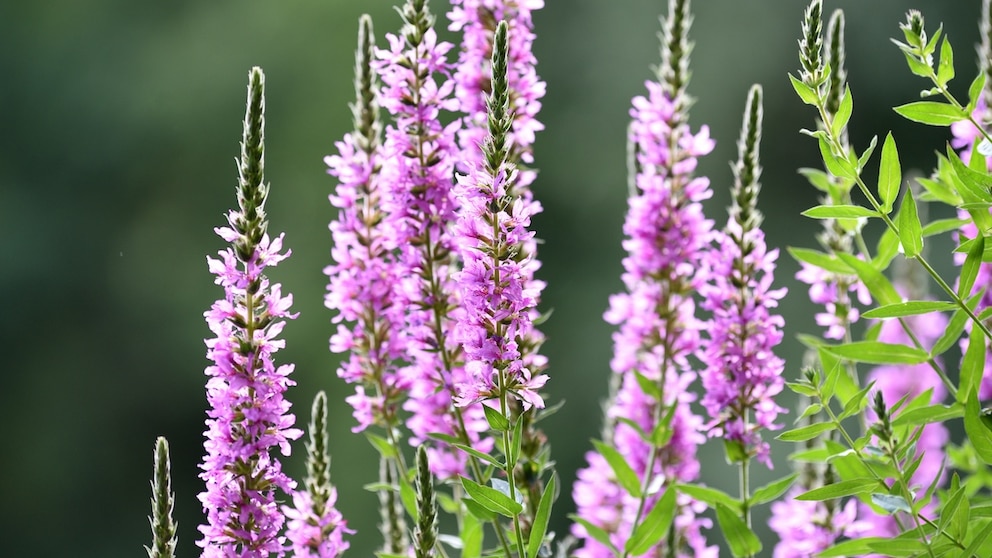
October 21, 2026, 3:48 pm | Read time: 4 minutes
Can a native plant actually help reduce body fat? This intriguing question was the focus of a recent clinical study by scientists. At the center was Purple Loosestrife (Lythrum salicaria), a previously overlooked plant whose components might possess interesting properties. The researchers examined the impact of an extract from the plant on body fat and weight–and came to remarkable conclusions.
Can Purple Loosestrife Influence Fat Formation in the Body?
Being overweight increases the risk of various diseases, including diabetes and cardiovascular diseases. However, body weight alone says little about how much fat a person actually carries. The commonly used Body Mass Index (BMI) also cannot distinguish between body fat and muscle mass. To more accurately capture changes in body fat, scientists use special measurement methods such as the DXA method, which can determine body composition.
Purple Loosestrife contains polyphenols and certain polysaccharides, which are attributed with health-promoting properties. Previous laboratory and animal studies have already suggested that its components could slow the formation of new fat cells and counteract weight gain. However, whether such effects also appear in humans had hardly been researched until now.
Study Design and Methods
The study from South Korea involved 90 adults aged 19 to 75. They were randomly divided into two groups: One group of 45 people received an extract from Purple Loosestrife (Lythrum salicaria), while the other received an inactive placebo. Neither the participants nor the researchers knew who received which preparation during the study, to prevent expectations from influencing the results.1
Over a period of twelve weeks, the Purple Loosestrife group took 500 milligrams of the plant extract in powder form daily. The researchers primarily wanted to find out if this would reduce body fat mass. To determine this as accurately as possible, the scientists used a special X-ray procedure (DXA) that can differentiate between fat, muscles, and other body components.
They also examined body weight, BMI, body fat percentage, lean body mass, and various blood values. A total of 84 participants completed the study as planned. For an additional evaluation, the researchers also considered the data of all originally 90 participants.
How Body Fat Responded to the Extract
After twelve weeks, a clear difference emerged between the two groups: Participants who took the Purple Loosestrife extract lost an average of 0.58 kilograms of body fat. In the placebo group, fat mass increased by an average of 1.43 kilograms. Overall, this resulted in a difference of about two kilograms in favor of the plant extract.
A similar pattern was observed in body weight: While participants in the Purple Loosestrife group lost an average of 0.98 kilograms, those in the placebo group gained an average of 0.79 kilograms. The BMI and body fat percentage developed more favorably in the extract group. However, the researchers found no clear differences in lean body mass, which includes muscles, and the waist-to-hip ratio.
Another interesting change was observed in the blood: In those who took the plant extract, the level of the hormone adiponectin increased. This hormone plays an important role in regulating fat and sugar metabolism. In the placebo group, the value decreased. Other blood values examined, including cholesterol, other blood fats, and inflammation markers, did not differ significantly between the groups.
According to their own statements, participants’ diet and physical activity did not change significantly during the study. Most adhered reliably to taking the preparations. Overall, six participants reported mild complaints or adverse events. No connection with the plant extract or the placebo was established.

Turmeric Promotes Weight Loss in These Individuals

The Effects of Pomegranate Extract on Muscles and Blood Vessels
What Is the Significance of the Results?
The study provides initial indications that an extract from Purple Loosestrife could help reduce body fat. However, the actual fat loss was rather small. The significantly larger difference between the two groups also resulted from the surprising increase in body fat among the placebo group participants. Why this happened remains unclear.
Changes in the hormone adiponectin should also not be overemphasized. Since the scientists examined numerous values without adjusting the statistical analysis accordingly, some notable results could have occurred by chance. The researchers therefore initially consider these findings as preliminary indications that need to be verified in further studies.
Also interesting: Low Carb, Intermittent Fasting, or Keto? What Studies Say Really Helps with Weight Loss
Study Assessment and Possible Limitations
The study is supported by its randomized, double-blind, and placebo-controlled design, as well as the bone density measurement. However, its significance is limited. The study included only 90 participants, lasted twelve weeks, and was conducted at a single study center. Whether the effect persists long-term and how the preparation is tolerated over a longer period cannot be assessed.
A significant uncertainty is the unexpected increase in fat mass in the placebo group. Diet and physical activity were recorded based on participants’ statements, so unmeasured lifestyle changes cannot be ruled out.