


November 13, 2025, 6:07 am | Read time: 6 minutes
Keeping your body in shape amidst a hectic daily routine is anything but easy—not just due to lack of time, but also because of the sheer flood of fitness options. New trends bombard us daily from the internet—but which one is right? One training method that has proven itself for decades is Pilates.
What Is Pilates and Where Does It Come From?
Pilates is a method of full-body training developed in the 1920s by Joseph Pilates, originally called “Contrology.”1 The native of Mönchengladbach believed in a connection between physical and mental well-being and created exercises initially intended for the rehabilitation of soldiers. After emigrating to the U.S., he founded a studio in New York and became a famous trainer, working with dance stars such as Martha Graham and George Balanchine.
The goal of Pilates is to gently and evenly train the entire body. The method is based on mental concentration, conscious breathing, and controlled movements targeting specific muscle groups. Some exercises even resemble the postures (asanas) of Hatha Yoga.
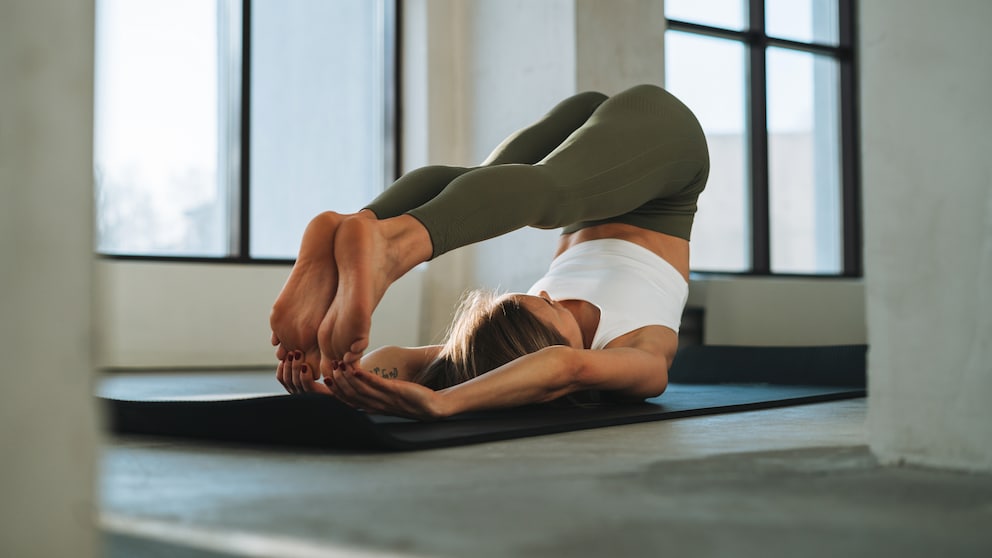
Today, exercises are mostly performed on mats, sitting or lying down, or with the help of special apparatus. Unlike Yoga, no static positions are intended, as flowing movement plays an important role.
The 6 Pilates Principles
Modern Pilates today is mostly based on the six principles derived by Frank Philip Friedman and Gail Eisen in the 1980s from the traditional form:
- Attention and Concentration: Bringing body and mind into harmony
- Centering: Stabilizing the body’s core (also called “Powerhouse”)
- Control of Movements: Correct technical execution of movements
- Breathing in Harmony with Movement: Synchronizing breathing and movements
- Flowing Movements: Harmonious, flowing, and continuous movements
- Precision as Key: Exact execution of exercises
The close connection of the principles forms the basis for a balanced and effective workout.
What Is Pilates Good for?
As a recognized and very popular form of exercise, Pilates is used not only as a workout in leisure time but also as a preventive and therapeutic form in physical therapy and rehabilitation. It is primarily used for the prevention and treatment of back pain and movement deficits. The flowing movements are gentle on the joints and reduce the risk of injury, allowing even those with motor impairments or older individuals to benefit.
Pilates aims to systematically train the entire body through a combination of stretching, breathing, and strengthening exercises. This is intended to enhance self-awareness and body perception.
Despite the lack of scientific evidence, Pilates is attributed with a variety of other positive effects, including:
- increased strength
- enhanced flexibility
- improved posture
- greater stability
- spinal alignment
- increased mobility
- stress reduction
- relaxation
- better body awareness
What Types of Pilates Are There?
Three of the most well-known types are:
- Power Pilates: Focuses on muscle strengthening and enhancing mental awareness
- Stott Pilates: Intensive stretching; targets the body’s core
- Yoga Pilates: Combines Yoga and Pilates, focusing on physical fitness, flexibility, and breathing
- Reformer Pilates: Performed on a special apparatus with spring resistance, it strengthens the entire body, improves posture, balance, and flexibility.
What Does the Research Say?
Improvement of Posture
A study examined 41 women with hyperkyphosis, divided into two groups: a control group and a group that performed Pilates exercises twice a week. The study showed that performing the exercises led to greater flexibility and improved posture.2
Improvement of Quality of Life
Another study focused on the effects of Pilates exercises on patients with chronic kidney disease. It concluded that they can improve a person’s quality of life.3
Rehabilitation of Musculoskeletal Disorders
The meta-analysis examined a total of 24 studies regarding the effects of Pilates exercises on the rehabilitation of musculoskeletal disorders. Overall, 14 of the evaluated studies showed that Pilates can be used for the treatment of various conditions such as scoliosis, back pain, or ankylosing spondylitis.4
Can Improve Running Performance
Another study examined the effect of Pilates training on runners’ endurance and concluded that the exercises can improve endurance.5
Which Body Parts Are Trained?
In general, Pilates focuses on strengthening the core muscles, distributed across the spine, abdomen, pelvis, and hips. This area is also referred to as the Pilates powerhouse. Special exercises can promote and develop the deep muscles and rarely used fine muscles.
Since Pilates exercises are based on adaptation and variation, personal skills, condition, and medical factors such as injuries can also be considered. Trainers create customized exercise routines and can modify exercises to suit the needs and difficulty level of the students. This makes the method very suitable for individual workouts.
What Differentiates Pilates from Yoga?
When looking at the movement sequences, many overlaps between Yoga and Pilates can be seen. However, the biggest difference is that in Yoga, spirituality is the core of the concept. In Pilates, the focus is more on the body and the movement itself. There are also differences in breathing: While in Yoga, breathing is mainly through the abdomen, in Pilates, breathing is more purpose-driven and often diaphragm-focused.
Another difference between Pilates and Yoga is that Pilates training—although the focus is very much on one’s own body and movements—has no spiritual background. The exercises themselves also differ, as the Pilates equipment or accessories used are different from those used in Yoga. For example, Pilates uses balls or rollers, which can not only expand the range of exercises but also provide more coordination and stability.

How a Star Ballerina Got Back in Shape After Pregnancy with an Unconventional Training Method

3 yoga exercises that burn the most calories
Who Offers Classes?
Most gyms, sports centers, and community colleges, as well as private studios, offer Pilates for groups. Classes typically last about an hour and cost between ten and 40 euros per hour. For beginners, it is advisable to work with a good trainer who can correct mistakes and avoid potential health risks. Both group classes and individual training, such as with a personal trainer, can be beneficial.
Alternatively, courses are also available in the form of books, CDs, and DVDs in stores or for free online. However, these offerings are generally aimed at more advanced practitioners.
Who Is It Suitable For?
In general, anyone who wants to keep their body flexible or strengthen it can use Pilates as strength training. Whether you’re a couch potato, an older person, or an endurance athlete—Pilates is considered a good and gentle entry into the world of sports. Another advantage is the low risk of injury: Abrupt movements are avoided through the concentrated execution of exercises. Additionally, you can individually adjust the pace and intensity of the exercises to suit yourself.