

August 3, 2025, 6:01 am | Read time: 5 minutes
A wasp sting is painful, but is it also dangerous? Experts at FITBOOK explain how to react if stung, how to recognize an allergic reaction, and what modern sting healers can do. You’ll also learn why you shouldn’t scratch the sting site.
Wasp Sting – What to Do?
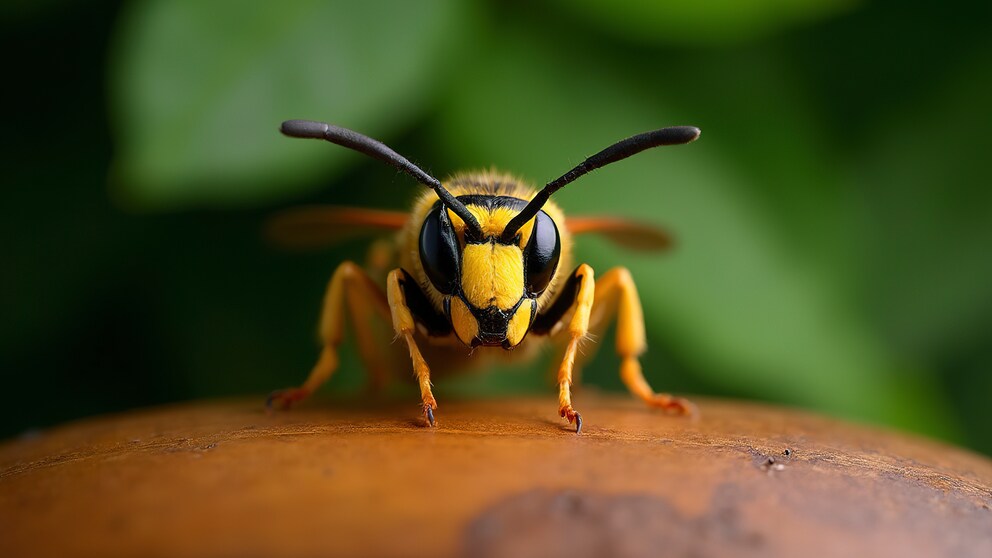
Wasps are often attracted to cakes or sweet drinks on the table. The best way to get rid of wasps is to gently push them away—aside from covering sweet drinks and foods outdoors. Swatting at them or blowing on them is a very bad idea: The carbon dioxide in your breath signals alarm to them and can put them on alert or make them aggressive. Wasps actually sting only when they feel threatened.
If you do get stung by a wasp, it’s important to stay calm. For healthy people—regardless of age—a wasp sting usually results in a tender swelling at the sting site that lasts about two days and an initial sharp pain, but it does not cause further health issues.
Unlike bees, wasps typically do not leave a stinger behind when they sting. In a conversation with FITBOOK, Munich dermatologist Dr. Timm Golüke explains that insect stings should be treated symptomatically—similar to a sunburn. Primarily, they should be cooled, “for example, with curd compresses. Cortisone creams relieve itching and reduce swelling.” These are available over the counter, such as products like “Hydrocortisone” or “FeniHydrocort.” Unfortunately, there’s not much more you can do.
Follow the FITBOOK channel on WhatsApp now!
Anaphylactic Shock – Symptoms and Accompanying Effects
It’s different for people who have an allergic reaction to wasp stings. The reactions can go far beyond local swelling. If symptoms like nausea, dizziness, or fainting occur, seek medical help immediately.1
Dr. Golüke warns to take it very seriously if the soles of your feet and palms start tingling shortly afterward. “This could be an anaphylactic shock,” the specialist explains. This is a severe allergic reaction that is always a medical emergency. Other accompanying effects could be general dizziness, shortness of breath—and the worst-case scenario could be death. So once again: An anaphylactic shock must be treated immediately, call emergency services.
Also interesting: A lifestyle change could lead to heart disease 12 years later
RAST Test and Emergency Kit
“After a first incident of this kind, a RAST test (Radio-Allergo-Sorbent Test, editor’s note) should be conducted,” emphasizes Dr. Golüke. This determines whether there is an insect venom allergy. Those who know they have it should always carry an emergency kit, according to the expert. This includes an adrenaline pen, which the stung person should use to quickly inject the hormone into the thigh. Also included in such an emergency kit: cortisone syrup—to prevent the throat from swelling shut—and an antihistamine, a medication that alleviates intolerance symptoms. You will be taught how to use it at the pharmacy.
Insect Stings in the Mouth and Throat Are a Case for Emergency Services
“If you swallow a wasp and it stings, it quickly leads to swelling of the inner mucous membranes,” warns Dr. Golüke. Thus, insect stings in the mouth and throat can be serious. Again, please alert emergency services immediately! To reduce the risk in advance, the doctor recommends covering open drinks outdoors and always checking whether an insect might be hiding in food.
Characteristics of Selected Insect Stings

What Do Modern Sting Healers Offer?
Special devices now promise to make bee or wasp stings disappear. Dr. Golüke has also heard of these sting healers. “The thermal ones are supposed to use a heat impulse to denature the foreign protein from the wasp venom so it can’t spread further.” Electric sting healers are said to have a similar effect on the venom, but through electric charges. According to the expert, conventional relief methods are better. “Antiallergic medications and cooling are more important,” he says.
7 Home Remedies for Mosquito Bites–Which Really Relieve Itching?
What Makes the Bite of the Black Fly So Dangerous?
Why Scratching Is Not Recommended
Prof. Thilo Jakob, director of the Clinic for Dermatology and Allergology at the University Hospital Giessen, says you shouldn’t scratch the sting sites. The reason is: “If the skin is scratched open, bacteria can settle and multiply there—then the sting can’t heal properly.”
Saliva and Onion Are Not Good Remedies
Dr. Jakob also mentions that saliva is nothing more than a liquid you always have with you that can cool the sting. When moisture is on the skin, even a slight breeze is enough to draw heat away—that’s how the cooling effect works, he continues.
Onions are often used as a cooling agent. However, this should be avoided. Onions contain a lot of acid, which can cause skin burns. “We’ve seen patients who put onion slices with a nice thick bandage on their skin and left it on for 24 hours,” says the doctor.
Conclusion: What to Do About Wasp Stings? The Most Important Tips
- Preventing Wasp Stings: gently push wasps away;
cover sweet drinks and foods outdoors - First Aid for a Wasp Sting: cool the sting, e.g., with curd compresses; use cortisone creams to relieve itching and swelling;
use modern sting healers (thermal or electric) - Anaphylactic Shock: call emergency services if anaphylactic shock is suspected!
Always carry a RAST test and emergency kit if you have a known allergic reaction - Insect Stings in the Mouth and Throat: alert emergency services!
*With material from dpa