


August 9, 2025, 2:03 am | Read time: 5 minutes
Red lips are considered a beauty ideal–but what does it mean when they suddenly appear pale, bluish, or chapped? FITBOOK explains what the color and condition of your lips can reveal about your health–and how to respond appropriately.
Follow the FITBOOK channel on WhatsApp now!
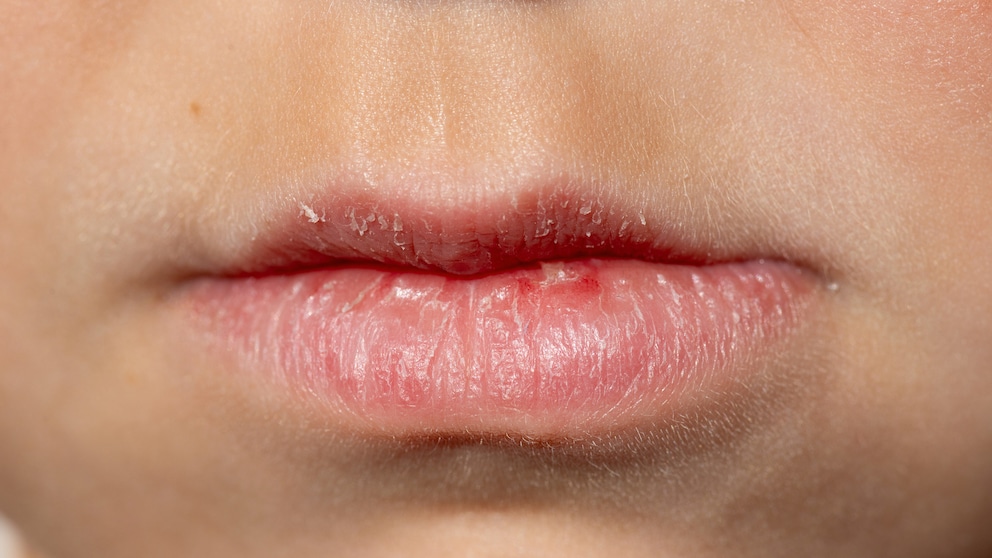
Chapped Lips: Dehydration
Chapped or cracked lips are not just a cosmetic issue–they can be a clear warning sign from your body. It’s not just wind, cold, or dry indoor air that causes chapped lips. Often, dehydration is the underlying issue: If the body is not supplied with enough water or loses too much through excessive sweating, the skin dries out–including the sensitive lip area.
Since lips lack oil and sweat glands, they don’t have the natural protective film that prevents other skin areas from drying out. The common reflex to moisten lips with saliva actually worsens the problem–the evaporating moisture further depletes the lips of water.
To counteract this, a sufficient amount of fluid should be consumed daily–ideally two to three liters spread throughout the day. This is the simplest and most effective measure against dry lips. Additionally, chapped lips can indicate inflammatory skin conditions such as eczema. If symptoms like burning or a feeling of tightness occur, an appointment with a dermatologist should be made.1
Also of interest: Impetigo – Symptoms, Treatment, and Prevention
Cracked Corners of the Mouth: Nutrient Deficiency
When the skin at the corners of the mouth cracks, hurts, or becomes inflamed, there’s often more to it than just dry winter air. The so-called angular cheilitis can have various causes–many of which can be specifically addressed.
Often, the cause is a nutrient deficiency. If the body lacks essential vitamins and minerals, the skin becomes more susceptible to minor injuries and inflammation. A deficiency in iron or B vitamins such as B2, B3, B12, or biotin plays a significant role. A balanced diet rich in fresh fruits and vegetables provides the body with these nutrients and supports skin regeneration.
External Factors and Nutrient Deficiency
Since lips lack oil glands, their surface dries out quickly–especially in cold weather, dry indoor air, or frequent lip licking. If the skin at the corners of the mouth is constantly irritated or softened by saliva, cracks can form. Bacteria, viruses like herpes, or certain conditions such as diabetes, HIV infection, or eczema can further aggravate the already weakened skin.
In many cases, cracked corners of the mouth can be prevented or treated by maintaining a balanced diet rich in fresh fruits and vegetables, which provide essential nutrients and support skin regeneration. If symptoms like burning or a feeling of tightness occur, a dermatologist appointment should be scheduled.2

Can Lip Balm Be Addictive?
Causes, Symptoms and Treatment of Atopic Dermatitis in Children
Bluish Lips: Oxygen Deficiency
If your lips turn bluish in cold weather or after consuming a brightly colored lollipop, it may indicate a lack of oxygen in the blood. This condition, known as cyanosis, occurs when the blood is not sufficiently oxygenated, causing areas like the lips, earlobes, or fingertips to appear bluish.
How Oxygen Enters the Blood
In the lungs, blood absorbs oxygen, which binds to the hemoglobin in red blood cells. The oxygen is then transported throughout the body via the bloodstream. Cells absorb the oxygen, and carbon dioxide–a metabolic waste product–is released back into the blood. This oxygen-poor blood then flows back to the lungs, where carbon dioxide is exchanged for fresh oxygen again.
When the blood is sufficiently oxygenated, it appears bright red. If the oxygen level drops, it takes on a darker, bluish color. This is especially visible in thin skin areas where blood vessels run close to the surface, such as the lips, earlobes, or fingertips.
Possible Causes of Oxygen Deficiency
The most common reason for blue lips is a lack of oxygen in the blood, which can be caused by lung or heart diseases. Poor circulation, poisoning, or certain chronic illnesses can also trigger cyanosis.
Anyone who notices blue lips frequently or persistently–especially without cold or external influences–should definitely see a doctor. The primary care physician can determine the cause and, if necessary, arrange for further tests or treatments.3
Swollen Lips: Signs of an Allergy
If your lips suddenly swell, it can have many causes–from harmless everyday injuries to serious allergic reactions. It’s important to identify the triggers and act quickly if certain accompanying symptoms occur.
Why Lips Swell
The structure of the lips is particularly sensitive: Thin layers of skin lie on the outside, with muscular tissue running underneath that is highly vascularized. If more blood flows into the tissue–for example, in response to trauma, infection, or an allergy–visible swelling occurs.
Even minor injuries like a bump, insect bite, or sports injury can cause lips to swell–even if no external wounds are visible. In most cases, the swelling subsides on its own. However, if it persists or is accompanied by pain and other symptoms, the cause should be investigated further.4
Caution with Allergic Reactions
Sudden, severe swelling of the lips can also be a sign of an allergic reaction. Especially if accompanied by burning, itching in the mouth, or difficulty swallowing, an allergy test should be considered. In such cases, the immune system overreacts to certain substances–such as foods, medications, insect stings, or cosmetics.
If additional symptoms like shortness of breath, dizziness, or circulatory problems occur, it may be a medical emergency. In such cases, a doctor or emergency services should be contacted immediately.
Not every swollen lip is a cause for concern–in many cases, the swelling subsides quickly and without consequences. However, swelling can also be a sign of underlying issues that require treatment.5