

July 2, 2021, 3:33 am | Read time: 4 minutes
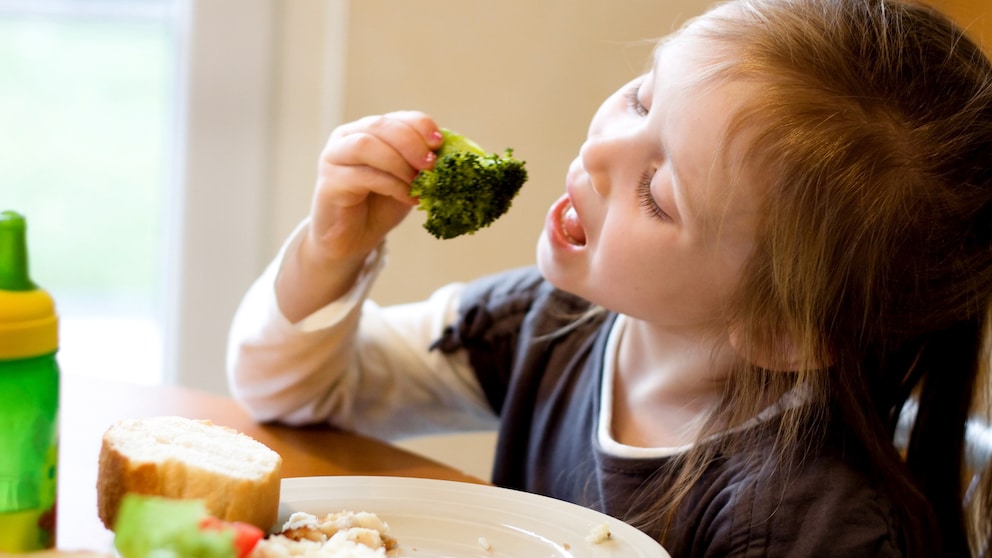
It’s not always easy to get younger children to eat their vegetables. Researchers at Penn State University have now developed a method that encourages toddlers to eat more eagerly.
In a child’s diet, every gram counts, especially when it comes to healthy foods like vegetables and fruits. They contain nutrients essential for child development. What is missed in the early years often cannot be made up later. As parents know, discussions with children usually don’t get far. Therefore, researchers at Penn State University (Pennsylvania) wanted to find out which strategy could encourage children to eat vegetables–without them realizing it.
Overview
How much vegetables young children should eat daily
According to the German Nutrition Society, toddlers up to the age of five should consume about 200 grams of vegetables daily.2 It’s estimated that only one in ten children achieves this. Additionally, two servings of fruit need to be incorporated somehow. Researchers suggest that a problem is that broccoli and similar vegetables often compete with unhealthy favorites like chicken nuggets–no wonder the greens are often rejected. It’s important to pay attention to what the vegetables are served with and in what quantity.
Also interesting: 7 foods important for the brain development of babies and toddlers
Double vegetable portion encourages grabbing
The first “trick” is to double the amount of vegetables offered. When researchers served children (ages three to five) 120 grams of broccoli and corn instead of 60 grams, they ate 68 percent more vegetables on average. That’s an average of 21 grams more vegetables per meal–a good improvement, the researchers write in their study report published in the journal “Appetite.”2 “The increase we observed corresponds to about one-third of a serving or 12 percent of the recommended daily dose for toddlers,” explains study author Hanim Diktas in the university release.3 “This strategy can be useful for parents trying to encourage children to eat the recommended amount of vegetables.”
Also interesting: 5 servings of vegetables and fruits a day–what does that even mean?
https://oembed/fitbook/affiliate/5bf0e55e06ebfcb4fa1bcfcb8ffa03b21e5d575644b140384af23e378e9f835d/900b495e-d27d-429e-892a-029abf95d223/embed
More success when serving vegetables with tasty foods
The competition must be tasty but not overwhelming. As mentioned: A broccoli floret stands no chance next to a chicken nugget. However, it does next to fish sticks, rice, or applesauce. Exactly this was served to 67 children between the ages of three and five over four weeks, along with broccoli or corn. With success. “We chose foods that generally tasted good but were not the children’s favorites,” explains Barbara Rolls, who was also involved in the project. “You have to make sure your vegetables taste pretty good compared to the other foods.”
Also interesting: This preparation could make broccoli even healthier
Children didn’t eat more vegetables when salted
Surprisingly, adding butter and salt did not make the vegetables more attractive to the children. Whether seasoned or not, it did not contribute to more being eaten. Overall, 76 percent of the children rated their vegetables from “tasty” to “just okay.” “We were surprised that butter and salt were not needed to improve intake. But the vegetables we served were corn and broccoli, which children are already familiar with,” says Diktas. It’s different with unfamiliar vegetables. A pat of butter might help make the new acquaintance a bit easier.
Also interesting: Those who eat fruits and vegetables daily feel less stressed

How the Portfolio Diet Works – and Who it is Suitable for
“Greens” – What Do Vegetable Powders Offer for Health?
Researchers still need to solve the food waste problem
The strategy of encouraging children to eat more vegetables by offering even more, of which only a fraction is consumed, unfortunately comes at a high cost. Financially, but also in terms of sustainability. Study author Diktas is aware of this: “We are working on additional research. In the future, we may be able to provide recommendations on portion sizes and replacing other foods with vegetables so that we can both limit waste and promote vegetable consumption in children.”
Sources
- Nutrition Review Child Nutrition. The nutrition of healthy children and adolescents according to the concept of optimized mixed diet. (2008)
- Diktas, H.E et al. (2021): Promoting vegetable intake in preschool children: Independent and combined effects of portion size and flavor enhancement. (2021)
- Penn State University. Serving larger portions of veggies may increase young kids’ veggie consumption. (2021)