

October 28, 2026, 12:31 pm | Read time: 5 minutes
Ebola is a rare but life-threatening infectious disease. In severe cases, it can lead to organ failure and internal or external bleeding. But what symptoms occur, how is it transmitted, and is there a vaccine? FITBOOK answers the most important questions.
Ebola often begins with symptoms that initially resemble the flu or other infectious diseases. However, the illness can quickly worsen. It is particularly challenging because, at the onset, it is often not possible to distinguish Ebola from other diseases based solely on symptoms. Rapid diagnosis and medical care are therefore crucial.
What symptoms does Ebola cause?
The first signs of an Ebola infection usually include sudden onset of fever, severe fatigue, weakness, and head and body aches. As the disease progresses, nausea, vomiting, abdominal pain, and diarrhea may occur. Skin rash and red eyes are also possible. In severe cases, bleeding may occur, such as from the gums or nose, or in the form of blood in vomit or stool. Additionally, the disease can damage the liver and kidneys and lead to circulatory problems.1
Important: Not all patients experience bleeding. Fever, diarrhea, and body aches are not definitive indicators of Ebola, as they occur in many other infectious diseases. Especially in the early stages, Ebola can be mistaken for malaria, for example. A definitive diagnosis is only possible through appropriate lab tests.
What is Ebola anyway?
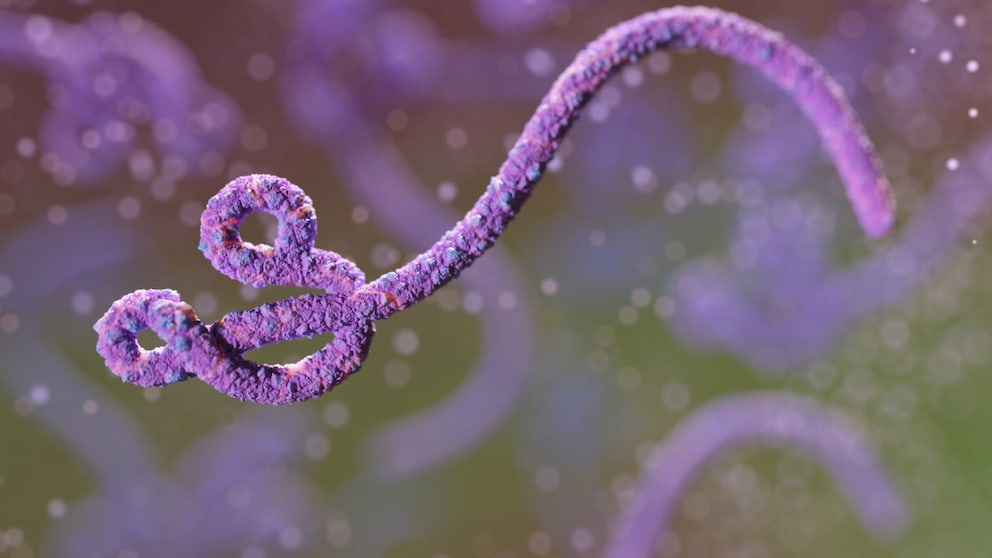
Ebola, also known as Ebola virus disease or Ebola fever, is a severe infectious disease caused by certain viruses from the Filoviridae family. It can affect the entire body and impair blood clotting, blood vessels, and vital organs.
There are different types of Ebola viruses, including the Zaire ebolavirus, Sudan ebolavirus, and Bundibugyo ebolavirus. This distinction is important because vaccines and specific medications do not automatically work against all virus types.
How is Ebola transmitted?
Ebola viruses can be transmitted from animals to humans. Certain fruit bats are considered possible natural hosts. Contact with infected wild animals or their body fluids can also cause infection. The virus is primarily transmitted from person to person through direct contact with the blood and other body fluids of an infected person. This includes saliva, sweat, urine, stool, and vomit. Objects like clothing, bedding, or medical instruments can also pose a transmission risk if contaminated with infectious body fluids.
Family members caring for the sick and medical personnel are particularly at risk. Infections can also occur during funerals if people come into contact with the body of a deceased person. Ebola does not spread like typical respiratory viruses simply by being near an infected person. People are generally considered contagious only when they develop symptoms.
How long does it take for symptoms to appear?
The time between infection and the onset of symptoms is usually two to 21 days. This period is known as the incubation period. During this phase, no symptoms appear.
After possible contact with an infected person, an initially symptom-free period does not automatically mean that an infection is ruled out. In the case of a justified suspicion, health authorities must be informed, and appropriate protective measures taken.
How dangerous is Ebola?
Ebola can be fatal. According to the World Health Organization (WHO), the mortality rate in past outbreaks has averaged about 50 percent.2 Depending on the outbreak, it ranged from 25 to 90 percent. These figures cannot be directly applied to every outbreak. The course of the disease depends, among other things, on the virus type, the health condition of the affected person, and the available care.
In severe cases, fluid loss, circulatory problems, and damage to vital organs can become life-threatening. Some people also suffer from prolonged symptoms such as fatigue and muscle and joint pain after recovering from the infection.
How is Ebola treated?
Early medical care is crucial. Treatment includes balancing fluid and electrolyte loss, alleviating symptoms, and supporting vital organ functions. Patients must be treated in appropriate medical facilities where staff are protected from infection through strict protective measures.
Specific antibody therapies are available for diseases caused by the Zaire ebolavirus. However, they are not automatically effective against other Ebola virus types. There is currently no approved specific therapy for the Bundibugyo variant. Research is ongoing into possible treatments.
Is there a vaccine against Ebola?
Yes, but not against all Ebola virus types. An approved vaccine, Ervebo, protects against the disease caused by the Zaire ebolavirus. It is used during outbreaks of this virus type.
There is currently no approved vaccine for the Bundibugyo variant. Researchers are investigating whether existing vaccines could also protect against this variant and which new vaccines might be suitable. Whether such approaches are effective must be scientifically tested.
These Symptoms May Indicate Malaria

Is the Risk of a Bird Flu Pandemic Increasing? This Is What an Expert Says
How can you protect yourself from Ebola?
The most important protection is to avoid contact with infected people and their body fluids. In affected areas, the guidance of health authorities is crucial. Medical personnel need appropriate protective equipment and must adhere to strict hygiene and isolation measures.
Safe handling of the deceased is also important to prevent further infections. In areas with Ebola outbreaks, travelers should also follow the recommendations of local authorities and avoid contact with sick people.
Anyone returning from an affected area and developing symptoms should seek medical help and inform them by phone about their stay and possible contact. This allows for appropriate protective measures to be prepared.
How great is the risk in Germany?
For people without a stay in an affected area and without contact with an infected person, the risk of contracting Ebola in Germany is very low. An introduction cannot be completely ruled out. However, by isolating suspected cases, conducting laboratory diagnostics, and identifying contacts, further spread can be contained.
Simply because of news about an Ebola outbreak, such as in the Democratic Republic of the Congo, there is no reason for the general population in Germany to assume an immediate risk of infection.3 However, anyone who may have had contact with an infected person should seek medical advice immediately and announce the contact by phone in advance.