

February 9, 2021, 6:57 pm | Read time: 5 minutes
When children contract the coronavirus, severe cases are rare. Nevertheless, vaccines are being developed for them too–to protect adults. This raises questions.
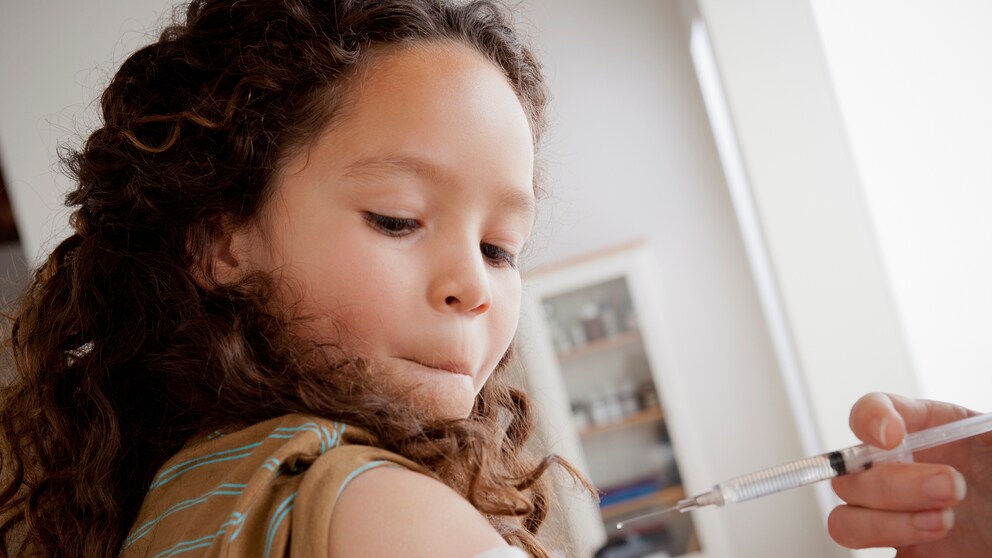
So far, the oldest are being vaccinated against COVID-19, but soon the age range will move backward. But what about the COVID-19 vaccine for children? Only one vaccine is currently approved for those 16 and older, with all others only for adults. Only a few manufacturers have begun studies on minors. This is because it is labor-intensive: The younger the children, the more complex the process.
The Issue with COVID-19 Vaccinations for Children
Fred Zepp expects that children in Germany could be vaccinated “at the earliest by the end of the year, more likely at the beginning of next year.” “The testing effort is much higher than for adults,” says the director of the Center for Pediatric and Adolescent Medicine at the University of Mainz, who is a member of the Standing Committee on Vaccination (Stiko). “The younger the person, the more pronounced the reaction can be, and the stronger the potential side effects.”
“Before clinical trials on children, it must be ensured that no serious side effects have occurred in adult studies,” states the Robert Koch Institute (RKI). “Children are not intended for early tests for ethical reasons alone.”
Also of interest: BioNTech, Moderna, J&J, and AstraZeneca–a comparison of four COVID-19 vaccines
What is the Status of COVID-19 Vaccine Development for Children?
The Association of Research-Based Pharmaceutical Companies (vfa) has compiled the status of vaccine manufacturers:
- The conditional approval of the BioNTech/Pfizer vaccine already includes adolescents aged 16 and older. In fall 2020, the duo added two study arms with participants aged 12 to under 16: one with the actual vaccine and one with a placebo. There are plans to also test children between 0 and 15 years.
- Moderna began recruiting minor participants in December. According to the company, 3,000 children between 12 and 17 years are expected to participate. So far, only U.S. clinics are involved in the “TeenCove” study. Two-thirds of the participants receive the vaccine, the rest a placebo. The adolescents are vaccinated twice, one month apart, and monitored for 13 months. They must visit the clinic at least six times, with additional phone calls and app feedback. The study is expected to conclude by mid-2022.
- AstraZeneca has not yet started pediatric studies. However, they plan to “continue the studies in a new protocol for the age group of 6 to 18 years,” according to the British-Swedish manufacturer. “These are expected to begin in the coming months.” Details will be announced “in due course.” According to the vfa, minors were already included early in studies for this vaccine, developed with the University of Oxford, one from India, and several Chinese vaccines. However, the studies are partly incomplete, and almost all products are not approved in Europe.
Also of interest: What is the risk with such rapidly developed COVID-19 vaccines?

Path Cleared for Moderna Vaccine for Children and Adolescents
BioNTech Seeks Approval for Vaccine for Children Ages 12 and Up
Results from Studies with Children Under 12 by the End of 2024
According to the vfa, studies with children under 12 are part of the EMA’s requirements linked to the “conditional approvals for adults” for both BioNTech/Pfizer and Moderna. The latest submission deadline for results is July or December 2024.
“It is expected that studies with these age groups will not begin until there are good results on the efficacy and tolerability of vaccinating adolescents,” states a vfa paper. Manufacturers typically work their way down by age group to younger children. Adolescents receive the same dose as adults. For younger children, the dose may need to be adjusted.
The Paul-Ehrlich-Institut, responsible for vaccine safety, emphasizes: Vaccines are only approved for age groups for which data on efficacy and safety from clinical trials are available. Approval would then be extended to younger individuals through a so-called change notice to the existing approval.
Also of interest: What is an mRNA vaccine–and does it alter my genetic material?
No Recommendation Yet for COVID-19 Vaccination for Children
But even if products are available, that doesn’t mean they will be used, and children will receive the COVID-19 vaccine. When asked, “Will there be a vaccination recommendation for children against COVID-19?” the Robert Koch Institute responded in early January: “This is not yet foreseeable.”
Vaccinating children against COVID-19 is initially “altruistic,” says pediatrician Zepp. “Children are dramatically less likely to become seriously ill than adults. We would primarily vaccinate children to protect older individuals. We must ask ourselves whether this is ethically justifiable, aside from children with special infection risks.”
And if children were left out: Would the desired herd immunity still be achievable? “Fundamentally, yes,” says Zepp. They contribute to the spread of the virus in other ways: by becoming infected themselves.
with material from dpa