


July 18, 2026, 3:03 pm | Read time: 5 minutes
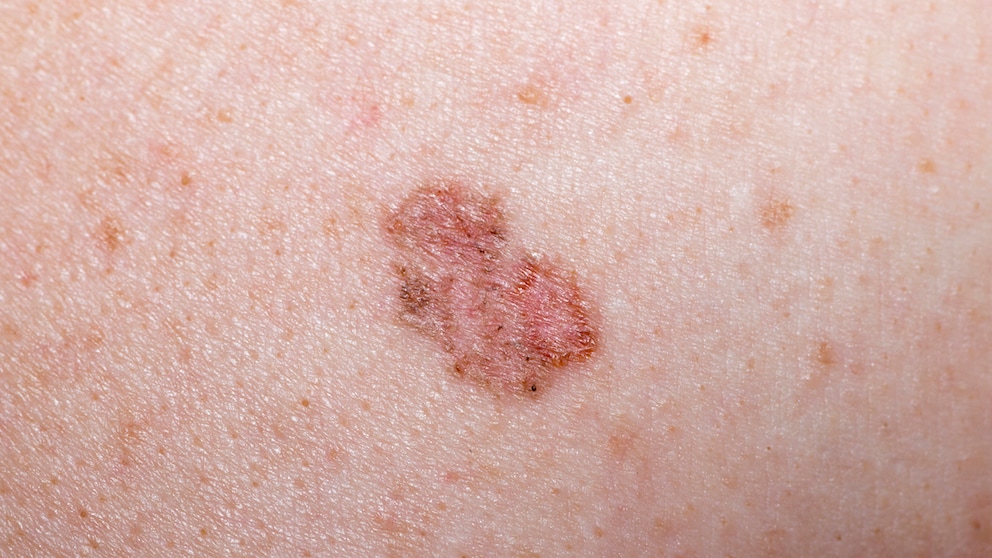
No one wants to develop skin cancer, that’s for sure. However, those affected at least breathe a sigh of relief when the diagnosis is “light” or “white” skin cancer. This form is less frightening than “black” skin cancer. Rightly so? A study from 2024 revealed surprising findings. Newer data support its conclusions.
Black skin cancer (malignant melanoma) is considered significantly more dangerous. It metastasizes faster and can be life-threatening. In the case of light skin cancer—known in the medical community as non-melanocytic skin cancer or NMSC—changes can usually be completely removed; it rarely spreads.
This umbrella term primarily includes basal cell carcinoma and squamous cell carcinoma.1,2 But how can it be that not black skin cancer, but the supposedly “less harmful” form of the disease is the deadlier one? An explanation was provided by a team of French and Indian researchers in a study published in 2024.3
What Was Investigated?
Thierry Passeron, a professor at the University Hospital in Nice, analyzed data from the WHO in his study, conducted in collaboration with experts from “L’Oréal Dermatological Beauty Corporate” and “La Roche-Posay,” focusing on the year 2020. He was particularly interested in the deaths caused by NMSC and black skin cancer.
This Skin Cancer Form Led to More Deaths
Overall, the World Health Organization recorded around 1.5 million people worldwide with skin cancer in 2020. Of these, 324,000 cases were due to malignant melanomas and about 1.2 million cases to NMSC. So, black skin cancer was less common, but as the more dangerous of the two skin cancer forms, does it lead to death more often?
“No,” is the answer. “Although NMSC is less often fatal than melanoma skin cancer, its prevalence is strikingly higher. In 2020, 78 percent of all skin cancer cases were NMSC, leading to over 63,700 deaths. In contrast, melanoma caused an estimated 57,000 deaths in the same year. The significantly higher incidence of NMSC has therefore led to a greater overall impact,” Passeron explained in a press release about the study.4 And it could be even larger than the WHO data showed. “As alarming as these numbers are, they may indeed be underestimated. NMSC is often underreported in cancer registries, making it difficult to understand the true burden.” Regardless, the analysis concluded that the supposedly more dangerous cancer form, black skin cancer, accounts for fewer deaths than NMSC.
Populations of Certain Countries Apparently More at Risk
The study also showed that countries with predominantly light-skinned populations and older demographics had more skin cancer cases than other countries.
These include:
- USA
- Germany
- United Kingdom
- France
- Australia
- Italy
But: Countries with a high proportion of dark phenotypes also report skin cancer cases. In 2020, 11,281 deaths in Africa were attributed to this type of cancer.
People particularly at risk of developing skin cancer were generally those who work outdoors, have had an organ transplant, and those suffering from the skin condition xeroderma pigmentosum (XP).
Researchers Urge Not to Underestimate the Danger of Skin Cancer
One reason why white skin cancer is associated with surprisingly many deaths compared to melanoma could be that it occurs much more frequently. Prof. Passeron, however, emphasized the need not to take the less dangerous form of skin cancer lightly: “We must spread the message that not only melanoma can be deadly, but also NMSC. It is important to point out that people with melanin-rich skin are also at risk and can die from skin cancer. We need to implement effective strategies to reduce the number of deaths associated with all types of skin cancer.”
This Growth on the Eye Could Indicate Skin Cancer

How Aggressive Is White Skin Cancer?
New Data on the Development of Skin Cancer
The findings from the 2024 study remain relevant because: New data analyses from 2025 confirm that skin cancer cases are increasing worldwide. While around 1.8 million cases were recorded in 1990, by 2021, it was already 6.64 million. White skin cancer, in particular, is driving the increase. Basal cell carcinomas (BCC) accounted for about 67 percent of all skin cancer cases in 2021.5
Another study from 2025 showed that the other form of light skin cancer, squamous cell carcinoma, is also becoming an increasingly significant health burden worldwide. An analysis of data from 204 countries found that the number of cases has more than quadrupled since 1990—and particularly affects older people. Based on the available data, researchers predicted a further significant increase by 2045.6
Conclusion
The numbers of cases and the analysis of deaths show: Skin cancer should always be taken seriously—not just in its most aggressive form. Prevention in the form of sun protection and regular screenings helps to detect and treat not only black but also white skin cancer early.