


August 2, 2021, 6:13 pm | Read time: 3 minutes
Exercise is beneficial—for young people, seniors, and children. For the latter, it positively impacts physical, mental, and psychosocial development. Studies have also shown that children find school learning easier when they engage in regular and sufficient physical activity. Now, a new study has shown that sports can particularly enhance children’s language development and vocabulary.
During the coronavirus pandemic, scientists already sounded the alarm that children and adolescents were not getting enough exercise due to restrictions and lockdowns. But even outside of the pandemic, physical activity is often lacking among the youngest in society. Yet, it is crucial for good development—both physical and mental. After a Swiss study had already shown that athletic children perform better in school, a new study from the University of Delaware now shows which type of sport is particularly beneficial for learning vocabulary and developing vocabulary skills.
Overview
How the Study Was Conducted
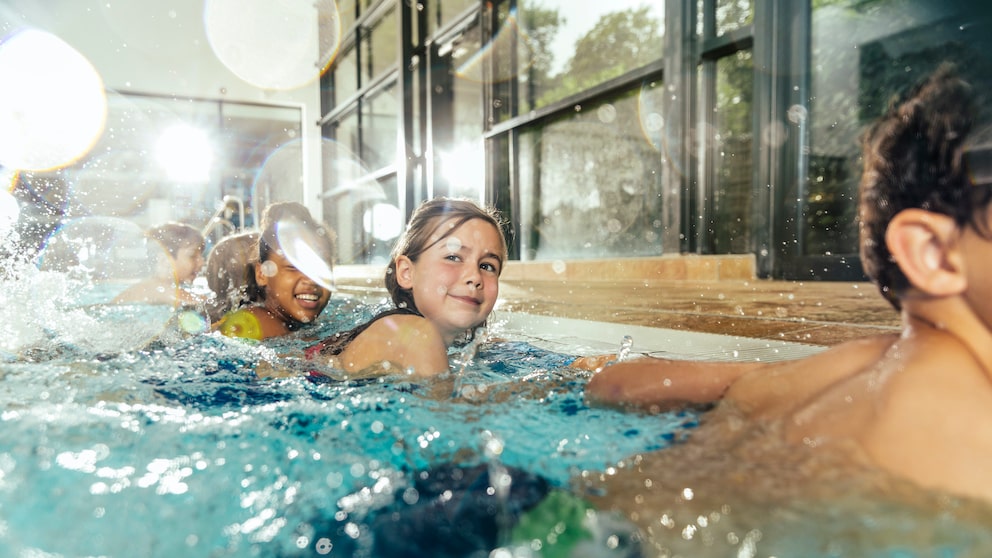
For the study, 48 school-aged children between 6 and 12 years participated in a vocabulary task where they learned new words.1 This was followed by a phase where the children were divided into three groups: One group colored in coloring books, the second group did Crossfit exercises, and the third group went swimming. In the final phase, it was tested how well the children could remember the previously learned vocabulary.
Also interesting: What you need to know for each swimming badge
Drawing, Crossfit, Swimming—What Is Beneficial for Learning?
At first glance, the result was as expected: The children who moved after learning vocabulary could better recall the previously learned words. However, it was surprising that the type of movement clearly matters. It turned out that there is a difference in learning success depending on whether the children swam or did Crossfit. The latter showed no significant difference from the drawing group, while the young swimmers performed 13 percent better in the final vocabulary test than the other children. They directly showed a positive effect on their language, being able to expand their vocabulary better.
Also interesting: Study analyzes the influence of parents’ fitness on their children

Neuroscientist Explains: “Exercise and You’ll Be Happy Doesn’t Work”

Why Children Should Balance, Hop, and Climb–and How to Encourage It
Automatic Movements (like Swimming) Are Particularly Beneficial for Learning
“Motor movement helps in storing new words,” explains study leader Maddy Pruitt in a press release.2 But why didn’t CrossFit show a similar effect as swimming? Here, the scientists suspect that automatism plays an important role. All the children in the swimming group could already swim, while the Crossfit group had to learn the exercises anew in the experiment, which also consumed mental energy. According to Pruitt, simple activities like walking or playing on the playground are also suitable for promoting learning. In general, it seems that automatic movements or endurance training are best for language development in children.
Sources
- 1. Pruitt M, Morini G. Examining the Role of Physical Activity on Word Learning in School-Aged Children. Journal of Speech Language and Hearing Research. (2021)
- 2. Boyle Tippett A. Fit Kids, fat vocabularies. University of Delaware. (2021)