


September 21, 2026, 4:05 pm | Read time: 8 minutes
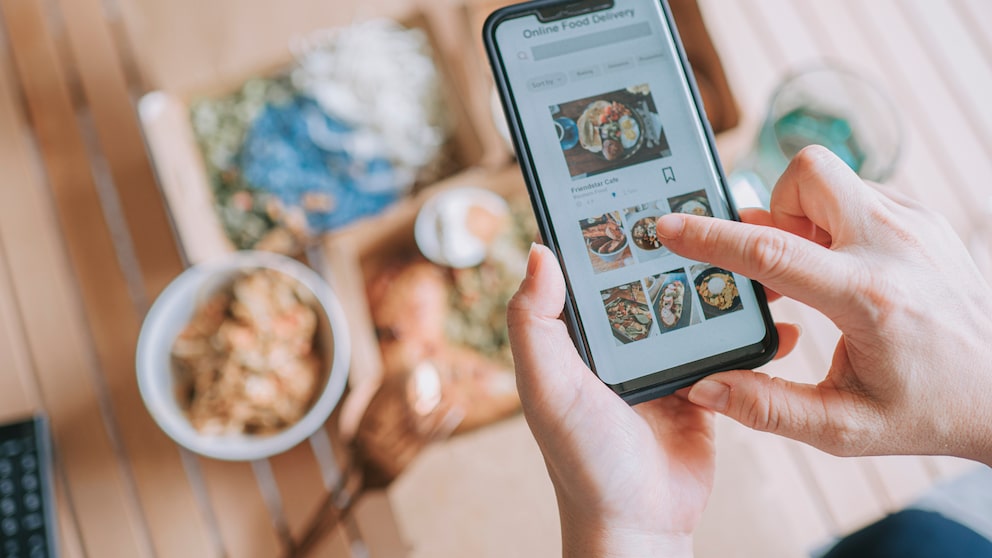
Pizza, burgers, or maybe Korean fried chicken? The food is chosen, the order is sent, and you can even track on your phone how the driver is getting closer. All that’s missing is the doorbell ringing. But that will never happen—that’s how a curious business idea works in South Korea. FITBOOK explains what’s behind it.
In short: The ordered food doesn’t exist. You don’t have to pay for it either. What sounds quite absurd at first is currently developing into a new internet phenomenon in South Korea. On so-called “Dopamine Sites,” users can simulate consumer experiences without actually buying or receiving anything. Especially with food, there’s an unusual idea behind it: Instead of giving in to the impulse and really ordering from a delivery service, the order is simply simulated. Yet, this process is supposed to make you happy. But why does it work even though the food never arrives?
Fake Ordering Instead of Really Buying
One of the South Korean sites is called “Only the Food Doesn’t Come.” Developer Park Seo-hyun explained to “MBC News” that some people use the service as a kind of challenge to avoid real delivery orders and save money. The high delivery fees are a reason for some. According to MBC, about 200 to 300 people now access the site daily.
Park herself had an interesting experience during development: Because she kept trying the fake orders, she eventually stopped ordering food altogether and didn’t even feel like opening a real delivery app. Whether this effect actually resulted from the simulation and can be transferred to others is completely open.
The site is part of the so-called “Dopamine Sites,” which are currently spreading mainly among young people of Generation Z. The principle is no longer just for food. In fake shops, users can, for example, add clothes and other products to the cart without actually buying them. An international version for food is “FoodNeverComes.”1 Users can select dishes from 22 different cuisines and go through the entire ordering process.
Why an Order Can Make You Happy Even Though Nothing Arrives
When you order pizza, you’re probably looking forward to eating it later. But part of the happiness can apparently arise much earlier.
You choose something, make a decision, and look forward to it. Dopamine plays a role in this. Often referred to as the “happiness hormone,” its function is much more complex. Dopamine motivates us to pursue goals and helps our brain learn which actions are associated with a possible reward. The mere expectation of such a reward can play a role.2
On “Dopamine Sites,” users experience several steps that can also trigger positive feelings during a real order: anticipation, personal selection, and finally, the confirmation that the supposed order has been placed. Only the crucial last step is missing: actually receiving the food.
FITBOOK spoke with economic psychologist Dr. Georg Felser from Harz University about this. He finds it plausible that ordering and anticipation can already be satisfying. “A part of the satisfying process of ordering and anticipation can indeed be experienced,” Felser explains. FoodNeverComes calls this process a “Dopamine Loop.”
We Actually Already Know This Principle
As unusual as it sounds, similar behavior might be familiar to many. Perhaps you’ve filled an online shopping cart and then closed the page without buying anything.
Others create wish lists with things they’d like to have, even though they might never order them. A similar effect can occur when planning a dream vacation that is never booked or when assembling the perfect house on Pinterest. You engage with something you want without actually getting it. “Dopamine Sites” now offer this behavior as a service.3
Can a Fake Order Really Stop the Craving for Food?
Feeling good about choosing and ordering is one thing. But is this effect enough to forgo the real order afterward?
Felser sees another potential advantage: The fake order takes additional time. “A longer delay occurs, during which the craving can subside again,” he explains. “This is potentially positive in itself.”
Why the Effect Could Diminish Over Time
But Felser sees a crucial catch: After anticipation, a fake order never leads to actual fulfillment.
“It builds on the fact that dopamine is released in anticipation of a ‘reward,’ and the things that announce a reward gain their own secondary reward value,” Felser explains.
Normally, such reactions would be unlearned if the expected reward consistently and permanently fails to materialize. Applied to the fake order, this means: If the brain eventually learns that no food follows the order process, it could lose its appeal. Or as Felser puts it: “If the order process does not announce a later satisfaction through the food or ‘reward,’ it will lose its borrowed reward value.”
Felser doubts that the effect will remain stable in the long term. Under certain conditions, it could look different, such as when the behavior is sometimes followed by an actual reward and sometimes not.
Or Does It Make You Even Hungrier?
Opening such a site means engaging intensely with the very food you want to avoid. Could the fake order even increase hunger?
“Indeed, the risk exists and is not small,” says Felser. What matters is the function that browsing serves for the individual. Just browsing a favorite online store and imagining buying something can be satisfying without actually ordering anything.
With food, it can work similarly to flipping through a cookbook and anticipating cooking or ordering a dish. “But if the hunger is already great, it can become even greater with this method,” Felser explains.
Self-control also plays a role. Research shows that resisting becomes more difficult the closer the reward seems. With a real order, it’s just a few clicks away. Felser warns: “In this respect, people who are interested in eating less or spending less money on such orders are playing with fire.”
Can Streaks and Discounts Become a New Habit?
FoodNeverComes also relies on countdowns, discounts, streaks, badges, and other playful elements. Could users resist a real order but develop a new habit at the same time?
Felser thinks it’s possible: “Through these playful elements and other gimmicks, it indeed becomes easier to build habits.”
The key is gamification. It could ensure that the food itself no longer holds the appeal. “If the reward signal always goes nowhere because no food is ever delivered, the effect is not as strong in my opinion,” Felser explains.
However, if additional incentives are added, this could change: “If, on the other hand, something like a competition or even just feedback on one’s behavior is added, other motives come into play that don’t have to do with food.” His conclusion: “And then the app’s effect takes on a life of its own.”

Between Dopamine and Constant Stress: Why We Reach for Our Phones So Often

Constant Craving for Sweets? Researcher Explains How to Break Free from Sugar
Can Fake Behavior Become Real?
It is still unclear whether constant simulation could have the opposite effect. In other areas, it is being studied whether initially simulated behavior can increase the likelihood of actually performing it later. This phenomenon is also known as “entry behavior.” For “Dopamine Sites,” this has not yet been studied. However, there are indications from gambling research that simulations can influence real behavior.
In 2014, researchers followed 409 people who used social casino games but had never gambled online for real money. Six months later, about 26 percent had started online gambling.4 A 2016 study found a similar result: Of 521 social casino players, 19 percent reported that the simulated games led them to gamble for real money later.5
A connection was also found among adolescents. A study with 1,178 participants aged 11 to 19 showed that simulated gambling was associated with a higher likelihood of real gambling a year later.6
These results, however, cannot be directly applied to fake food orders. Whether a “Dopamine Site” prevents or possibly even encourages the use of a real delivery app in the long run has not yet been studied.
Even Free Can Have a Price
The fake order costs nothing, but using such sites can still be valuable for operators.
FoodNeverComes, for example, displays ads and links to commercial offers. Ad-supported sites can also use cookies and other tracking technologies to capture user behavior and use the collected information for personalized advertising. So the order remains fake. Your clicks do not.
Does Fake Ordering Really Make You Happy?
At least in the short term, a fake order can indeed make you happy. Because part of what makes a real order appealing happens beforehand: anticipation, choosing, and expecting the reward.
Whether this feeling of happiness lasts is questionable. If the expected reward is permanently absent, the fake order could lose its appeal. With strong hunger, engaging with the desired food can even increase the craving.
The supposed happiness lies less in the food itself than in the anticipation of it. Whether this effect actually helps to order less food in the long term has not yet been studied.