


March 23, 2025, 6:59 am | Read time: 6 minutes
It’s a question many people ask: Why do we wake up consciously between 2 and 4 a.m.? And what can be done if falling back asleep is difficult? This can indeed cause significant distress for those affected. FITBOOK Editor-in-Chief Nuno Alves spoke with sleep researcher Dr. Christine Blume about this. The expert explains the phenomenon and offers helpful tips for when falling back asleep doesn’t work.
About eight percent of people in Germany, France, the United Kingdom, Italy, and Spain regularly wake up at night and then have trouble falling back asleep, according to a 2010 cross-sectional study.1 People with pain or mental illnesses are more than four times as likely to be affected. Other risk factors include high blood pressure, cardiovascular diseases, respiratory diseases, diabetes, and high caffeine consumption. However, the phenomenon also occurs in healthy individuals. But why is that? Dr. Christine Blume, a sleep researcher at the Center for Chronobiology at the University of Basel, explains in an interview why we wake up between 2 and 4 a.m. and what strategies can help us get back to sleep.
FITBOOK: Some people worry because they can’t sleep through the night. Is that a problem?
Dr. Christine Blume: “Waking up at night is completely normal and part of healthy sleep. We all wake up briefly 15 to 30 times a night—so briefly that we don’t remember it the next morning. It only becomes problematic if falling back asleep is difficult and the awakening affects sleep quality.”
This often happens between 2 and 4 a.m. Why is that?
“Sleep is controlled by two factors: First, we have a kind of internal battery. Hopefully, it gets recharged at night, is full again in the morning, and discharges throughout the day. In the evening, we then have the urge to sleep again. We call this urge sleep pressure. But there’s a second factor: our internal clock. This increasingly promotes wakefulness during the day, counteracting sleep pressure. In the evening, the promotion of wakefulness slowly decreases, and in combination with high sleep pressure, we can fall asleep well. The interplay of both factors—internal battery and wakefulness promotion—helps us stay awake for about 16 hours during the day without just collapsing despite high sleep pressure.”
Also interesting: 6 insights I gained using a sleep tracker
Why we often wake up consciously between 2 and 4 a.m.
How does this relate to waking up between 2 and 4 a.m.?
“The two factors not only ensure that we stay consistently awake during the day but also have about eight hours of stable sleep at night. When we go to bed in the evening, our internal battery is recharged, especially through deep sleep in the first half of the night. Here, we are essentially under the influence of our strongest internal sleep aid—sleep pressure. In the second half of the night, sleep pressure is largely reduced, but the promotion of wakefulness is also very low at this time, allowing us to continue sleeping. In the transition between the first and second halves of the night, the first conscious awakening often occurs—simply because sleep differs between the two halves. Sleep in the second half of the night is also more unstable.”
Sleep is much more than just rest; it influences numerous processes in the body, from metabolism to mental performance. I also discuss its role in long-term health and aging in my book, “Highway to Health – In 7 Steps to a Healthy Long Life,” which will be published on January 4, 2027, and features sleep researcher Dr. Christine Blume as an expert.
What can you do if you can’t fall back asleep?
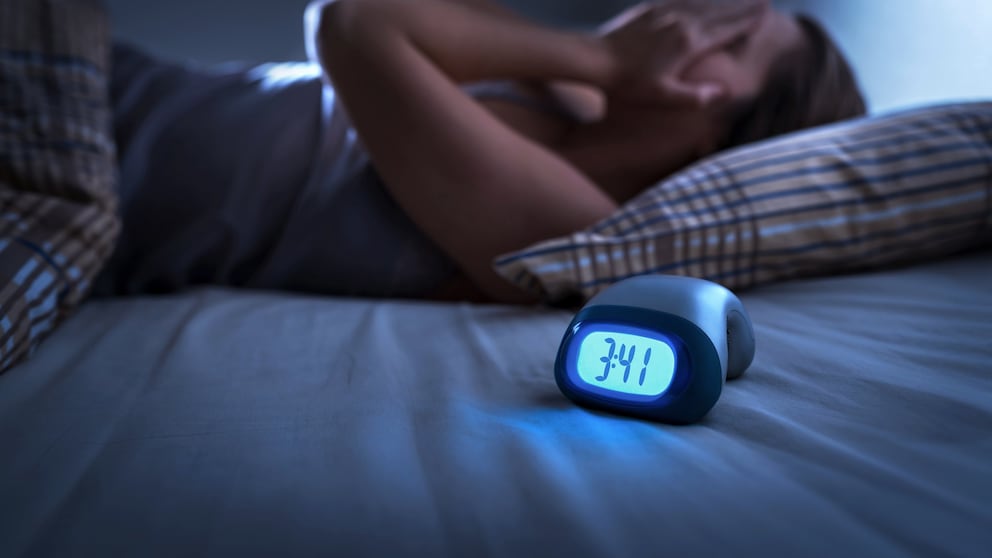
“Many people start to ruminate—this can trigger stress. Looking at the clock adds pressure. This stress can then prevent falling asleep. A helpful strategy is to ignore the clock. Another is to practice relaxation exercises during the day to lower internal arousal levels and keep stress from becoming too great. While you can often fall asleep well in the evening due to sleep pressure, excessive tension and stress can resurface in the second half of the night when our internal sleep aid is depleted. And that can make falling back asleep difficult.”

Early, Late, or Normal? Take the Chronotype Test!

FITBOOK Move Jam 2021 – Catch Up on Session 4 Now
Daytime relaxation exercises can help make it easier to fall back asleep at night
So, evening relaxation exercises alone aren’t always enough…
“You should preferably do such exercises during the day and not just when falling asleep is difficult. This also trains our ability to relax. Sleep is a very deep state of relaxation. And if I lose the ability to relax, I need a lot of sleep pressure to fall asleep. And especially in the second half of the night, this sleep pressure is not as strong. We need even more relaxation.”

So, either you’re very relaxed, or the sleep pressure is strong enough to counteract the stress level. What if neither is the case?
“If you can’t fall back asleep within 20 to 25 minutes, you shouldn’t continue to lie in bed waiting for sleep. This can lead to a bad mood, worries, and anxiety, or stress, and cause sleep problems to persist.”
Woke up between 2 and 4 a.m.? What to do if falling asleep is difficult
What should you do instead?
“Ideally, leave the bed and even the room and engage in something that feels good and for which you don’t have enough time during the day. You should only try to fall asleep again when you feel so tired that it can work within 20 to 25 minutes. In the end, this means you might sleep less that night and be more tired during the day. But every night you don’t sleep well is preparation for the next night because it increases the likelihood of sleeping better then.”
Also interesting: Is it normal to wake up at night?
You recommend engaging in something that feels good—what do you mean by that?
“Ideally, it’s something not very activating. But also not something where you fall asleep outside the room—like watching a series or listening to a podcast. After all, you want to fall asleep in bed again. One option is to plan a meeting with friends or a dinner menu. Researching your next vacation can also be included. I advise against work. It should be relaxing and not stressful or negatively connoted.”
So using a smartphone or laptop would be okay.
“You should reduce the brightness as much as possible or switch to night shift mode.”