


July 6, 2026, 1:47 am | Read time: 5 minutes
Brushing your teeth twice a day is important! However, teeth don’t just thrive on a toothbrush and toothpaste alone. They also need support from healthy food. There are certain foods that, according to research, actively maintain oral flora and thus keep teeth healthy—FITBOOK provides an overview. For the following treats, the rule is: bite into them more often!
Raw Cacao Nibs
Is chocolate good for your teeth? We’ve learned the opposite. True, the chocolate bar remains a no-go. But raw, sugar-free cacao nibs (raw cacao) are true friends of your teeth. Older studies have already discovered that the polyphenols in raw cacao effectively kill cavity-causing bacteria.1 In 2019, Indian researchers found that a cacao bean mouthwash specifically targets the worst culprit, the Streptococcus mutans bacterium, while sparing beneficial oral bacteria.2 Additionally, snacking on cacao has another pleasant side effect: A portion of 48 grams apparently improves brain performance measurably just 120 minutes later.
Cheese and Yogurt from Grass-Fed Animals
The calcium in dairy products makes teeth and bones strong. Products from grass-fed milk have an additional advantage besides animal welfare and sustainability. Cows, sheep, and goats that graze outdoors produce milk with a higher vitamin K2 content, as it is activated by the chlorophyll in plants.3 K2 is a less well-known but extremely important nutrient. The vitamin plays a key role in bone, tooth, and heart health by regulating calcium levels.4 Unfortunately, most people consume too little of it. Switching to grass-fed dairy products could help address this deficiency in a delicious way.5
Fresh, Raw Onions
Onion breath is anything but sexy, but the distinctive essential oils do a thorough job in the mouth. An older analysis found that fresh, raw onion extracts (cooked onions unfortunately do nothing) not only ruthlessly kill the two cavity-causing agents Streptococcus mutans and Streptococcus sobrinus, but also target the periodontitis-causing Porphyromonas gingivalis and Prevotella intermedia.6 The activity remained for 48 hours. Using onions as a healthy food for teeth is more for solitary days. But it pays off. The so-called allium plant is also said to protect against cancer.
Broccoli
Yes, broccoli should also be mentioned when it comes to dental health. The vegetable, loved by some and hated by others, is a true health booster—even for teeth. A study published in 2025 showed that broccoli extract seems to protect tooth enamel as well as fluoride gel.7 So if you need another reason to eat broccoli more often, here it is.
Green Tea
Researchers repeatedly describe green tea as one of nature’s most valuable gifts. What this Asian hot drink does for health would exceed the scope here. Let’s stick to teeth: A summary of several studies concluded in 2018 that the polyphenol epigallocatechin-3-gallate in green tea not only eliminates all unwanted bacteria but also effectively protects against oral cavity carcinoma (tumors of the oral cavity).8 Green tea has both preventive and healing effects. Additionally, it provides a dose of tooth-strengthening fluoride. What more could you want?
Ginger
There is indeed a study from 2019 that examined whether raw cacao or ginger is better at killing cavity bacteria.9 The result: Cacao can—as already mentioned—quite reliably eliminate S. mutans, while ginger is better at tackling other inflammation-causing bacteria. A homemade mouthwash from fresh ginger is thus a balm for oral flora and perfectly complements cacao. It’s a shame that chocolate-covered ginger sticks don’t have the same effect. The combo just fits too well!
Celery Sticks
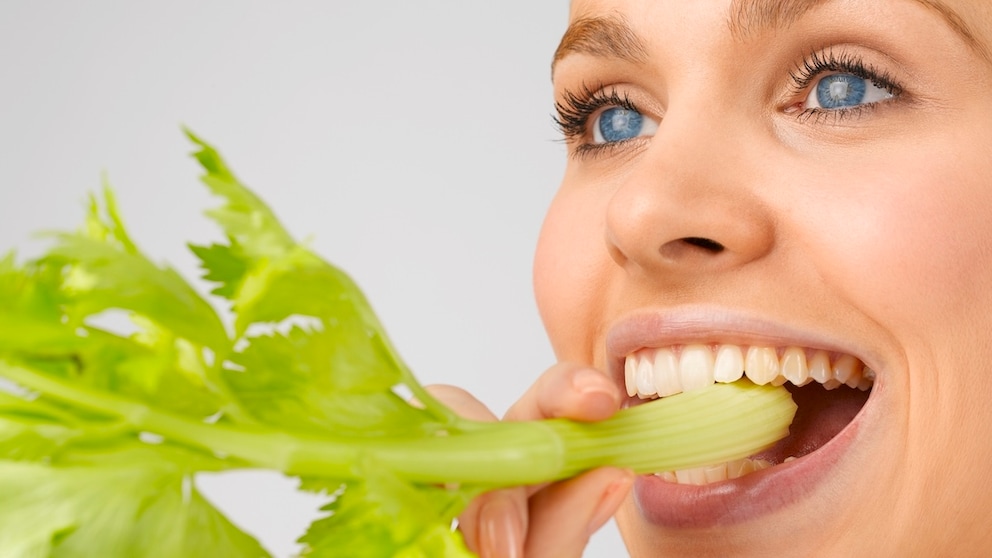
With celery, it’s less about the ingredients and more about the texture that makes it a superfood for dental health. Chewing on one of the crunchy sticks is akin to a mini tooth-brushing session. The fine fibers act like dental floss, removing food particles from between teeth and scrubbing away bacterial plaque, while the mouth produces a large amount of saliva, which in turn neutralizes acid. A piece of chilled celery is also great for teething babies.
Fish
Speaking of fluoride—fish, especially sea fish, contain a lot of it, making it a recommended food for healthy teeth. Fatty fish like salmon or mackerel also provide vitamin D, which promotes the body’s calcium absorption. Calcium is known to be important for healthy bones and teeth. Fatty fish also provides omega-3s. These fatty acids have anti-inflammatory effects, which are particularly important for preventing and treating periodontitis in terms of dental health.10

How Often Should You Brush Your Teeth?

Most People Make This Mistake When Using Mouthwash
Shiitake Mushrooms
Cavities, gum inflammation, periodontitis, and even plaque—there seems to be hardly a dental problem that the shiitake mushroom can’t help with. The reason is a substance found only in this mushroom called lentinan.11 This is being researched because its potential seems to go far beyond dental health. Researchers are already celebrating shiitake extract as a “cheap dentist.” Unfortunately, there are currently no mouthwashes with shiitake extracts on the market. However, a similar effect can be achieved by chewing a raw shiitake mushroom for a long time.
Foods That Are Not Good for Your Teeth
Teeth and gums do not like sugar and acid at all. Therefore, make these foods the exception:
- Soda, cola, sports drinks (even the light versions)
- Caramel and other sticky, filling-pulling sugary stuff
- Gummy candy and anything with sugar
- Hard lollipops
- Store-bought kombucha (often contains more sugar than necessary; making it yourself is worth it!)
- White bread, crackers, and the like
- Wine, beer, spirits, and worst of all: cocktails (strictly speaking, alcohol is not a food)