

May 25, 2026, 6:00 am | Read time: 4 minutes
There are not only taste differences between sweet potatoes and regular potatoes—the tubers actually belong to different botanical families. But is one healthier than the other?
Origin and Characteristics of the Sweet Potato
Sweet potatoes (botanically: Ipomoea batatas) and potatoes (botanically: Solanum tuberosum) are not the same; in fact, they are not even related. The yellow potatoes belong to the nightshade family.1 The sweet potato, on the other hand, belongs to the morning glory family.2
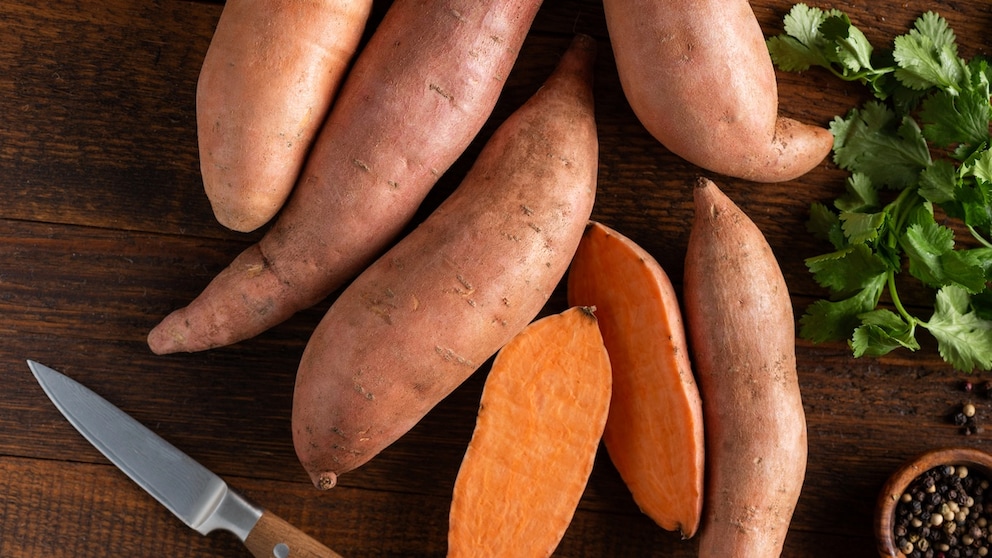
Sweet potatoes, often also called batatas, are typically larger. Depending on the variety, they have a yellowish to reddish skin, either white or reddish flesh, and taste—as one might guess—sweeter than potatoes. Another difference: Sweet potatoes can be eaten raw! Potatoes, however, are potentially toxic when uncooked.
Sweet potatoes have been in Europe since the 16th century. Nevertheless, they have recently emerged as a nutrition trend. Their valuable properties are said to make them a healthier alternative to potatoes. Rightly so?
The Tubers in a Calorie Comparison
The good old potato averages 71 kilocalories per 100 grams. For sweet potatoes, it’s about 86. The few extra calories are explained by the different sugar contents: Sweet potatoes consist of about 20 percent carbohydrates, more than four grams of which are pure sugar. Potatoes have only about 14.6 grams of carbohydrates per 100 grams, with less than one gram of sugar.
Sweet Potato vs. Potato: The Nutrient Check
Sweet potatoes provide more B vitamins, vitamin A, and beta-carotene than potatoes. They offer a small boost for eyesight and the immune system. In Germany, however, the population is well-supplied, and deficiencies are rare.3
Which Tuber Should You Prefer?
Whether sweet potatoes or regular potatoes, both are ideal for a fitness-conscious diet. They each have different advantages. The classic potato contains so-called “resistant starch,” which forms when cooled and becomes indigestible fiber. This means the calorie content drops by about ten percent, even if you reheat the potato afterward.4 A practical aid for weight loss.
Sweet potatoes do not have this property. However, they have a lower glycemic index, especially when cooked.5 Therefore, they are said to have a gentler effect on blood sugar levels and keep hunger at bay longer.

Sweet Potato Toasts in Four Delicious Varieties

The Healthiest Way to Prepare Potatoes
Carbohydrates from Potatoes–Good or Bad?
FITBOOK also asked Prof. Dr. Worm, knowing that the nutritionist is generally critical of carbohydrates. “Potatoes consist mainly of water and starch,” he explains, and that starch is quickly broken down into glucose.
The issue with the lower glycemic index attributed to sweet potatoes is negligible. “After all, sweet potatoes also have more carbohydrates. Therefore, the glycemic load per serving is not very different and is rather irrelevant from a health perspective.”
Regarding ingredients, Prof. Worm concedes that besides starch, there are “a few” nutrients. However, you don’t necessarily need potatoes to obtain them. These nutrients are also found in other, less starchy vegetables.
Whether from (sweet) potatoes or grain products: According to Prof. Worm, only people who do physical labor or exercise a lot and can metabolize sugar well should consume plenty of carbohydrates. “Hard-working muscles love starch,” Prof. Worm explains. Those who are less physically active should be more cautious with carbohydrates, in his opinion.
Whether sweet potatoes or potatoes are healthier also depends on the method of preparation. After a dip in the deep fryer, neither is particularly beneficial, let alone healthy.
Conclusion
Both tubers have good nutrients, as well as carbohydrates and (sometimes critically viewed) sugar, which should be more or less part of the diet depending on lifestyle and any pre-existing conditions like diabetes. Some people opt for proteins with salad, while others consciously include healthy carbs in their meal plans. For the latter, potatoes and sweet potatoes—both good, plant-based foods with valuable properties, but also rich in starch—can be included. Like fiber-rich whole-grain bread, they should not be consumed in excess.