


May 24, 2026, 6:06 am | Read time: 6 minutes
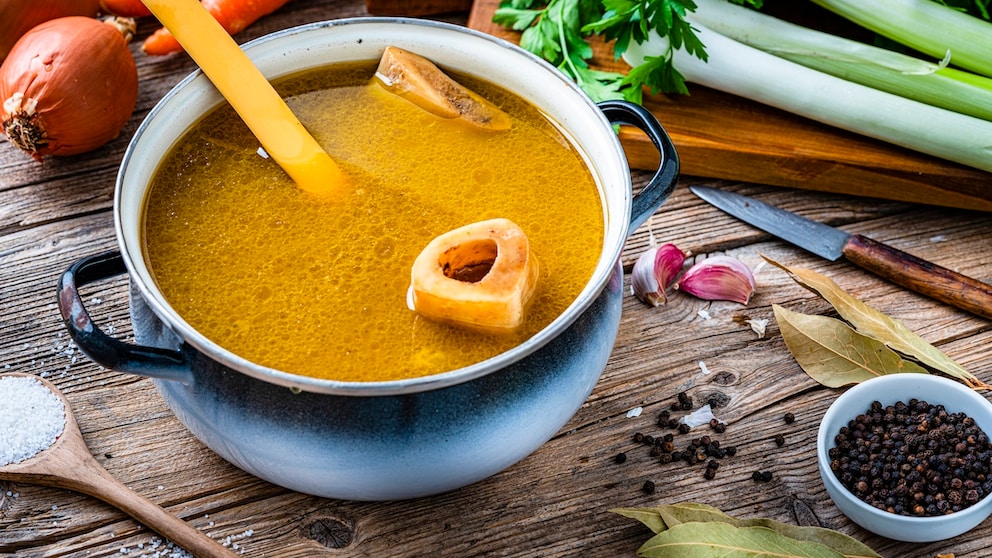
There’s a new superfood trending on social media: bone broth. Numerous before-and-after photos claim to show improvements in wrinkles, figure, and skin texture among users. However, this soup trend is not new; it has a long tradition in European and Asian cuisine. FITBOOK nutrition expert Sophie Brünke spoke with nutrition scientist Prof. Dr. Nicolai Worm about how healthy bone broth really is.
Bone Broth–What’s Inside
There is no standard recipe—and therefore no standard nutrient composition—for bone broth. Depending on taste, bones, including marrow bones, can be simmered for hours with meat, vegetables, spices, and herbs. The effects are said to be varied: bone broth is supposed to promote beautiful skin, aid in weight loss, and strengthen the immune system. But which nutrients actually make it into the broth during simmering?
Manufacturers of related products particularly advertise the ingredients collagen, amino acids, and minerals. Some use especially complex terms like glycosaminoglycans (building blocks for connective tissue and skin), while others forgo micronutrient details altogether and simply refer to it as “Grandma’s secret weapon” to convince customers through emotional security.
As for the macros, it’s—typical for a broth—modest:
- Energy: about 20 calories
- Fat: less than 1 gram
- Carbohydrates: less than 1 gram
- Protein: 0 to 3 grams
The minerals typically include potassium, calcium, magnesium, and phosphorus. However, a serving of bone broth covers less than five percent of the daily requirement, so the content should not be overestimated.
How Bone Broth Affects Skin and Joints
When it comes to skin and joints, collagen is the focus. It’s a structural protein that provides stability to skin, bones, joints, and tissue. However, the body’s own collagen production decreases with age. That’s why bone broth (and collagen supplements) are particularly popular in the beauty industry. There are, however, two problems: “The collagen content in bone broth is variable and not standardized,” says nutrition scientist Prof. Dr. Nicolai Worm. Additionally, collagen breaks down into the building blocks gelatin and amino acids during the long simmering process. The Federal Center for Nutrition (BzfE) explains that whether the body can then rebuild collagen from these components depends on many factors. It emphasizes that it is “more than unlikely” that the collagen from the broth will become significant amounts of the body’s own collagen.1
In other words, skin and joints are likely to benefit little from the broth. The consumer center makes it clear that advertising claims like “collagen smooths your skin,” “visibly reduces wrinkles,” or “reduces cellulite” are prohibited for dietary supplements.2
Expert on Current Study Situation
Worm explains: “There are no controlled clinical studies on bone broth as a food for joint health in humans.” According to the expert, an animal study suggests that certain components from chicken bone broth could slow bone loss in rats with an increased risk of osteoporosis.3 But this result is “not transferable to humans.” Moreover, while amino acids from bone broth are absorbed in the intestine, “there is no evidence that they are incorporated into joint cartilage in relevant amounts,” the expert notes.
With collagen supplements, the outlook is only slightly better. Products that provide ten grams per day show “significant but clinically modest symptomatic effects in osteoarthritis, with a good safety profile,” according to current research. However, the evidence is not sufficient to make a clear recommendation, and the transferability to bone broth is lacking due to the non-standardized composition and absence of clinical studies. Thus, neither the broth nor supplements are mentioned in current osteoarthritis guidelines.
Can Bone Broth Help with Weight Loss?
Bone broth can aid in weight loss because it has a hearty taste that can curb cravings for salty or savory foods. The warmth also provides a feeling of fullness and can reduce acute cravings. At the same time, it provides electrolytes but relatively few calories—and can thus replace a higher-calorie indulgence drink in the evening. Still, water or unsweetened tea is always the first choice for weight loss because they are completely calorie-free. So, bone broth doesn’t have a “booster” effect: it doesn’t actively promote fat loss but can, at most, help save calories indirectly.
What Collagen Is Really Good For–Researcher Assesses the State of Studies

How Collagen Affects Biological Age, According to a Study
The Effect on the Immune System
Can you simply drink away a cold or other infections with broth? After all, bone broth was considered a tonic in Grandma’s time. But according to BzfE, there is little scientific evidence to support this. There are indications that chicken broth might positively influence certain markers in the body. However, the perceived relief from a cold could also simply be due to the warm steam (which moistens the airways) and the warming liquid. For people struggling with loss of appetite during an infection, the broth can be practical for taking in fluids and electrolytes.
Does Bone Broth Have Any Disadvantages?
Bone broth is not suitable for people with histamine intolerance. The longer it simmers, the more histamine is in the final product. However, regarding warnings about heavy metals, there is less cause for concern: while animals do accumulate heavy metals from their environment in their bones, a 2017 study showed that only trace amounts of heavy metals make it into the broth when animal bones are simmered.4 So, there’s reassurance here.
One last important point is the salt content. Depending on the amount, this can become a disadvantage. Ready-to-eat broths can contain up to three grams per serving, which is already half the recommended daily maximum. With a typical diet, the six-gram limit is then hard to maintain. And high salt consumption increases blood pressure—a major risk factor for cardiovascular diseases. Better: cook it yourself and control the salt content.