


June 17, 2026, 6:29 pm | Read time: 8 minutes
Smoothies have been among the most popular breakfast trends for years. They are quick to prepare, easy to take with you, and considered a simple way to incorporate fruits and vegetables into your diet. But can a smoothie really replace a full meal?
Where Does the Term Smoothie Actually Come From?
Today, almost everyone knows the creamy blended drink, but the term isn’t that old. The word “smoothie” originally referred to the particularly fine consistency of the drinks.1
The first precursors of modern smoothies emerged in the U.S. in the 1930s after electric blenders became available for home use. However, they only gained popularity decades later with the health and natural food movement of the 1960s and 1970s. Smoothies became a global trend in the 1990s when specialized smoothie bars opened and the first bottled versions appeared in supermarkets.
Not All Smoothies Are the Same
When someone talks about a smoothie, they don’t always mean the same drink. The differences can be significant. While some versions consist only of pureed fruit and fruit juice, others include vegetables, oats, yogurt, nuts, or seeds. Accordingly, the nutritional values also vary. The term smoothie alone says little about whether a drink is suitable as a breakfast or more as a small snack in between.
Why Many Breakfast Smoothies Only Satisfy Briefly
At first glance, a fruit smoothie seems like the ideal morning meal. After all, it provides vitamins, minerals, and natural plant compounds. The problem often lies in the high fruit sugar content. When several servings of fruit are processed into one drink, you often consume significantly more sugar than you would by eating whole fruits. At the same time, many smoothies lack the components necessary for long-lasting satiety.
The result: Blood sugar levels rise quickly and then drop again. Many people feel hungry again shortly afterward or develop cravings for sweets.
Why an Apple Satisfies Differently Than a Smoothie
Many consumers equate a smoothie with a serving of fruit. However, a smoothie is consumed much faster than solid food. Although many fibers are retained during blending, smoothies often seem less filling than whole fruits.2
The Right Mix Makes the Difference
If a smoothie is to replace breakfast, it needs more than just fruit. Nutrition experts recommend a combination of protein, fiber, healthy fats, and complex carbohydrates. Protein is one of the most important satiety factors in a meal. It is digested more slowly than many carbohydrates and can help keep hunger at bay longer. Good sources include skyr, natural yogurt, quark, soy yogurt, or silken tofu.
Fiber also plays an important role. Fiber sources increase the volume of the meal and are processed more slowly. This often keeps the feeling of fullness longer. Oats, flaxseeds, chia seeds, and vegetables are particularly high in fiber.3
Last but not least, healthy fats should be included. They not only add flavor and a creamy consistency but also slow down digestion. Nuts, nut butter, avocado, or seeds are particularly suitable for this.
Why Oats Belong in Many Smoothies
Few ingredients are recommended by nutritionists as often as oats. There are good reasons for this. Oats contain complex carbohydrates and soluble fiber, which are digested more slowly than sugars from fruit juices or highly processed ingredients. This provides energy more evenly and often keeps the feeling of fullness longer.
Additionally, oats make the smoothie creamier and significantly increase its nutritional value. Therefore, they are considered one of the simplest ways to upgrade a smoothie into a complete meal.
Can You Drink a Smoothie Instead of Breakfast?
My answer is: theoretically yes, practically often not. A smoothie can provide many valuable nutrients and certainly contains components of a balanced meal. In reality, however, many breakfast smoothies consist mainly of fruit, fruit juice, or other quickly available carbohydrates. As a result, they often provide a lot of sugar but comparatively little protein, fat, and filling fiber.
Another point that is often underestimated: Liquid meals generally satisfy less than solid food. Studies show that people often feel hungry again more quickly after consuming liquid calories than after a comparable solid meal.4
One reason for this is that chewing is omitted. During chewing, various satiety signals are triggered, which tell the brain that food has been consumed.5 This effect is much weaker with drinks. Moreover, a smoothie is usually consumed within a few minutes. For the body, it makes a difference whether an apple is chewed or pureed with other fruits and consumed in a short time. This often results in larger amounts of fruit being consumed than one would normally eat.
Another Aspect Is the Energy Density
Many people underestimate how many calories can be in a smoothie. Bananas, nut butter, oats, dried fruits, or juices quickly add up without the drink automatically being more filling.
If someone asks me whether a smoothie can replace breakfast, I would say: In exceptional cases, yes, but as a daily habit, I see it more as a supplement to breakfast rather than a full replacement. Those who like to drink a smoothie in the morning often do better by combining it with a solid component—such as yogurt, skyr, a boiled egg, nuts, or whole-grain bread. For me, a good breakfast should not only provide nutrients but also satisfy me sustainably. Solid meals often achieve this better than a drink.
Are Green Smoothies Automatically Healthier?
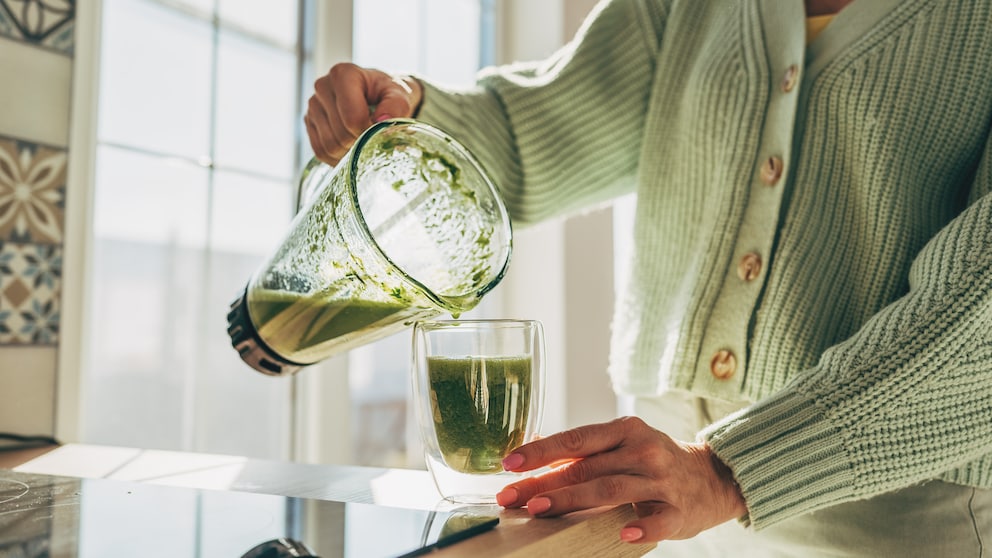
The green color gives many people the impression of being particularly healthy. In fact, the color says little about the composition. Many green smoothies do contain spinach, kale, or other leafy greens. However, the taste often comes from bananas, mangoes, pineapples, or grapes. These fruits can significantly increase the sugar content.
A green smoothie is therefore not automatically lower in calories or sugar than other variants. Those who want to know what is actually contained should pay attention to the ingredients and not just the color.
Ready-Made Smoothies Are Often Not the Best Breakfast Choice
In the refrigerated section, many smoothies appear at first glance to be healthy all-rounders. Statements like “100 percent fruit,” “no added sugar,” or “rich in vitamins” sound promising.
However, many ready-made products consist mainly of fruit juice or pureed fruit. As a result, they often provide large amounts of fruit sugar, while protein and filling fiber are rather scarce. Additionally, the calorie content is often underestimated. Even small bottles can be surprisingly high in energy without being correspondingly filling.6
Common Mistakes Made with Breakfast Smoothies
Many smoothies fail not because of the idea but because of their composition. A common mistake is combining large amounts of sweet fruits with fruit juice. This significantly increases the sugar content.
Equally problematic is the lack of protein sources. Without protein, the satiety is often significantly lower. Fiber is also often underestimated, even though it can significantly help prevent hunger from returning too soon. Calorie-rich ingredients like nut butter, avocado, or coconut milk can be useful, but should be used consciously.
Fresh or Prepared: What’s Better for Smoothies?
Freshly prepared smoothies usually taste best. Additionally, sensitive vitamins are better preserved immediately after blending. For working people or those with little time, preparing in advance can still be practical. In this case, the smoothie should be stored as cool as possible and consumed within 24 hours. As storage time increases, color, taste, and consistency change. Moreover, the content of some vitamins gradually decreases.
What Belongs in a Balanced Breakfast Smoothie?
A filling breakfast smoothie should combine several nutrient groups. Particularly suitable are:
- Fruit in moderate amounts, such as berries or bananas
- Vegetables like spinach, cucumber, or carrots
- Oats as a source of complex carbohydrates
- Skyr, yogurt, quark, or plant-based protein sources
- Flaxseeds, chia seeds, or hemp seeds
- Nuts, nut butter, or avocado
- Water or unsweetened plant milk as a base

How the Portfolio Diet Works – and Who it is Suitable for

What Makes a Healthy Breakfast? These Foods Are Ideal
Should a Smoothie Be on the Breakfast Table Every Morning?
There is no universal answer to this. A well-composed smoothie can certainly be part of a healthy diet and occasionally replace a meal.
It becomes problematic mainly when the drink consists almost entirely of fruit or fruit juice. In this case, it often provides a lot of sugar but only a few of the nutrients that are satisfying in the long term.
Conclusion
Smoothies can be part of a healthy breakfast, but do not automatically replace a full meal. The composition is crucial. While pure fruit smoothies often provide a lot of sugar and little satiety, protein sources, fiber, and healthy fats ensure a more balanced nutrient supply. Those who want to stay full for a long time often do better with a combination of a smoothie and solid foods.