


August 20, 2026, 4:03 pm | Read time: 3 minutes
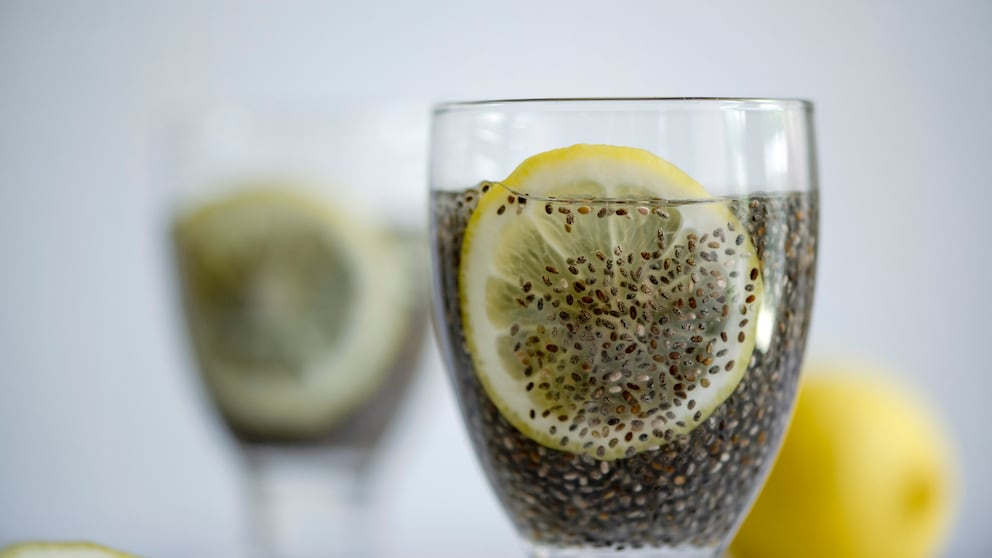
In addition to the well-known flaxseeds, chia seeds have also made a name for themselves in recent years. Currently trending on social media is the drink “chia water.” This mixture is touted as the ultimate diet hack. FITBOOK nutrition expert Sophie Brünke examines the claims.
Chia Seeds Provide a Valuable Nutrient Combo
The reputation as a superfood is well-deserved: Chia seeds offer a valuable combination of protein, fiber, and fatty acids. With about 40 grams of fiber per 100 grams, chia seeds are among the most fiber-rich foods available. Additionally, chia seeds contain a significant amount of protein for a plant-based food. With around 22 grams of protein per 100 grams, they can help meet protein needs.1
Another advantage is their fat profile. Although chia seeds contain a relatively high amount of fat overall, the majority consists of “good” unsaturated fatty acids. They are particularly rich in alpha-linolenic acid (ALA), a plant-based omega-3 fatty acid, which is especially important for heart and brain health.
Additionally, chia seeds provide significant amounts of minerals such as calcium, magnesium, iron, and zinc.
Key Nutrients in Chia Seeds per 100 Grams
- Energy: 479 calories
- Protein: 22.1 g
- Fiber: 40.2 g
- Total Fat: 32.8 g
- Unsaturated Fatty Acids: 27.9 g
- Omega-3 Fatty Acids (ALA): 19.4 g
Does Chia Water Help with Weight Loss?
The nutrients in chia seeds can be beneficial in a diet. Adequate protein intake is important to prevent the body from using muscle protein. Additionally, fiber helps keep you full longer as it swells with liquid. At the same time, it stabilizes blood sugar levels, helping to ward off cravings. If the chia seeds are allowed to swell in water for about ten minutes before drinking, the soluble fiber in their shell forms a gel that is particularly beneficial for digestion—so don’t be surprised by the changed consistency when drinking.
However, one should not expect miracles from chia water in a diet, only support. For example, a glass at lunchtime can help mitigate afternoon energy slumps and cravings. It’s best not to consume more than one glass a day, as the seeds also contribute to calorie intake due to their fat content.