


November 6, 2025, 3:01 am | Read time: 5 minutes
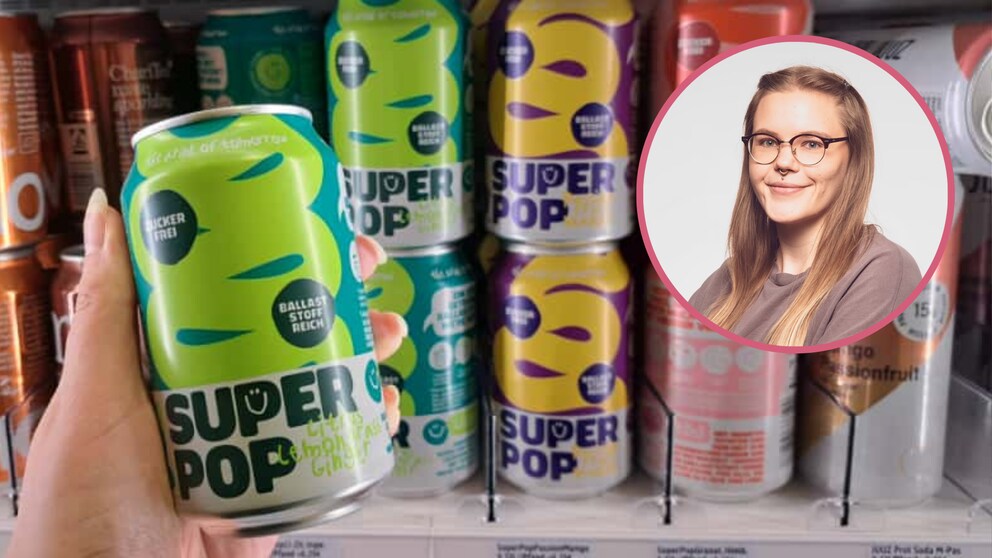
A new beverage trend is making its way to Germany from the U.S.: functional sodas. These are not only meant to taste good but also come with low sugar and an extra dose of fiber for gut health. Sounds practical at first. FITBOOK nutrition expert Sophie Brünke took a closer look at the ingredient lists.
The Idea Behind Functional Sodas
In Germany, the annual per capita sugar consumption is a hefty 30.4 kilograms. That’s about 28 sugar cubes a day.1 Soft drinks like sodas contribute significantly to this: They rank second after chocolate and sweets in the most consumed sweet foods in a Statista survey from 2022/23.2 A healthier alternative makes sense here. But don’t such options already exist in the form of light and zero versions? Not quite, as functional sodas focus on gut health and contain additional ingredients like fiber, lactic acid bacteria, and apple cider vinegar. But is this really sensible or just a clever marketing ploy?
From Poppi to Super Pop
Since 2018, the U.S. has seen the rise of pioneering brands Poppi and Olipop, which gained rapid popularity mainly through social media. The former was even acquired by market giant PepsiCo, which plans to launch a prebiotic version of Pepsi Cola in early 2026. German manufacturers are also jumping on the hype: beverage producer Oettinger, supplement providers More and Braineffekt, and the startup Nova Nutrition launched their functional sodas this year. Fitness influencer Pamela Reif is also involved in “Super Pop” by Unibev.3,4
What’s Inside?
A look at the ingredient lists of various manufacturers reveals that the functional ingredients differ little; rather, the flavors do. The calorie content ranges from four to 14 calories. Sugar is either absent or up to 2.2 grams per 100 milliliters. Compared to a classic soda, which contains an average of 42 calories and ten grams of sugar per 100 milliliters, consumers can save.5
By the way: Since a legal dispute in 2024, where a soda contained too little sugar for the term, these no longer need to have a minimum sugar content, and only require “ingredients to achieve a sweet taste.”6,7
Sweeteners
For sweetness, the sodas contain steviol glycosides from stevia. This might appeal to consumers, as typical sweeteners like aspartame and sucralose have a bad reputation. Stevia, on the other hand, is often portrayed as “natural sweetness.” However, the steviol glycosides derived from it are a classic industrial product and are classified as sweeteners with the E-numbers E 960 a and c. The European Food Safety Authority (EFSA) has set an ADI (Acceptable Daily Intake) for steviol glycosides at four milligrams per kilogram of body weight. This describes the amount of a substance that can be consumed daily over a lifetime without expected health risks. However, the consumer center warns that children, in particular, could easily exceed the ADI. The main source of steviol glycosides is beverages, but they are also allowed in 31 other food categories, which can increase intake amounts.8
Fiber
The idea of adding fiber to drinks is intriguing. These serve as food for the “good” gut bacteria, promoting a healthy gut flora. They also keep you full longer, support digestion, and stabilize blood sugar and cholesterol levels. The German Nutrition Society (DGE) recommends a daily fiber intake of 30 grams, which is often not met. Women average 18 grams of fiber per day, men 19 grams.9
Depending on the manufacturer, a can of functional soda provides six to ten grams of fiber and could already cover up to a third of the recommended intake. However, a comparable amount is also found in two slices of whole-grain bread, a bell pepper, or a side serving of peas.
Also interesting: What Whole Grain Means and What to Look for When Buying Bread
Postbiotics
On the ingredient list of a soda, you find the term “heat-inactivated Lactobacillus plantarum.” This refers to killed lactic acid bacteria that do not further multiply in the drink but can still offer health benefits. Compared to living microorganisms, however, they are less extensively researched.
Apple Cider Vinegar
Last year, a study from Lebanon sparked a hype around apple cider vinegar: In the study, apple cider vinegar seemingly helped participants significantly with weight loss. But beware: Following severe criticism of the study’s methodology by experts, the study was retracted in September 2025—the results are no longer scientifically valid.
In a previous FITBOOK article on apple cider vinegar, Antje Gahl from the DGE also rated other health benefits as limited. Regarding the effect of vinegar in our body, she explains: “Vinegar is ultimately broken down into water and carbon dioxide in the metabolism, without triggering special effects in the body.” Possible weight loss is more likely due to a change in diet than the apple cider vinegar drink.