

April 30, 2024, 6:02 pm | Read time: 6 minutes
Rich in plant-based protein, calcium, and iron, yet low in calories and cholesterol-free–tofu is often celebrated as a healthy superfood. However, it frequently causes uncertainty among women: Can tofu disrupt hormone balance? Are there risks for the female body? And what about kidney stones or genetic modifications? Many myths surround tofu, especially regarding its effects on hormones. What do science and medicine say? Experts provide insights–and recent studies offer revealing answers.
Follow the FITBOOK channel on WhatsApp now!
Overview
How is Tofu Made?
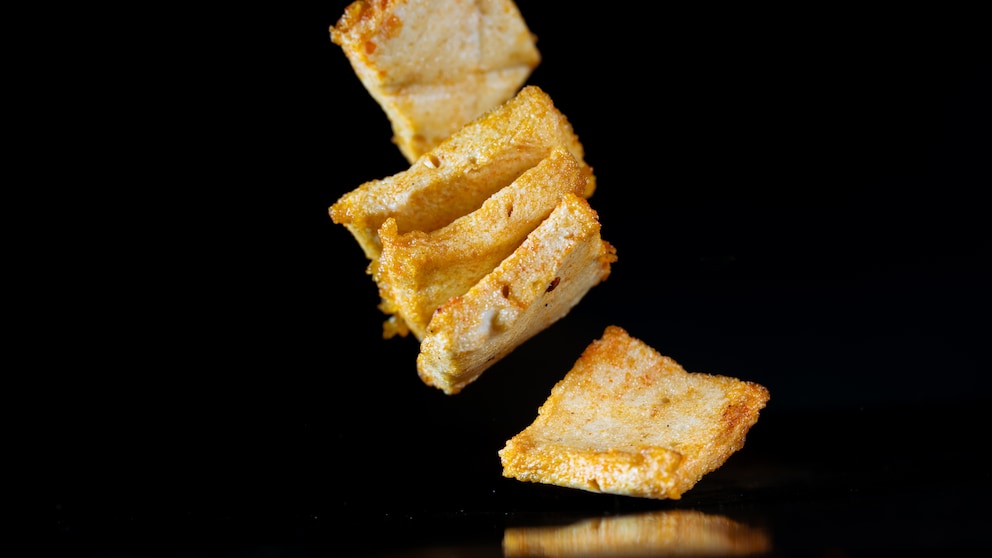
Tofu (also known as bean curd) is made from soy milk. The process is similar to cheese-making. The soy milk is cooked and mixed with a natural coagulant, and the resulting curds floating in the whey are later filtered. Depending on the degree of dehydration, tofu comes in different varieties: the snow-white silken tofu is pudding-like, while smoked tofu has a firmer consistency and is comparable to semi-hard cheese.
The Benefits of Tofu
- Calcium, iron, magnesium, phosphorus, folic acid, and a range of vitamins–tofu contains many essential nutrients
- Tofu has a high protein content, making it a good and important protein source in a vegan diet.
- Tofu is low in calories and fat, with 100 grams containing only about 76 calories. In comparison, even lean chicken has three times as much!
- Tofu is completely cholesterol-free
- Soy products are virtually tasteless, making them versatile and easy to prepare with the right spices
- Its production is significantly less environmentally damaging than animal farming, especially regarding the consumption of natural resources, such as water
While tofu is considered healthy and versatile, persistent half-truths surround the soy product. It is often said that soybeans are almost exclusively genetically modified, that regular tofu consumption promotes kidney stones, or that the phytoestrogens it contains can cause hormonal changes in the body. Such claims cause uncertainty–yet a closer look at the scientific data shows that many of these assumptions lack a solid foundation.
Does Tofu Disrupt Hormone Balance?
Background
Soy products contain isoflavones, secondary plant compounds also known as phytoestrogens due to their estrogen-like effects. Tofu consumption is therefore believed to affect the human hormone balance. Allegedly, women in menopause benefit because isoflavones or phytoestrogens are said to alleviate typical menopausal symptoms like hot flashes and improve skin appearance, potentially reducing wrinkles. And what about men? It is said that the phytoestrogens in soy and tofu contribute to feminization of the body. Additionally, plant pigments in tofu are thought to negatively affect thyroid function.
Also interesting: How many eggs per week are healthy?
Expert Opinion
“The risk of feminization through a soy-based diet does not exist,” says Dr. Markus Keller. As the founder of the “Institute for Alternative and Sustainable Nutrition” (IFANE) explains in an interview, the effects of the substances found in tofu are much weaker than the real hormone estrogen, “so men can eat tofu as often as they like.” Additionally, consuming soy products likely contributes to reducing the risk of developing prostate cancer.
Similarly, the food cannot, as sometimes assumed, promote thyroid cancer. “On the contrary. Epidemiological studies and articles show that people with higher soy product intake have a lower risk of the disease,” says Keller.1,2
For women, the research on positive effects on skin and menopause is not conclusive. However, studies show that women in Asia, where soy products are consumed more frequently, experience fewer menopausal symptoms. Generally, the isoflavones in tofu can influence hormone balance: This influence depends on the woman’s estrogen level, as noted by the “Harvard T.H. Chan School of Public Health.” The influence of phytoestrogens is higher when estrogen levels are lower, as is the case for women in menopause.
Conclusion
Women and men with a healthy metabolism can be reassured as long as they do not consume excessive amounts of soy milk products. For individuals with thyroid dysfunction (such as due to iodine deficiency), soy products could increase the risk of developing hypothyroidism. However, as long as they ensure adequate iodine intake, tofu consumption is safe for their health.
Due to the purported positive properties of isoflavones, they are also sold in isolated form. However, it is advised against taking them, as they are not without risk to the body, according to the Federal Institute for Risk Assessment.3
Foods That Are Especially Beneficial During Menopause

Foods That Can Trigger Early Puberty in Girls
Can Tofu Cause Kidney Stones?
Due to its oxalate content, the claim that tofu could promote kidney stone formation frequently arises. Indeed, soy is among the foods that contain relatively high levels of oxalate. This substance can combine with calcium to form calcium oxalate stones, the most common type of kidney stones.4 For people with a predisposition or history, a high intake of oxalate-rich foods can be problematic.
Does this mean tofu causes kidney stones? No–not inherently. The effect largely depends on the total oxalate intake, fluid consumption, and other individual factors. Additionally, tofu contains magnesium, which can even inhibit crystal formation.5 For most people, tofu is completely safe. However, those who have suffered from kidney stones or are at risk should monitor their overall oxalate intake. Besides tofu, foods like spinach, rhubarb, and beets are also included.6
Is Soy Genetically Modified?
Is Soy Genetically Modified?
As an affordable protein source, the soybean is a crucial raw material for the food industry–not least in the production of meat and cheese. With the enormous demand in recent years, producers have come under pressure. The result: 70 percent of the world’s fields are now planted with genetically modified varieties, and conventionally grown soy has become a rarity worldwide.7
Expert Opinion
“At least in the EU, the fear of genetically modified tofu is unfounded,” assures Dr. Birgit Wilhelm, an agricultural expert at “WWF Germany.” Here, tofu made from genetically modified seeds must be labeled, the expert adds. For this reason alone, manufacturers shy away from using genetically modified products, “no one would buy their goods.”
Conclusion
Compared to cheap meat, whether from the supermarket or an Asian takeout, tofu is indeed preferable. Because: Even though genetically modified soybeans are not approved for cultivation, over 21 million tons of genetically modified soybean meal are imported annually–and used as cheap, protein-rich feed in livestock farming.8 “And farmers do not have to disclose what their animals were fed,” warns Dr. Wilhelm.