


September 28, 2024, 5:55 am | Read time: 6 minutes
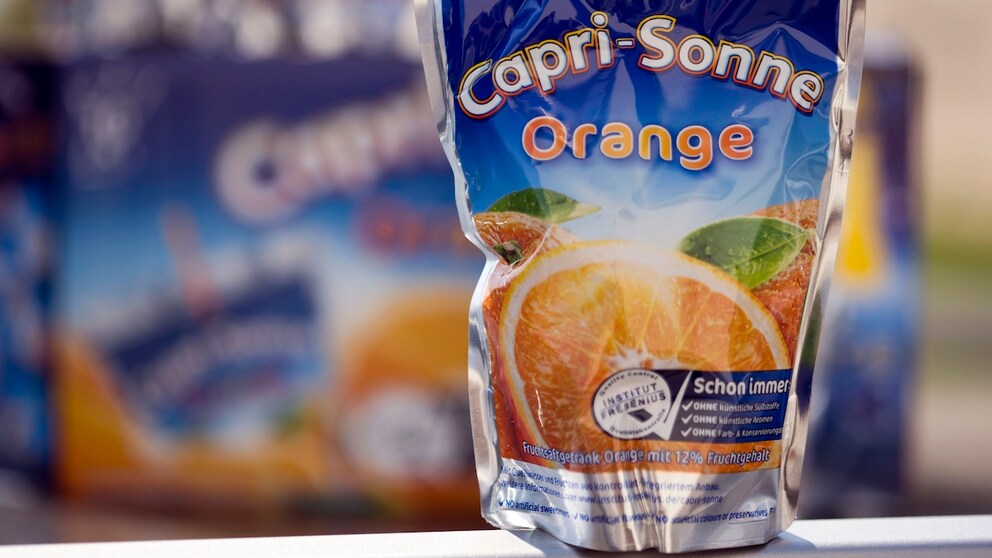
It’s a product that reminds many people of their childhood: Capri-Sun, formerly known as Capri-Sonne. Amid the colorful hustle of market launches and product eliminations, Capri-Sun has managed to remain a constant in supermarkets. Today’s parents can now buy their own childhood favorite for their kids. But what nutrients are actually in a pouch–and most importantly: how much sugar? FITBOOK nutrition expert Sophie Brünke takes a closer look at the children’s drink.
These are small, chilled drink pouches that are especially popular with children in the summer. We’re talking about Capri-Sun. In 2013, however, the family-owned company received the negative award “Golden Windbag” for the most brazen advertising gimmick. The marketing activities at the time were directly aimed at children and specifically sought proximity to sports. Even teaching materials for elementary school teachers were found on the homepage. A recommendation learned? How much sugar is in the children’s drink today, and is Capri-Sun really that unhealthy?
Follow the FITBOOK channel on WhatsApp now!
Overview
What Exactly Is a Fruit Juice Drink?
Capri-Sun is marketed as a fruit juice drink. These usually consist of water, fruit juice or pulp, as well as sugar and flavorings. There are legal guidelines for how high the fruit juice content must be. In the case of citrus fruits (Capri-Sun Orange), it’s a mere six percent. Manufacturers can voluntarily add more fruit juice. For fruit juice drinks with pome fruits, grapes, or mixtures thereof, at least 30 percent is required.1
Fruit juice drinks thus differ from fruit juices, which are 100 percent fruit, and fruit nectar, which consists of 25 to 50 percent fruit depending on the type. Nectar also has sugar added.
Also interesting: Pediatric dentist Dr. Anne Heinz warns: “I would rate sugar similarly to cigarettes.”

Where Sugar Hides in Products—and When It Becomes Dangerous

Why You Shouldn’t Give Your Kids Drink Pouches
This Much Sugar Is in Capri-Sun
The family-owned company states on its website that the added sugar sweetens their product and preserves it naturally. Since its market launch in 1969, they have been continuously working to reduce the sugar content. Most drink pouches (200 milliliters) contain less than 8.8 grams of sugar per 100 milliliters, which is less than in an equivalent fruit juice. Unfortunately, the manufacturer does not calculate for consumers how much sugar is in a whole pouch. It’s a total of 17.4 grams–you’re welcome.2
The classic Capri-Sun Orange contains twelve percent fruit juice (orange, lemon, lime) and delivers a solid 16 grams of sugar per 200-milliliter pouch. Accordingly, such a portion contains about one and a half tablespoons of pure fruit juice–an amount that probably doesn’t require any calculation for vitamin content. By the way, the manufacturer keeps its promise here. Orange juice in an equivalent amount actually contains more sugar: one gram. However, it likely also contains significantly more vitamins and secondary plant compounds.
Zero Products–Now Also for Kids
In addition to the standard range, there is also a Zero variant available this year. The missing sweetness is replaced by three sweeteners: sucralose, cyclamate, and saccharin. If sweeteners are not particularly healthy for adults in certain amounts, they probably won’t be for children either, right? But more on that in this article.
The Consequences of High Sugar Consumption in Childhood
First, the good news: The average intake of free sugar among children and adolescents has decreased from nearly 17 percent of daily energy intake in 2010 to nearly twelve percent in 2023. This is according to the results of the DONALD study (“Dortmund Nutritional and Anthropometric Longitudinally Designed”). The bad news: The values are still higher than the recommendation of the World Health Organization and the German Nutrition Society of a maximum of ten percent. Moreover, the actual figures could be even higher. This is because these are self-reports, where one or two sweets might be “forgotten.”3
The consequences of high sugar consumption are far-reaching for health. In Germany, the proportion of overweight and obese children is continuously increasing. The Federal Ministry of Health reports that 9.5 percent of children and adolescents aged three to 17 are overweight and 5.9 percent are obese. This poses a risk factor for later cardiovascular diseases, diabetes, joint problems, or depression. Additionally, overweight developed in childhood often persists throughout life.4 If children eat a diet high in sugar and fat, they apparently often already show initial blood vessel damage in adolescence, which fuels the development of cardiovascular diseases–according to the results of a study by the University of Bristol, which involved more than 4,700 adolescents.5 A possible diabetes diagnosis is also not without consequences: According to a study, it can reduce life expectancy by nearly two years.6
It can probably be concluded that Capri-Sun only brings joy for a short time. In the long run, however, the extra portions of liquid sugar can seriously harm children’s health. If you still want to give your child a fruity treat, it’s best to mix juice spritzers yourself. Ideally, in a ratio of 30 to 40 parts juice and 60 to 70 parts water.