


July 23, 2026, 11:54 am | Read time: 4 minutes
Open the can, pour the tomatoes into the pot. When it comes to speed, canned vegetables are unbeatable. But wouldn’t fresh produce be the better alternative? FITBOOK nutrition expert Sophie Brünke reveals which form of fruits and vegetables delivers the most nutrients and why canned goods can also be surprisingly beneficial.
Fresh Isn’t Necessarily More Nutrient-Rich
Many assume that fresh fruits and vegetables are always the most nutrient-rich choice. But that’s not necessarily the case. How many vitamins actually end up on the plate depends on factors such as variety, ripeness, transport, and storage duration. After fruits and vegetables are harvested, metabolic and degradation processes continue. Particularly sensitive nutrients like vitamin C and some B vitamins can decrease during long transport and storage times.
Fresh, seasonal produce from the region has an advantage if harvested ripe and eaten promptly. Broccoli, on the other hand, that has been transported for several days and then stored in the fridge for a long time may have already lost some of its vitamins.
Flash Freezing Preserves Many Nutrients
Frozen fruits and vegetables are mostly processed directly after harvest and quickly brought to very low temperatures. This significantly slows down the degradation of many nutrients. However, it doesn’t work without losses: Vegetables are often briefly blanched beforehand, treated with hot water or steam. This inhibits enzymes and preserves color and taste but can reduce water-soluble and heat-sensitive vitamins. Even during subsequent frozen storage, degradation continues, albeit much slower than with fresh foods.
A study compared corn, carrots, broccoli, spinach, peas, green beans, strawberries, and blueberries fresh and frozen. For five of the eight foods, the vitamin C content did not differ significantly. In the remaining three, the frozen variant even contained more vitamin C than the fresh produce that had been refrigerated longer. The researchers also found no evidence that frozen products generally fare worse in terms of minerals, fiber, and phenols.1,2
With frozen products, it’s also worth checking the ingredient list. Pure vegetables and unsweetened fruits are preferable to products like creamed spinach, vegetables in butter sauce, or sweetened fruit mixes.
Also interesting: Eating kiwi skin–what it could offer
Which Nutrients Remain in the Can
For canned goods, fruits and vegetables are heated to kill germs and make the food last longer. This can lead to the loss of water-soluble and heat-sensitive vitamins like vitamin C and some B vitamins. The extent of these losses depends on factors such as temperature, processing duration, and oxygen exposure. A review cites vitamin C losses ranging from about 20 to 90 percent depending on the method.3
Other nutrients are much more stable. These include many minerals and fibers, as well as fat-soluble vitamins and certain secondary plant compounds.

The Underrated Benefits of Rosehip Powder–and How to Make It Yourself

3 Methods to Preserve Vitamins While Cooking
Tomatoes Are a Canned Star
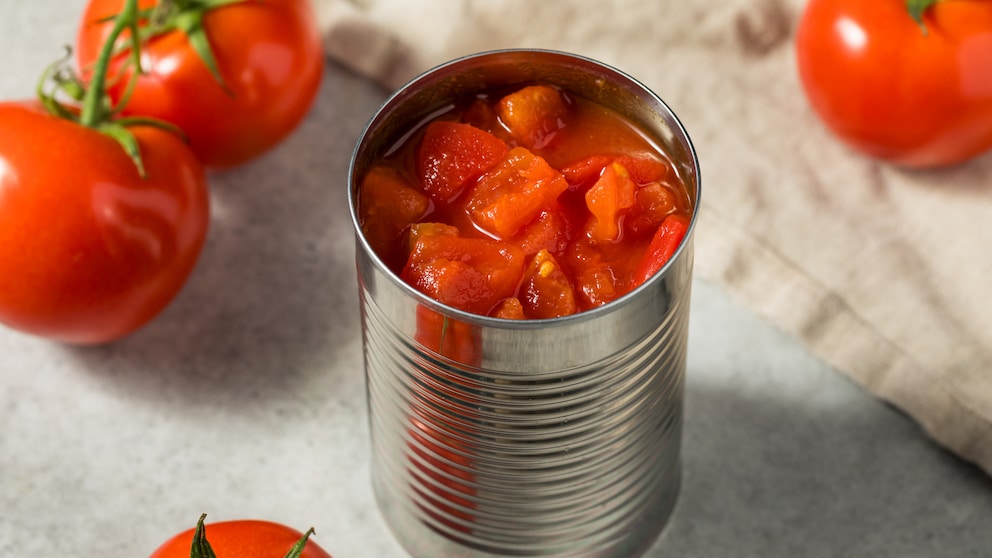
Artist Andy Warhol probably didn’t think about nutrient content when he worked on his famous piece “Tomato Soup.” But canned tomatoes shine not only in pop art but also have a surprising advantage over fresh tomatoes: They contain about twice as much of the secondary plant compound lycopene.4 This antioxidant protects our cells from free radicals. What’s special about lycopene is that it becomes more absorbable for humans through further processing with heat or pureeing.5 Tomato paste, by the way, has the highest lycopene content.
What to Watch for in Canned Goods
Vegetable cans often have added salt. Products without added salt are therefore the better choice. Rinsing can also reduce the salt content. Fruits should ideally be canned in their own juice. The label “sweetened” or “in syrup” indicates added sugar. The liquid also contains water-soluble nutrients that have leached from the fruits or vegetables. If consumed or used in sauces and soups, these nutrients are not completely lost.
Be cautious with bloated cans: Harmful germs may have multiplied inside. Strong dents or bulges can also cause harmful substances from the can to leach into the food.6