

May 2, 2026, 6:23 am | Read time: 6 minutes
Vitamin B12 deficiency is often associated with a vegetarian or vegan diet–after all, the vitamin is found almost exclusively in animal products. However, even people who eat a balanced mixed diet can be affected. Particularly insidious: A deficiency often develops gradually and goes unnoticed for a long time.
Symptoms of Vitamin B12 Deficiency
The body can store vitamin B12 for years, so a deficiency can remain unnoticed despite insufficient intake. However, once the reserves are depleted, it can become a health concern. A deficiency affects blood formation, among other things: Resulting anemia can manifest as paleness, fatigue, and tingling or numbness. Additionally, neurological and psychological issues such as memory problems or depressive moods are possible. The gastrointestinal tract can also be affected, with symptoms like burning tongue, loss of appetite, or constipation.
Overview of Symptoms
- Fatigue
- Difficulty concentrating
- Headaches
- Paleness
- Dizziness
- Hair loss
- Brittle nails
- Confusion
- Memory weakness
- Depression
- Muscle weakness
- Sensory disturbances up to paralysis (tingling)
- Optic nerve atrophy, blurred vision
- Burning tongue
- Loss of appetite
- Constipation
Why Vitamin B12 Is So Important
Vitamin B12 plays a central role in energy metabolism. The body needs it for the formation of red blood cells, cell division, and the protection of nerve cells. Consequently, the effects of a deficiency can be far-reaching: If left undetected, it can impair the nervous system. The first signs are often nonspecific and easily overlooked–in the long term, however, serious, sometimes irreversible neurological damage can occur.
What Is the Daily Requirement for Vitamin B12?
The German Nutrition Society (DGE) provides estimated values for adequate vitamin B12 intake based on age as follows1:
What Is the Vitamin B12 Intake in Germany?
According to the National Consumption Study2, the average intake of vitamin B12 is 3.8 micrograms per day for women and 5.3 micrograms for men. An intake below the reference value is not synonymous with a deficiency but increases the likelihood of under-supply according to the DGE.3
These Foods Contain Vitamin B12
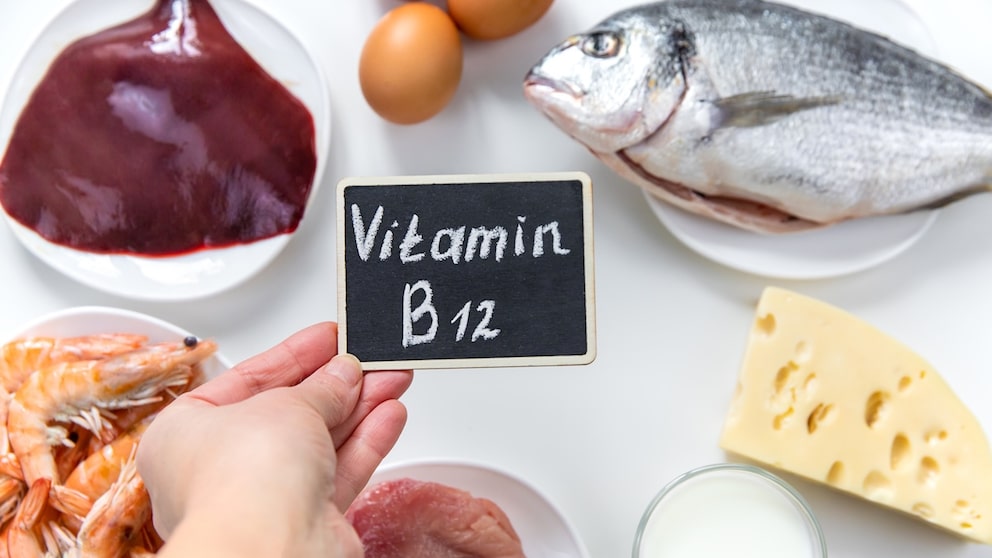
Vitamin B12 is produced exclusively by microorganisms and enters the human body through the food chain. Significant amounts are therefore mainly found in animal products. The vitamin is produced in the digestive system of ruminants such as cattle–and is then absorbed through meat, milk, or eggs.
Animal Sources of Vitamin B12:
- Meat
- Fish and seafood
- Eggs
- Dairy products
- Offal
Plant-based foods can also contain traces of vitamin B12 through bacterial fermentation–such as in sauerkraut. Other potential sources include seaweed like nori, shiitake mushrooms, or products with cyanobacteria. However, the content can vary significantly. Additionally, it is often unclear how well the body can actually utilize the vitamin contained. Reliable coverage of needs is therefore generally only possible through animal products or targeted supplementation.
Who Should Pay Special Attention to Their Vitamin B12 Needs?
At the latest, with the onset of pregnancy, vitamin B12 supply should be closely monitored, as the need is increased during this time. Low levels are associated with an increased risk of miscarriages, growth disorders, and malformations of the child’s brain and spinal cord (neural tube defects).4 Professional societies and obstetricians therefore recommend ensuring adequate intake early on–ideally before pregnancy.
Meat Does Not Automatically Protect Against Vitamin B12 Deficiency
At this point, a brief look at how vitamin B12 is absorbed in the body: The so-called intrinsic factor (IF)–a special protein produced by the gastric mucosa–plays a central role. Its task is to bind the vitamin B12 absorbed through food and transport it to the small intestine, where it is absorbed and then passed into the blood and nerve cells. Simply put: the “transport service” for vitamin B12.
Some people lack this intrinsic factor, for example, due to an autoimmune disease. As a result, a vitamin B12 deficiency can develop. Diseases or functional disorders of the gastrointestinal tract–such as Crohn’s disease–can also impair absorption. Additionally, people who regularly take acid-reducing medications or metformin should monitor their vitamin B12 supply.5
Overview of Risk Groups for Vitamin B12 Deficiency
- Vegetarians and vegans
- Pregnant and breastfeeding women
- People with stomach diseases
- People with intestinal diseases
- People with Hashimoto’s thyroiditis
- People with type 1 diabetes
- People taking the diabetes medication metformin
- People taking acid blockers or stomach protectants
- People who abuse nitrous oxide (laughing gas) as a party drug
How Can a Deficiency Be Clearly Diagnosed?
A vitamin B12 deficiency can be reliably diagnosed through a blood test. The determination of holotranscobalamin (Holo-TC) is particularly informative, as this value reflects the proportion of actually available, active vitamin B12. Often, the vitamin B12 level in blood serum is measured first–an inexpensive but less accurate test. If this is in the lower normal range, an additional determination of Holo-TC may be useful to assess the status more precisely.

Effects, Dosage and Potential Risks of Vitamin B12 Supplementation

Babies and Toddlers on a Vegan Diet? Pediatrician Discusses Potential Risks
Why Vitamin B12 Deficiency Should Be Treated
Especially in children, a vitamin B12 deficiency should be avoided at all costs. If there are no pre-existing conditions or absorption disorders, the requirement can usually be met through a balanced diet. Often, one to two smaller portions of fish per week (e.g., around 100 grams of pollock) are sufficient; for meat–especially offal–even smaller amounts are enough. Additionally, dairy products and eggs provide reliable amounts of vitamin B12.
How Parents Can Prevent Vitamin B12 Deficiency in Infants and Children
The Professional Association of Pediatricians (BVKJ) recommends that pregnant women who follow a vegetarian or vegan diet coordinate their nutrition with a professional and have their nutrient supply checked by a doctor. If necessary, supplementation may be advisable to prevent a potential vitamin B12 deficiency in the unborn child.6
Even after birth, mothers who follow a vegetarian or vegan lifestyle should closely coordinate with the pediatrician. With an exclusively plant-based diet, the pediatrician can regularly check whether the infant is adequately supplied with vitamin B12. There is a particularly high risk of deficiency if breastfeeding exclusively for more than six months without introducing meat-based complementary foods.