


July 14, 2026, 7:05 pm | Read time: 4 minutes
Avocados have become a staple on brunch café menus. But the fatty fruit can do more than just adorn toast: According to a new study, it is also of interest for heart health. Does this mean you should have avocado on your bread every day? FITBOOK nutrition expert Sophie Brünke explains the study.
New Analysis of an Avocado Study
In 2021, the “The Habitual Diet and Avocado Trial” (HAT) was published, a study that examined whether eating one avocado per day affects various metabolic and cardiovascular risk factors in adults with abdominal obesity (predominantly belly fat, “apple type”). The main study already showed that eating an avocado daily did not reduce belly fat but did lower LDL cholesterol in the blood. This is often referred to as “bad” cholesterol and is associated with arteriosclerosis.1
Building on this, scientists recently analyzed the study’s dataset to see if the so-called lipoprotein particles also change due to avocados.2 LDL stands for “low-density lipoprotein,” a low-density lipoprotein. Importantly, LDL is not the same as cholesterol. LDL particles are merely the “taxis” for cholesterol in the body. If there are particularly many of these particles in the blood, it can be unfavorable for the vessels, even if the LDL cholesterol level alone appears unremarkable.
How the Scientists Proceeded
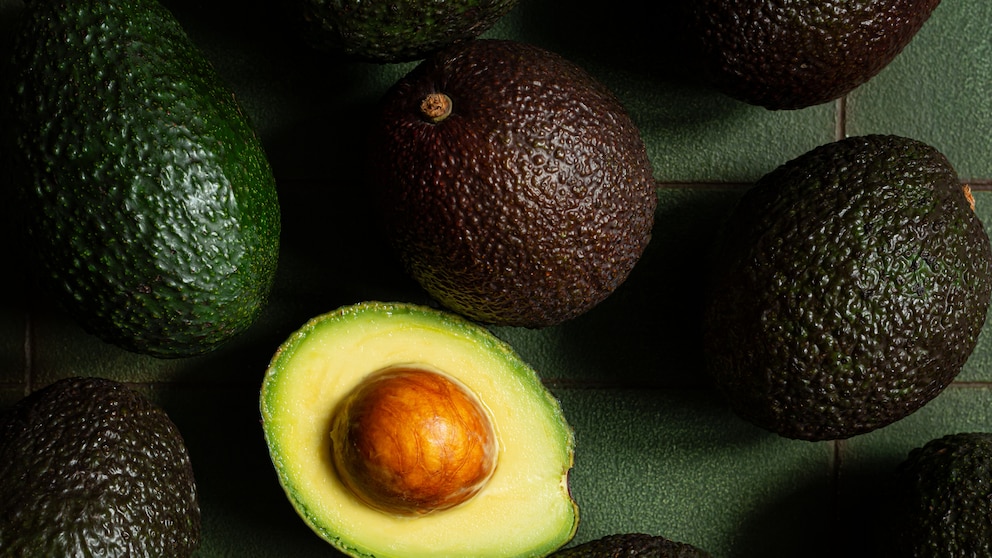
For this accompanying study, researchers used blood samples from 786 obese adults from the HAT study, who previously ate at most two avocados per month. Three hundred eighty-nine participants were assigned to the avocado group, and 397 to the control group. The avocado group received a Hass avocado daily and was instructed to incorporate it into their usual diet. The control group was to maintain their regular diet and continue to eat few avocados.
The study lasted 26 weeks. Neither group received dietary counseling. This is important because the study was closer to everyday life than strictly controlled dietary studies, where every meal is prescribed.
Fasting blood samples were examined at the beginning and end of the study. Researchers determined not only classic blood lipid levels but also the concentration of various lipoprotein particles and their subgroups.
Also interesting: The effect of one avocado per day on blood sugar
How Strong Was the Avocado Effect?
In the avocado group, the total number of LDL particles decreased significantly by 49.1 nanomoles per liter compared to the control group. According to the study authors, this reduction could correspond to about a four percent lower risk of cardiovascular diseases. However, this risk reduction was not directly measured but derived from previous data.
Study author Janhavi Damani explains the result in a press release: “Imagine two people with the same high LDL cholesterol levels. Person A transports their cholesterol in fewer, larger LDL particles, and Person B transports their cholesterol in more, smaller LDL particles. The risk of heart disease would be higher for Person B because the total number of particles is higher, even though an LDL cholesterol test would look identical.”3
Other values did not change significantly. These included the size of the LDL particles, individual LDL subgroups, other fat transport particles, certain protein markers of blood fats, and markers for early insulin resistance and inflammation.

Eating Avocados for a Healthy Heart? Here’s What an Expert Says

Lowering Your “bad” Cholesterol Can Reduce Dementia Risk by 26 Percent
Is It Worth Eating an Avocado Every Day?
Avocados provide many nutrients, including heart-healthy unsaturated fatty acids, fiber, potassium, folate, and phytosterols. At the same time, an avocado contains about 280 kilocalories. Those who eat it in addition to their current diet–especially with obesity–should keep an eye on their calorie intake.
Damani says: “For people with obesity, incorporating avocados into the daily diet could be a good starting point.” Obesity is a significant risk factor for cardiovascular diseases. She also puts the effect into perspective: “Four percent is a moderate reduction.” A complete dietary change would have a much greater effect. “However, it is a step in the right direction.”
Practically speaking, one avocado a day does not replace an overall heart-healthy diet. It is more sensible to use avocado as a substitute for less favorable foods, such as highly processed snacks or fat sources with many saturated fatty acids.
Study Assessment
The strengths include the randomized study design, the everyday-life approach, and the precise analysis of fat transport particles in the blood. This allows for a better understanding of what a daily avocado might have changed in the blood beyond the classic LDL cholesterol level.
Additionally, the study only examined blood values and not whether participants later actually experienced fewer heart attacks, strokes, or other cardiovascular diseases. The estimated risk reduction of four percent is derived from the improved LDL particle value but was not directly measured in this study.
The study was funded by the Avocado Nutrition Center. According to the publication, the sponsor had no role in data collection, analysis, interpretation, manuscript preparation, or submission. The authors reported no conflicts of interest.