

December 12, 2025, 3:04 am | Read time: 6 minutes
Peanuts are considered a healthy snack due to their high content of plant-based protein, minerals, vitamins, and valuable unsaturated fatty acids. Their consumption can support the function of the heart, muscles, and metabolism—and possibly also promote brain health. A study examined the effect of regular peanut consumption on brain circulation, with remarkable results.
Many people appreciate peanuts as small turbo energy providers. Thanks to their combination of protein, healthy fats, essential B vitamins, and other ingredients such as L-arginine, unsaturated fatty acids, and polyphenols, they boost metabolism, improve vascular function, and help quickly access performance—both physically and mentally. Research has long been focused on the properties of peanuts. Their consumption is generally considered beneficial (though one should also consider their relatively high energy density). A recent study, for example, found that regular consumption of roasted peanuts with skin can protect against cell aging.1
Speaking of aging: As we age, the function of blood vessels in the brain deteriorates, which can lead to memory decline. Nuts in general, and peanuts—which are technically legumes—can positively influence brain circulation. Previous studies have already shown this.2 Researchers at the Maastricht University Medical Center aimed to verify and confirm these promising findings using modern, highly precise imaging techniques in a recent study.3
Study Details
Does daily peanut consumption improve vascular function in the brain? Does this potential effect impact memory, attention, and other cognitive abilities? And: Can possible mechanisms—such as improved circulation—be demonstrated? The Dutch team explored these questions in their randomized, controlled, single-blind crossover study. Thirty-one generally healthy adults with an average age of 67 participated.
During the study, all participants went through two phases. In the first phase, they consumed 60 grams of peanuts daily for 16 weeks. In the second, equally long phase, they abstained from peanuts. Each study segment was separated by an eight-week break, a so-called washout phase, intended to “reset” the body. The order, whether the peanut phase or the peanut-free control phase occurred first, was randomly determined. During their measurements, the researchers did not know which phase the participants were in.
Focus on Measurements
The researchers defined cerebral blood flow (CBF) as the primary target variable. This provides the most reliable indication of whether regular peanut consumption affects brain circulation. They determined the value using the state-of-the-art MRI method “Arterial Spin Labeling,” which allows particularly precise and direct quantification of brain circulation.
The cognitive performance of the study participants was assessed using the so-called CANTAB test battery, a neuropsychological test system conducted entirely on a computer. This system examines, among other things, memory performance, attention, and orientation ability of the subjects. Additionally, the researchers conducted blood pressure measurements and determined the vascular values in the participants’ eyes. The latter serve as a measure for the condition of the brain’s microvessels. The circulation of the large cerebral arteries was recorded using transcranial Doppler ultrasound.
The data collection also included the participants’ entries from food diaries and nutrient analyses based on them. Body measurements, self-assessed sleep quality, and physical performance were also recorded. To clearly attribute the results to peanut consumption, participants were asked to avoid other nuts and comparable nutrient-rich foods throughout the study. Adhering to such guidelines is generally difficult to verify. However, the study authors emphasize a “very high compliance” among participants. According to the food diaries, they almost completely adhered to the prescribed dietary guidelines.

Why You Should Drink Beet Juice More Often

The Effects of Cocoa While Sitting
Improved Brain Circulation Thanks to Peanut Consumption
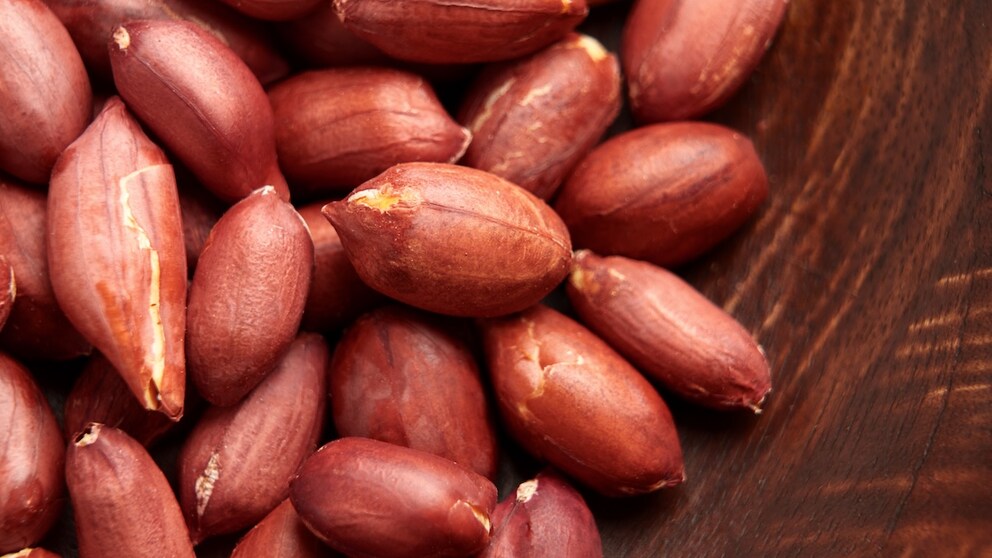
According to the evaluation, the 16-week consumption of peanuts with skin increased average brain circulation by 3.6 percent. The gray matter in the brain also increased by 4.5 percent. The changes were particularly pronounced in the frontal and temporal lobes, which play a central role in memory, language, attention, and decision-making processes, the researchers said.
Beyond improved brain circulation, positive changes in verbal memory were also observed. In the corresponding CANTAB test, participants could remember an average of 1.4 more words after the peanut phase, representing a performance increase of about 5.8 percent. In other cognitive areas (such as reaction speed), significant effects were absent. Remarkable changes were, however, observed in the area of cardiovascular health: During the peanut phase, the systolic blood pressure decreased by an average of 5 mmHg and the pulse pressure by 4 mmHg. Lower blood pressure overall relieves the blood vessels and fits well with the measured improvements in cerebral circulation.
No changes were observed in the large cerebral arteries or the eye’s microvessels, the researchers admit. They conclude that the positive effects of peanuts are more likely to act in the smallest blood vessels of the brain. They are therefore not necessarily detectable in larger vessels.
Significance of the Results—and Limitations
As the study authors explain, their work provides clear and methodologically high-quality arguments that peanut consumption improves brain circulation in older adults. Their results support the assumption that certain ingredients in peanuts—including L-arginine, unsaturated fatty acids, and polyphenols—can directly support vascular function. This is noteworthy—after all, poorer brain circulation in old age is considered a central risk factor for cognitive decline and neurodegenerative diseases. The researchers also view the easy availability of peanuts positively, as opposed to “real” nuts, which are usually more expensive.
However, there are also limitations to consider. The sample size was quite small, with only 31 people, and relatively homogeneous, as only older, healthy adults were studied. The effects on younger, pre-diseased, or already cognitively impaired individuals could be very different. Additionally, it is difficult to say with certainty whether the observed effects are solely due to peanut consumption. Only one variety and a specific amount of roasted peanuts with skin were studied. Whether other foods containing peanuts bring positive effects is unclear. “This is an important question,” explains Dr. Peter Joris, one of the study authors, in response to FITBOOK. Future studies should examine whether similar benefits also occur with other preparations of peanuts—such as blanched, cooked, roasted, or processed into products like peanut butter.
In collaboration with the Pennsylvania State University (USA), a project is being conducted, Dr. Joris revealed, that examines the long-term effects of peanut butter consumption on brain health. Additionally, the researchers want to determine which specific components of peanuts are responsible for the observed positive effects. For this purpose, a study is already underway investigating the effects of (plant-based) protein on brain function.
The research team sees the limitation of the study duration to 16 weeks and the resulting lack of significance for long-term effects as not very problematic, as no significant differences are expected with long-term peanut consumption. Nevertheless, future investigations should clarify whether the observed effects also persist with regular, long-term intake.