


October 31, 2025, 12:37 pm | Read time: 4 minutes
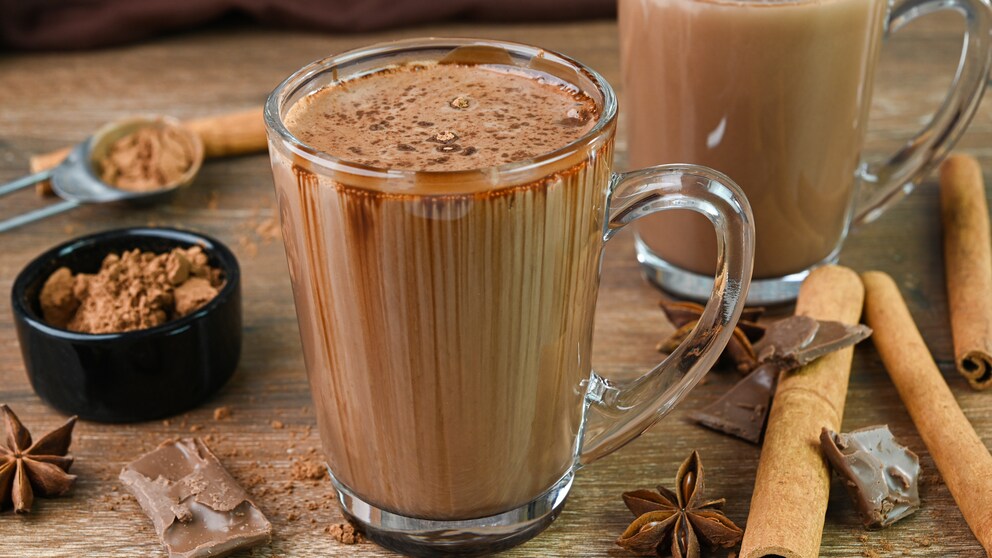
Prolonged sitting negatively affects blood vessels—this is now well-documented. A new study shows that a drink with flavanol-rich cocoa can prevent this effect. A single intake was enough in the study to completely avoid a measurable deterioration in vascular function during two hours of sitting. Interestingly, the protective effect occurred regardless of the participants’ fitness levels. The key apparently lies in certain plant compounds—called flavanols—which are found not only in cocoa but also in tea, berries, and apples.
The study, conducted at the University of Birmingham in England, involved 40 healthy men aged 18 to 34. Half of them were particularly fit, the other half less so. A test of endurance performance was crucial, specifically how well the body can utilize oxygen under stress.1
All participants went through two identical test days: Before each two-hour sitting phase, they drank either a cocoa with very low flavanol content or a cocoa with high flavanol content. Since the drinks looked identical and tasted similar, the participants could not tell which test drink they received.
The cocoa drink with high flavanol content contained 150 grams of the flavanol (−)-epicatechin. It is found mainly in cocoa, tea, and berries and can have a positive effect on blood vessels. Previous studies had already provided indications of this.2
Measured before and after sitting:
– the function of the arm and leg arteries
– blood pressure and heart rate
– as well as oxygen supply in the leg muscles
Flavanol-Rich Cocoa Stabilized Vascular Function Despite Sitting
After two hours of sitting, participants showed a measurable deterioration in vascular function—but only if they had drunk the low-flavanol cocoa. The arteries reacted more sluggishly, less elastically.
In contrast, those who drank the flavanol-rich cocoa showed no decline. In some cases, vascular function even remained stable or improved slightly. The effect was the same for all individuals—regardless of whether they were athletic or not.
The participants’ endurance did not matter. It seemed that cocoa, not fitness, made the difference.
Flavanols Targeted Large Blood Vessels
Notably, blood flow and other circulatory values remained unchanged by the cocoa. Researchers, therefore, suspect that the effect was not due to improved circulation but rather a direct impact on the vessel walls.
Muscle oxygen supply worsened for everyone due to sitting, regardless of the drink. Similarly, diastolic blood pressure rose slightly. The protective effect of cocoa thus mainly concerns the large arteries, not the fine vessels or blood pressure.

Why You Should Drink Beet Juice More Often

The Impact of Peanuts on Our Brain Health
Limitations of the Study
As always, it’s important to contextualize the study findings. As remarkable as they are, they cannot be universally applied. For instance, the study was conducted exclusively with young, healthy men. Women were not involved. Nor were older individuals or those with pre-existing conditions such as high blood pressure, diabetes, or obesity. Whether the observed effects would occur in these groups is unclear.
Additionally, only a single intake of flavanols before a two-hour sitting phase was examined. How long the effect lasts, whether it is enhanced by regular intake, or if it persists with longer periods of sitting, is not yet known.
Caution is also advised with dosage. The tested drink contained 150 milligrams of (−)-epicatechin, a flavanol-rich plant compound administered in high concentration. Such amounts are rarely found in regular cocoa or chocolate. Only unsweetened, minimally processed cocoa or specially enriched products reach comparable levels.
It’s also important to note: The study shows a short-term protective effect, but not a general health benefit of cocoa itself. Those who move a lot, eat a balanced diet, and take regular breaks from sitting benefit the most in the long run. Cocoa does not replace exercise—at best, it can be one of many components when movement is not possible.
Conclusion
Flavanol-rich cocoa is no substitute for exercise—but it could be a useful addition in certain everyday situations. Those who regularly sit for long periods and want to pay attention to their vascular health benefit not only from sports but also from conscious nutrition. The key is not just any cocoa, but choosing a high-quality product with a measurable flavanol content.
The research opens the door to new approaches: nutrition as a targeted protective measure—not generally, but tailored to situations where the body is under particular stress. This is not a free pass for hours of sitting, but an impetus to think more critically about everyday behavior.