


March 9, 2026, 4:09 pm | Read time: 7 minutes
Hojicha tea has its origins in Japan and is characterized by a special feature in its preparation. It is also said to have various effects. The tea is said to strengthen the immune system, support the metabolism, and even have an anti-aging effect. FITBOOK editor Julia Freiberger explains the use and effects of the tea and what the studies say about it.
Tea drinkers can look forward to variety in their tea cupboard. With Hojicha tea, they can add a tea with an intense aroma and unique taste to their hot beverage collection. It owes this to a special preparation method. Find out here what other health benefits it can bring.
Overview
What Is Hojicha Tea?
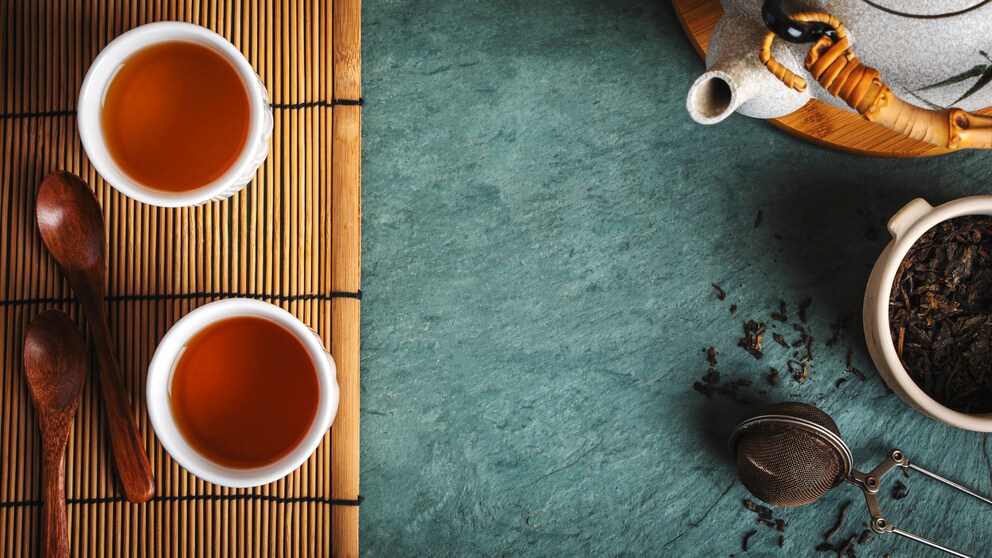
Even if Hojicha tea does not look like it at first glance, it is actually a green tea. The secret of how the tea gets its characteristic brown color is already in the name. Translated from Japanese, “Hojicha” means “roasted tea.” This is because, unlike other Japanese teas, the leaves of the plant are not steamed but roasted, which gives the infusion its dark color.
Hojicha tea is one of the particularly stomach-friendly teas and is preferred by older people and children in Japan in the evening. Babies and toddlers can also drink it. Especially during the hot summer months in Japan, people like to enjoy it served cool. Due to the roasting process, the tea can withstand high temperatures and can also be prepared with almost boiling water without becoming bitter..1
Origin of Hojicha Tea
Its origins go back just over a century, to around the 1920s. It is said that a tea merchant in Kyoto (Japan) did not want to waste unsold leftover green tea (leaves, stems, and twigs) and decided to roast them. The result had a convincing taste and gave the new type of tea a permanent place on the market. The tea is pronounced “Ho-Ji-Ja.”
Making the Tea
After harvesting, the leaves are allowed to wither briefly. In this process step, the tea leaves lose a small amount of their moisture. A subsequent processing step suppresses the oxidation of the leaves: the tea leaves are exposed to steam jets at very high temperatures, which deactivate the oxidizing enzymes. This preserves the fresh character of the tea.
In the next step, the leaves are shaped, which is usually done in a needle-like structure for Japanese teas. Finally, the leaves are dried, which fixes the aromas and removes any remaining moisture. This is particularly important in order to preserve the tea and make it ready for packaging.
Now comes the step that gives Hojicha tea its special taste—roasting. There are two different types of roasting:
- Mild roasting gives the tea a golden hue
- Intensive roasting darkens the tea so much that it is almost reminiscent of a red tea in terms of color
In traditional production, tea leaves from Sencha or Bancha are used to make Hojicha tea..2 The tea is processed in the conventional way before being roasted in a heated, rotating drum at temperatures of up to 200 degrees.
How Does the Tea Taste?
It is interesting to note that the duration of the roasting process can influence not only the color but also the intensity of the tea’s taste. The roasted aromas that are produced are responsible for the spicy and nutty-caramel taste of the tea. The taste of Hojicha tea is therefore often compared to a mild black tea. As it has a full-bodied aroma, the tea is also suitable for coffee lovers who are looking for an alternative with less caffeine.
The taste of Hojicha tea is often described as a mixture of matcha, cocoa, and coffee. The bitter notes in particular, which some people find unpleasant in coffee, green or matcha tea, are balanced out in hojicha tea by a pleasant sweet taste. The tea is also said to have a nutty aroma..3
And Why Does It Have So Little Caffeine?
The low caffeine content of Hojicha tea can actually be attributed to various factors. Firstly, it has to do with the production of the tea: It is usually made from older leaves and stems of the tea plant, which contain significantly less caffeine than the young, tender leaves used for other types of green tea. Interestingly, the tea plant actually produces caffeine as a natural protection against insects. Younger leaves, which are more susceptible to attack, contain more caffeine than older stems and leaves.
The choice of harvest time is also responsible for the low caffeine content. Leaves from summer or fall harvests are used for hojicha tea; they contain less caffeine than leaves from spring harvests. In addition, the caffeine content is reduced during the roasting process. The caffeine gradually breaks down at temperatures above 178 degrees, and as Hojicha tea is roasted at temperatures of up to 200 degrees, this further reduces the caffeine content..4
Effects of Hojicha Tea?
Promoting Calm and Relaxation
The tea is rich in an amino acid called L-theanine, which is said to help relax the body and mind. The tea is also said to reduce stress and alleviate anxiety. Due to its calming effect, the tea is suitable at any time of day.
Supporting Oral Health
Apart from the amino acid, the tea also contains polyphenols—plant antioxidants found in the tea leaves. The tea is said to have antiviral properties, which, among other things, can help to kill bacteria. In combination with another antioxidant (EGCG), they are also said to contribute to oral health. The tea is therefore said to be able to help prevent bad breath and tooth decay, while the polyphenols help to reduce gingivitis and gum disease.
Stimulating the Metabolism
Hojicha tea also contains vitamins A, B, and C—making it a little vitamin bomb. The catechins (also antioxidants) contained in Hojicha also boost the metabolism and contribute to improved digestion and fat burning. The tea can therefore promote general well-being.
Anti-Aging Effect
Due to its high concentration of antioxidants, hojicha tea is said to be able to protect the body from free radicals. Regular consumption of the tea is also said to help reduce age spots and wrinkles, resulting in a fresher complexion.
Strengthening the Immune System
The polyphenols contained in the plant give the tea antimicrobial and antibacterial properties. The tea, therefore, also supports the immune system. It is said to help the body protect itself against infections..5

Oolong Tea: Uses, Effects, and Proper Preparation

Ingredients and Effects of Black Tea
What Is the Study Situation?
To date, there are no scientific studies that focus exclusively on the health effects of hojicha tea. However, there are numerous studies that have looked at the effects of green tea in general.
Antioxidant Properties
One study investigated the physiological and pharmacological effects, as well as possible side effects and toxic properties of green tea (Camellia sinensis). The results indicate that green tea has antibacterial, antiviral, antioxidant, and blood sugar-lowering properties. Toxic effects were rare in this context and occurred in combination with very high doses of green tea extracts or in the case of pre-existing conditions..6
Positive Effects on Brain Function
A systematic review has investigated the effects of green tea and its main constituents (L-theanine and epigallocatechin gallate) on brain function, mood, and cognition in humans. The analysis of 21 selected studies suggests that green tea may have potentially positive effects on human neuropsychology and brain function.7
Preparation of the Tea
Hojicha tea is easy to prepare. Compared to many other types of tea, it is possible to infuse Hojicha tea with boiling water—the roasting process allows it to withstand high temperatures without becoming bitter. It is recommended to use 12 to 16 grams of tea leaves for one liter of water. Depending on individual taste, the brewing time can vary between 30 seconds and 3 minutes. Hojicha tea can be infused up to three times, with each infusion having a different taste..8