


November 7, 2025, 10:00 am | Read time: 7 minutes
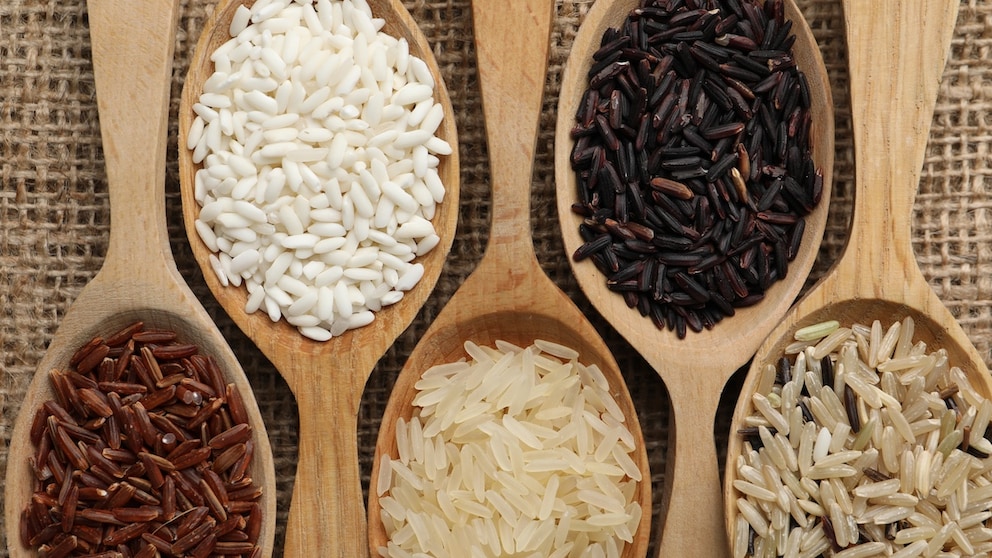
Basmati, wild rice, jasmine—which is the healthiest type of rice? FITBOOK author Friederike Ostermeyer examined seven varieties and discovered surprising differences in their nutrient profiles. There is also a clear winner.
White Rice and Parboiling Process
In terms of health, white rice is more or less on the same level as white bread. White rice is not a natural product but the result of a process where the husk, bran, and germ are removed. This process polishes away vitamins and minerals, leaving only empty carbohydrates and a few proteins. Studies show that white rice stays in the stomach for a shorter time than other rice varieties, while blood sugar levels spike.1 As a result, hunger returns soon after eating. The so-called parboiling process can push some nutrients into the rice’s interior, but it loses its stickiness. Unfortunately, this means that popular sushi rice is nutritionally almost worthless and ranks last among the healthiest rice varieties.
Risotto Rice
Risotto rice (Arborio) is primarily grown in Italy and is known for its creaminess. This smooth texture is due to its high starch content. For the glycemic index, this is a downside, but risotto rice can score points elsewhere: With nine grams of protein per 100 grams, it is the protein powerhouse among rice varieties (white rice contains seven grams).2 Risotto rice does not have a significant vitamin content. Since the delicious taste of a classic risotto is mainly due to plenty of butter and Parmesan, one should keep an eye on the total calories. Of course, occasional enjoyment is not a problem.
Jasmine Rice
Jasmine rice smells wonderful and is somewhat healthier than the white rice varieties mentioned above. Although nutrients have also been removed from this variety, it still provides iron and niacin.3 The latter is important for energy metabolism and cell division. Jasmine rice, like the varieties above, should not be on the table daily. According to studies, people who eat white rice daily have an 11 percent higher risk of developing type 2 diabetes.4 The risk decreases when switching to brown rice or whole grain varieties. So, if you love the typical jasmine scent but want to be a bit healthier, choose the natural variety.
Basmati Rice
Basmati rice is softer and thinner than jasmine rice and has a slightly nutty taste. Finally, there’s a boost in nutrients: folic acid, copper, iron, zinc, vitamin B6, and thiamine are present in relatively acceptable amounts in the small grain.5 Thiamine is needed by the body to convert carbohydrates into energy. Compared to other rice varieties, basmati contains less arsenic. A heavy metal linked to diabetes, heart problems, and certain cancers.6 Generally, the amount of arsenic—as long as you don’t consume large amounts of rice daily—is usually harmless. Important: Wash rice thoroughly before cooking! Basmati is also easily digestible and is therefore suitable for people with digestive issues like irritable bowel syndrome.
Properly Washing Rice
To rid rice of impurities, place it in a bowl or pot and cover it well with cold water. Mix until the water becomes milky–this is the excess starch. Then drain and cook in fresh water.
Brown Rice
Now it gets really healthy, as brown rice retains its fiber-rich bran layers during the milling process. These layers contain the rice’s superpower. They include flavonoids like apigenin, quercetin, and luteolin. These compounds protect against chronic diseases, neutralize free radicals, and are even said to inhibit certain cancers.7 A serving of brown rice contains almost all essential minerals and vitamins and nearly meets the entire daily requirement for manganese.8 This trace element is vital for numerous processes in the body, including bone formation, wound healing, muscle contraction, metabolism, nerve function, and blood sugar regulation. A deficiency, on the other hand, can lead to growth disorders, sagging skin, bone demineralization, and infertility. Additionally, brown rice keeps you full for a long time and keeps blood sugar in check, protecting against diabetes.9
All in all, brown rice is a valuable and affordable food that deserves more attention due to its numerous health benefits. So, if you want rice without any frills, brown rice is (almost) the healthiest type of rice. Almost? Yes, because it can get even healthier.
Wild Rice
Botanically speaking, wild rice is a grass. Nevertheless, it should not be missing from this list. Wild rice is significantly more expensive compared to other varieties, has a strong aroma, and is very firm. It is rarely served alone but mixed with other rice varieties or vegetables. Wild rice tastes very healthy and actually is. It offers 14 grams of protein per 100 grams (cooked), packed in just over 100 calories.10 It also contains all amino acids and plenty of fiber; wild rice keeps you full for a long time, making it a slimming agent. In addition to the usual vitamins and minerals, it contains effective radical scavengers. An analysis found that the antioxidant activity of wild rice is 30 times higher than that of white rice.11 This makes wild rice a cancer- and heart-protecting fountain of youth.
Are Glass Noodles Healthier Than Regular Pasta?

Red Cabbage is Very Healthy and Low in Calories
Black Rice
We have now reached the first place among the healthiest rice varieties: black rice. This was known in ancient China, which is why black rice was also called “forbidden rice.” It was reserved for the royal family due to its valuable properties. What are these? Anthocyanins—a group of secondary plant compounds that give the rice its black-purple color. They are proven to protect against heart attacks, regulate cholesterol levels, and possibly prevent cancer, especially colon cancer.12 All red and purple foods contain anthocyanins—such as eggplants, cherries, blueberries, or red cabbage. Compared to all other rice varieties, black rice has the strongest antioxidant activity.13
Additionally, there are 23 other protective plant compounds that all contribute to healthy cells, healthy eyes, beautiful skin, and youthful strength.14 The unique combination of ingredients in black rice is considered so cleansing that researchers suspect it offers protection against osteoporosis, as well as strong liver and kidney detoxifying properties.15 Thus, black rice could play a role in alcohol withdrawal in the future. Given this, the (usual) vitamins and minerals it contains are not worth mentioning. Black rice, which is always whole grain, rightly has superfood status. In terms of sustainability, it is important to look for fair-trade and organically produced products when purchasing.
Long Grain, Short Grain, Medium Grain
The terms long grain, short grain, and medium grain describe the characteristics of the rice grain. Long grain (e.g., basmati and jasmine): at least six to eight millimeters long, with a very narrow diameter. Medium grain rice is five to six millimeters long, contains more starch, and absorbs more liquid when cooked, making it ideal for creamy risotto. Sushi rice is also a medium-grain rice. Short-grain rice has a body length of four to five millimeters and is used (along with risotto rice and sushi rice) in various dishes, including rice pudding, among others.