


April 11, 2026, 4:09 pm | Read time: 3 minutes
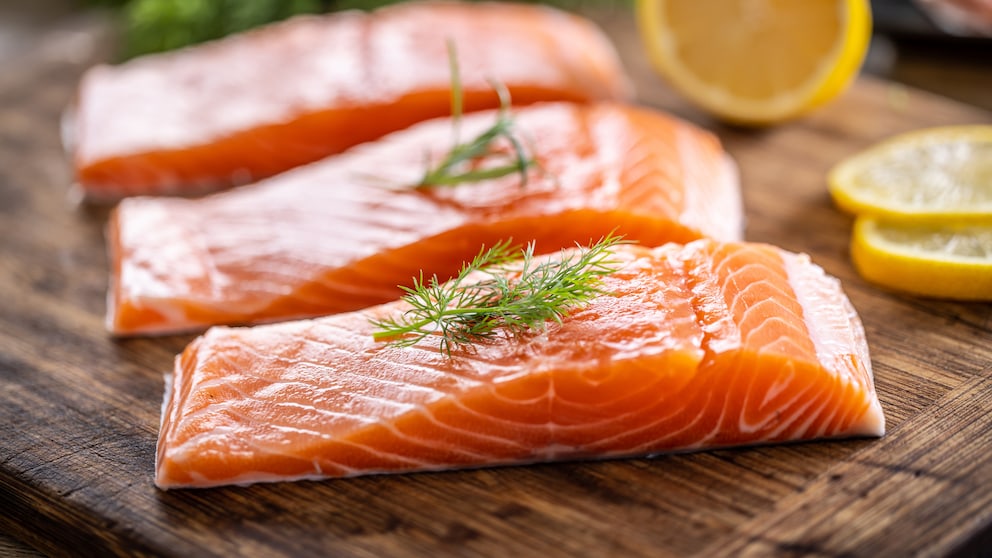
Salmon is one of the most popular edible fish—yet many people avoid it during a diet. While it’s true that salmon is a fatty fish, FITBOOK nutrition expert Sophie Brünke explains why it can still aid in weight loss.
Salmon Keeps You Full and Protects Muscles
Let’s take a look at the macronutrients found in this orange-pink fish per 100 grams:
- Energy: 208 kcal
- Protein: 20 g
- Carbohydrates: 0 g
- Fat: 13 g
- of which unsaturated fats: 10 g1
With a 20 percent protein content, salmon definitely doesn’t need to hide. Protein is the number one macronutrient, especially when losing weight. It keeps you full and provides building material for our muscles. When losing weight, without proper nutrition, you not only lose body fat but often muscle mass as well. Protein helps preserve muscles better, especially when combined with strength training.
Daily intake should be at least 0.8 grams of protein per kilogram of body weight. Note: If you are overweight, calculate your protein needs based on your theoretical normal weight.
There’s no need to shy away from the ten grams of fat either. The fish contains valuable omega-3 fatty acids, which are consumed far too little in our region. So if you’re going to consume fat, make it good fat. The ratio of omega-3 to omega-6 fatty acids is particularly critical. An optimal ratio would be 5:1, but for many, this ratio is up to 20:1.2 The extra portion of omega-3 is worth it: It reduces inflammatory processes in the body and protects the cardiovascular system.
These Nutrients Give Salmon Its Color
Have you ever wondered where salmon gets its bright orange-pink color? The answer lies in the micronutrients. Wild salmon eats small crustaceans and other organisms that contain carotenoids, especially astaxanthin. This pigment accumulates in the muscle tissue and colors the flesh pink to reddish. Carotenoids are the precursors of vitamin A, which is primarily important for the eyes. They are also antioxidants. Astaxanthin, in particular, is a very strong antioxidant. It reduces harmful processes in the body associated with inflammation, aging, diseases, and cell damage.
Proper Preparation Is Key
All the salmon won’t help if it’s swimming in a cream sauce with white pasta. That quickly fills up the calorie count and leaves you hungry. Better: Switch to whole grain or lentil pasta. Pasta made from legumes contains more protein. Cream can be replaced with low-fat cream cheese. The fish itself already provides enough fat—and as we now know, it’s heart-healthy fat.
Salmon is also excellent for easy preparation in the air fryer, oven, or grill—saving you the cooking oil. Halfway through the cooking time, you can add chopped vegetables—feel free to go all out here. Vegetables have a low energy density and provide plenty of vitamins and fiber, which keep you full and stabilize blood sugar. Top it all off with lemon juice and spices of your choice—and enjoy.