


April 10, 2026, 9:05 am | Read time: 5 minutes
Strength training is beneficial at any age—especially as you get older, when muscle loss begins and continues throughout life. The male body also loses muscle due to age-related processes and a declining testosterone level. Trainer and FITBOOK expert Alina Bock reveals which exercises counteract this process and are recommended for men over 40.
Why Strength Training Is Especially Important After 40
Muscle loss begins as early as age 30 and progresses steadily thereafter. Without strength training and a protein-rich diet, muscle loss over the years inevitably leads to back and joint problems, movement restrictions, and cardiovascular issues. Physical complaints are especially likely in physically demanding jobs or sedentary occupations without concurrent strength training to balance movement patterns and limitations.
6 Effective Exercises for Building Muscle After 40
To build muscle, prevent physical complaints, and achieve an athletic appearance, carefully selected exercises are important. To boost testosterone release in the male body and accelerate muscle growth, men should focus on training large muscle groups as they age. Additionally, full-body exercises like deadlifts promote learning complex movement patterns that are transferable to everyday life.
Deadlifts
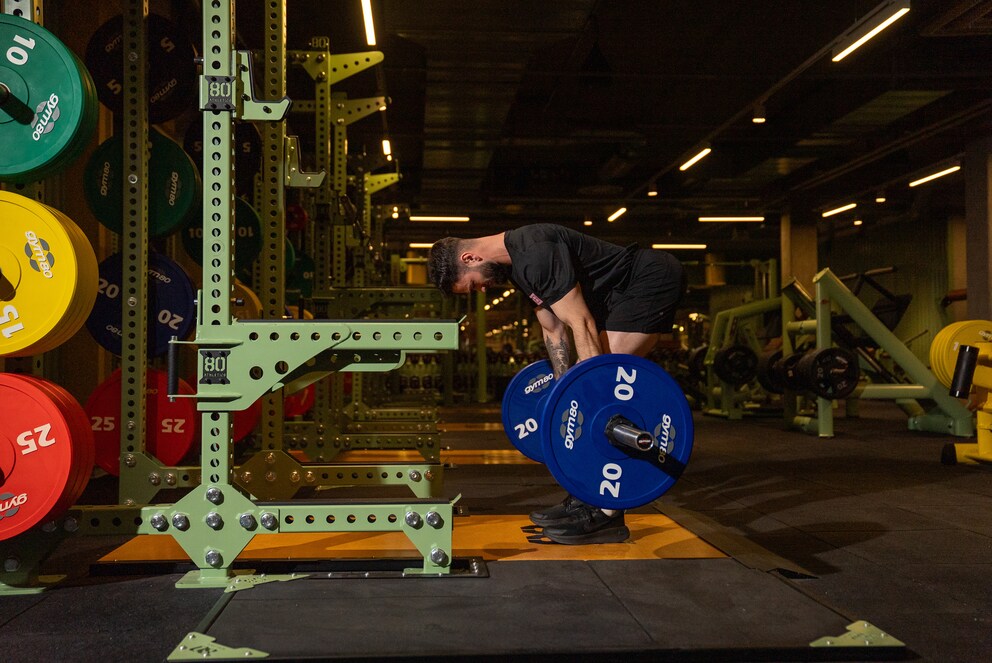
Deadlifts are the ideal exercise to activate a variety of muscles in one move. They train the glutes, legs, back, and core muscles. Since the exercise requires concentration, it’s perfect as an entry point into the workout series. It also simulates lifting objects in daily life, aiding in learning a healthy posture.
To perform the exercise, you’ll need a barbell. Grip it with both hands, about shoulder-width apart. Start in a bent position, with the barbell and weights on the floor—feet are hip-width apart, legs bent, and torso slightly upright. Keep your chin pointing toward your chest throughout the exercise. Take a deep breath in. As you exhale, straighten your legs and lift your torso. The pelvis should be tilted, and the navel pulled inward to maintain core tension during the exercise. In the final position, when the body is fully upright, pull your shoulder blades together.
Lunges
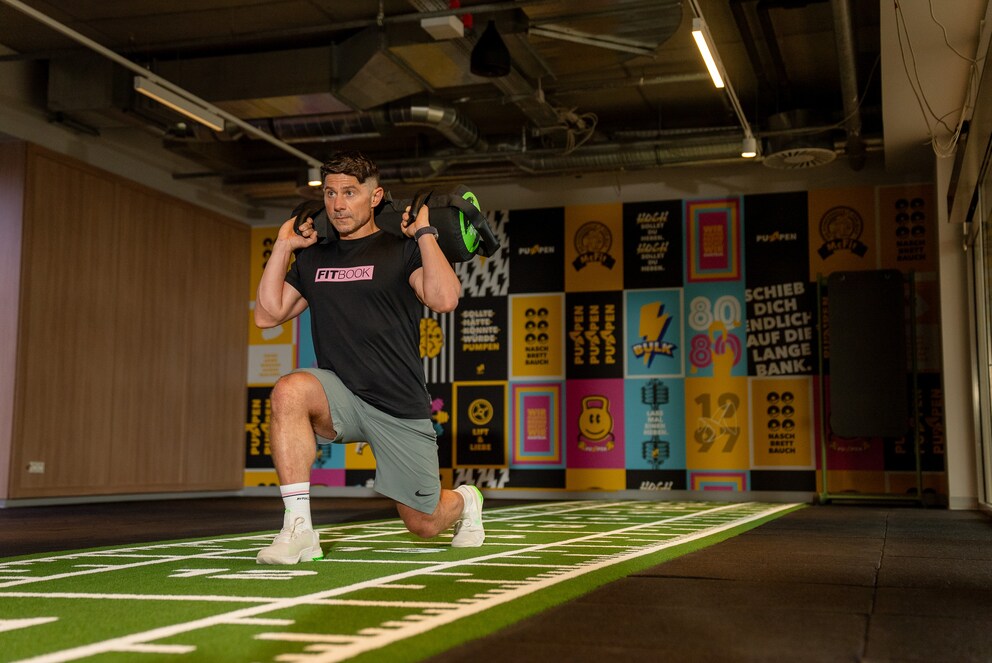
Another complex exercise that trains the entire lower body is the lunge. These can be performed either on a Smith machine or with free weights. To also promote balance and coordination, lunges with dumbbells are recommended. Since the glutes and leg muscles are the largest muscle group in the body, exercises targeting this part of the body particularly increase testosterone release and thus promote muscle growth throughout the body.
To perform the exercise, you’ll need two heavy dumbbells. Take a large step forward and bend your leg until the knee is just above the ground. Then straighten the leg and lift your body. Follow with the other leg. You can lean your torso slightly forward. To maintain tension in the leg muscles, the legs should always remain at least slightly bent throughout the exercise—even in the final position.
Leg Extensions
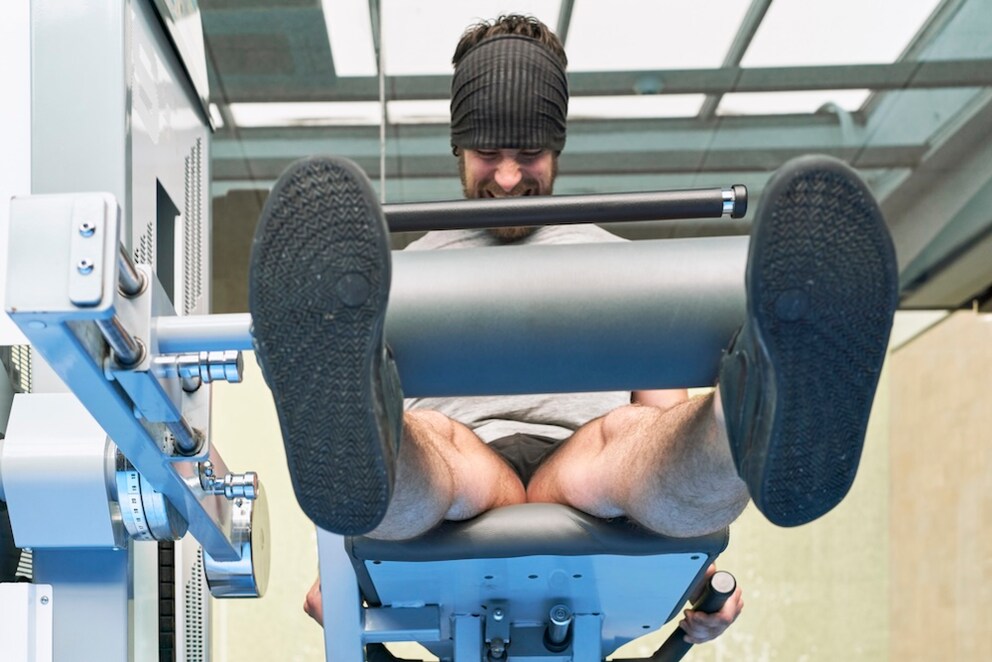
The leg extension is suitable as the final exercise for the leg muscles. It isolates the leg extensor muscles, specifically the quadriceps femoris. The exercise is performed on the leg extension machine, which can be adjusted individually. It’s important to set the axis at knee height to maximize the exercise’s potential.
Lat Pulldown
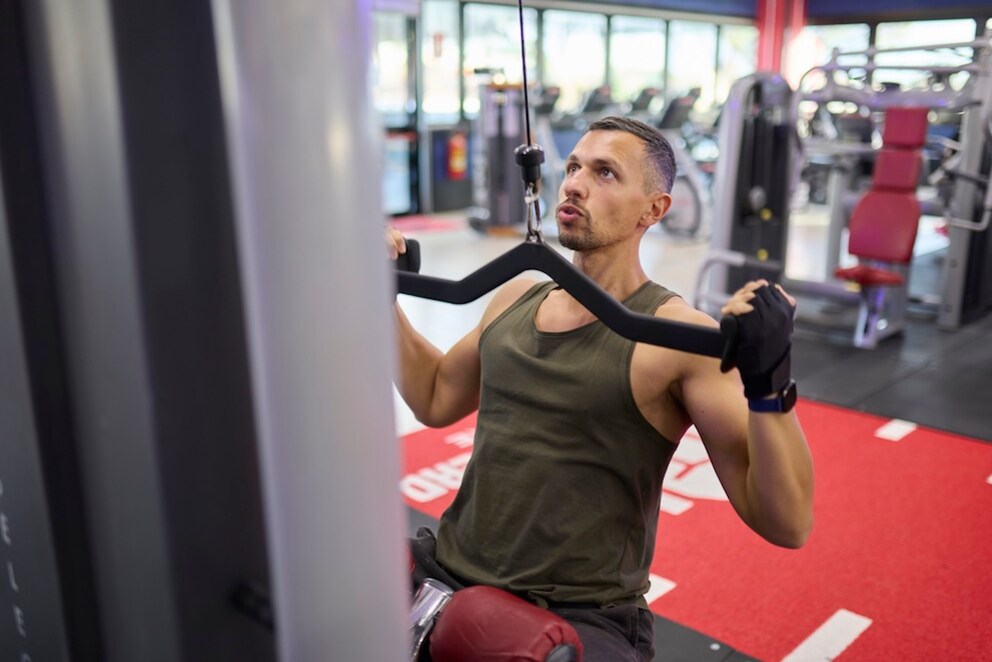
To prevent back problems or alleviate existing pain, it’s important to strengthen the spine’s alignment and back muscles. The lat pulldown is an ideal exercise for this, primarily targeting the latissimus dorsi. Additionally, other back muscles and the core provide stabilization, while the biceps and forearm muscles offer support.
The exercise is performed on a designated machine. Grasp the handle with both hands. Activate your muscles and then pull the handle toward your chest. The elbows should always be in front of the body. The body is slightly tilted backward during the movement. A slow execution of the exercise is recommended to achieve a good muscle feel.
Rowing
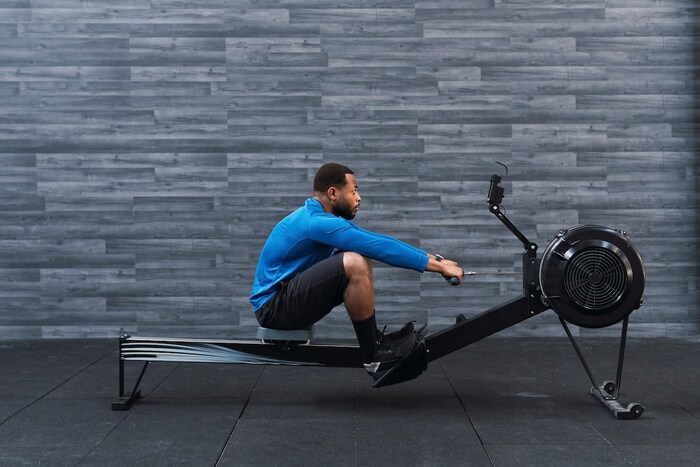
As a second exercise for strengthening the back muscles, I recommend rowing. This can be done either on a machine or a designated cable pull. After sitting down and securing the handle, pull it close to your body toward your torso. Keep your back straight. To target different back muscles, the handles can be swapped over time.
Bench Press
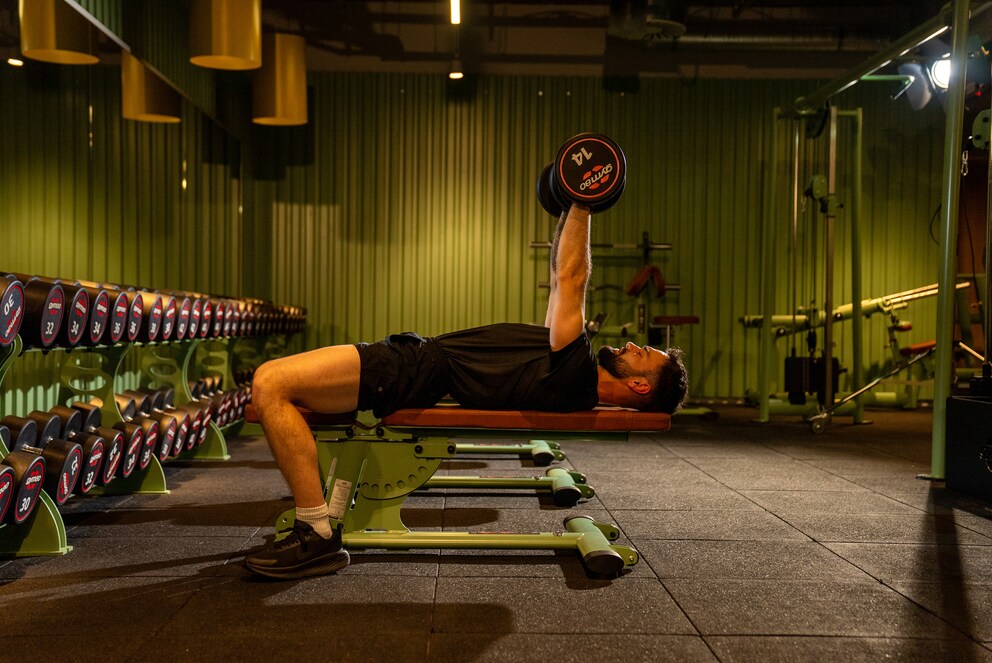
After adequately training the back muscles, it’s time for the chest, shoulder, and triceps muscles. A classic exercise for this is the bench press. It covers all three muscle groups. We intentionally recommend only one chest exercise, as a 2:1 ratio of back-to-chest training is advised for an upright posture.
Advanced individuals can perform the bench press freely with a barbell, while beginners should start on the Smith machine. The barbell is gripped shoulder-width and extended upward. Then, while inhaling, lower it toward the chest. The elbows point downward. During exhalation, press the barbell upward. To maintain tension and protect the joints, the elbows should not be fully extended even in the final position.